Residents across Newcastle and the Hunter have voiced strong concerns in a series of letters to the editor, highlighting issues from dangerous e-bikes on coastal paths to calls for improved security and criticism of government spending. The collective correspondence, published on January 17, 2026, paints a picture of a community grappling with local safety and national policy frustrations.
E-bike Menace on Coastal Shared Paths
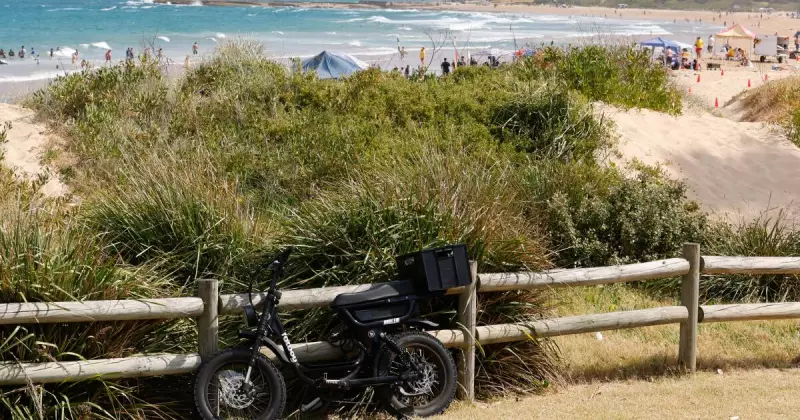
A significant point of contention for locals is the perceived danger posed by electric bikes, particularly modified ones, on popular shared pathways. Peter O'Neill from Warabrook describes a common experience for pedestrians: being zoomed past at excessive and dangerous speeds, especially along the foreshore and between Bar Beach and Merewether.
While acknowledging that standard bikes and e-bikes are permitted, O'Neill targets the illegal, modified e-bikes that require no pedaling. He expresses deep concern about the message this sends to younger riders, who he believes are fully aware they are breaking the law. His worry extends to a potential erosion of respect for regulations, questioning whether this behaviour will translate to a disregard for road rules when these youths obtain driver's licences. He criticises the lack of action from authorities to curb this trend.

Calls for Armed Security Deterrent in Public Spaces
In light of rising violence in public areas, Carl Stevenson from Dora Creek proposes a radical shift in security strategy for places like shopping centres. Drawing on his experience in Manila nearly six decades ago, he recalls the prevalence of well-armed, licensed security personnel who served as a visible deterrent.
Stevenson argues that police cannot be everywhere due to physical and financial constraints and should act as backup. He advocates for an independent, armed, and licensed security presence, potentially staffed by ex-military or law enforcement officers, to project authority and deter criminal activity. He suggests funding such a scheme through a community levy, similar to the fire service levy, asking why society shouldn't collectively pay to deter crime as it does to fight fires.
Government Spending and National Priorities Under Fire
Multiple correspondents took aim at state and federal government priorities. Graeme Kime from Muswellbrook questioned the allocation of funds towards royal commissions and other investigations while Australians face droughts, fires, floods, and struggles with youth crime, hospital funding, and energy costs. He linked housing shortages and increased criminal activity to immigration policies pursued without adequate infrastructure, accusing the government of not looking after "true blue Australians."
Tony Mansfield from Lambton and Grahame Danaher from Coal Point criticised the federal government's response to social cohesion and the Bondi massacre. Mansfield accused leaders of lacking the backbone to call out anti-Semitic hate from the outset, arguing their policies fostered division. Danaher expressed frustration at the announcement of a royal commission he believed was unnecessary, hoping instead for progress on immigration policies to prevent "importing hatred."
Other letters covered a range of topics. Graeme Tychsen from Toronto defended a nation's right to arms for defence in the context of the Israel-Gaza conflict, while Greg Lowe from New Lambton demanded a completion date for the long-stalled Newcastle Post Office redevelopment. Kevin White from Lambton raised fire safety concerns for properties between Wollombi and Broke, and Ian Thomas from The Hill lamented the opposition's "politics of division" following the announcement of the Bondi royal commission.