Newcastle Councillor Demands Fair Share for Ageing Pools as Funding Falls Short
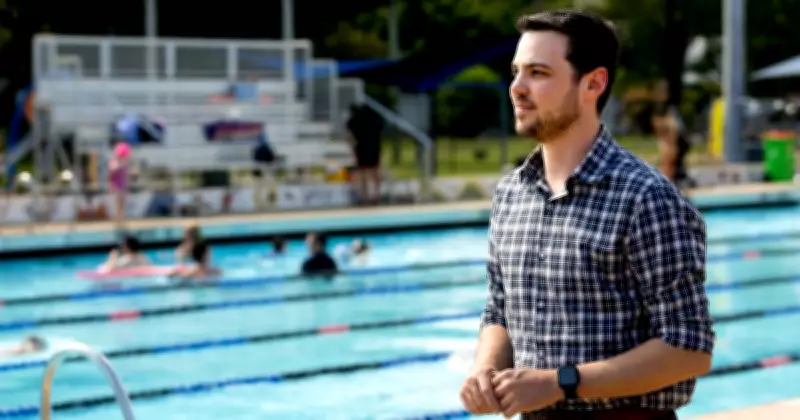
As temperatures soared during a recent scorcher, with Novocastrians flocking to local pools to beat the heat, Labor councillor Declan Clausen has shifted focus to the pressing future of Newcastle's five inland swimming facilities. With a critical funding shortfall looming, Cr Clausen is calling for Newcastle to receive its equitable portion of state and federal government funds to address the ageing infrastructure.
Swimming Season Highlights Urgent Needs
The City of Newcastle's $2 entry trial at Beresfield, Mayfield, Stockton, and Wallsend pools has proven immensely popular, drawing large crowds during the peak swimming season. However, this success underscores a deeper issue: the pools, constructed in the late 1960s and 1970s, are rapidly approaching the end of their operational lifespans. Forecasts indicate that Lambton and Beresfield pools will require replacement within just 20 years, with the others following in a further decade.
Cr Clausen emphasised the severity of the situation, stating, "Pool funding is a significant issue for us." He highlighted recent public discussions about investments in the Lambton diving facility to meet contemporary safety standards. In December last year, the council temporarily closed all but one one-metre springboard at Lambton pool after a SafeWork NSW inspection identified risks of slips and falls, impacting the Hunter United Diving Academy's approximately 70 members.

Massive Replacement Costs and Funding Gaps
A City of Newcastle spokeswoman revealed that replacing the pool shells is likely to cost upwards of $300 million, a figure far beyond the council's means without substantial contributions from higher tiers of government. She noted that councils across Australia face similar challenges with ageing public pool assets, representing a nationwide infrastructure crisis.
The council has invested more than $5 million in upgrades and $2 million in maintenance over the past few years, and sets aside $1 million annually in a restricted reserve for future investments. However, this amount falls drastically short of the predicted replacement costs. A 2025 Royal Life Saving NSW report added context, revealing that nearly 40 per cent of Australia's 1,200 public pools will reach end-of-life by 2030, with an estimated $8 billion replacement cost nationwide.
Newcastle Overlooked in Government Funding
The council's Inland Pools Strategy 2043 outlines a recommended investment strategy, noting that in the four years leading to its adoption in 2023, state and federal governments jointly provided $630 million for pool upgrades—none of which were allocated to the Newcastle local government area. Instead, funding has been "selectively" directed to other regions, including $106 million for the City of Sydney, $87 million for Parramatta, $69 million for Eurobodalla, and $64 million for North Sydney.
Cr Clausen pointed to the North Sydney pool as a particularly egregious example. Around 2019-2020, the federal government granted North Sydney Council $10 million from a fund designated for regional facilities, despite the pool being located beneath the Sydney Harbour Bridge. Newcastle was excluded from this fund because it was deemed metropolitan, a decision Cr Clausen called "ludicrous" and "extraordinary."
Building a Case for Investment
The success of the $2 entry trial, which began in September and has increased attendance at all five pools, helps build a compelling case for investment. Cr Clausen stressed the importance of community support, stating, "I can't overemphasise just how important this is." He expressed confidence in council unity on fighting for funding, with a shared view across the chamber about the priority of this issue.
As the swimming season progresses, the outcomes of the trial will be evaluated and reported back to the elected council. Cr Clausen concluded that while current maintenance efforts are adequate, honesty with the community is essential: these ageing facilities will require significant capital upgrades, and support from other tiers of government will be crucial when those triggers are met.