Anti-Immigration Rallies to Coincide with Invasion Day Marches on January 26
Anti-immigration protests are scheduled to take place in major Australian cities on January 26, running parallel to the annual Invasion Day marches that commemorate Indigenous dispossession. Experts have expressed deep concern, noting that this represents a relatively new and troubling phenomenon on the already contentious national holiday.
March for Australia Organises Nationwide Demonstrations
The far-right group March for Australia has planned several rallies in cities including Sydney, Melbourne, and Canberra on Monday. This comes in stark contrast to the Invasion Day rallies that will be held nationwide. Last March, an estimated 15,000 people attended a demonstration organised by the group in Sydney, with thousands more participating in other states and territories, including the Australian Capital Territory.
A spokesperson for March for Australia declined to provide attendance estimates but stated the event aims to "provide a platform for national pride and to advocate for our core message of ending mass immigration." Over recent years, January 26 has increasingly become a flashpoint for right-wing and neo-Nazi groups, with organisations like the now-defunct National Socialist Network deliberately choosing the date to stage unauthorised rallies in locations such as train stations.

Historical Context and Shifting Focus
Professor Michelle Arrow, a modern history expert at Macquarie University, observed that while January 26 has long been a site for discussions around racism and Indigenous dispossession, it has not typically centred on migration. "I think what seems to be different about the upcoming planned marches is their association with a pretty far-right neo-Nazi kind of ideology," she explained.
"The debate around immigration and disquiet around immigration has always played out in other ways. For example, there were controversies around migration from Asia in the 1980s and '90s but they didn't necessarily manifest in large-scale demonstrations."
Australia Day first gained national prominence in 1988 when over 40,000 people staged what was then the largest ever march for Indigenous land rights in Sydney. Since then, a global resurgence of far-right movements in the UK and the US, coupled with efforts to reclaim Australia Day as a day of mourning, has likely contributed to the date being used to target migration.
"There's a longer heritage of racist sentiment in Australia that goes right back to the White Australia policy, and it plays out periodically in these ways," Professor Arrow noted. "But I do think what's happening now is a bit different, which is disturbing because the politics have changed since then and there's not that embrace of multiculturalism as a kind of core Australian value."
False Claims Driving Anti-Migrant Sentiment
A new wave of anti-migrant sentiment is gaining traction in Australia, with concerns over immigration fuelling a resurgence in support for far-right political parties such as Pauline Hanson's One Nation. However, according to ANU migration expert Professor Alan Gamlen, much of the anti-migrant sentiment circulating in public debate is based on disinformation.
"We do not have out-of-control migration. We have a migration system that is stabilising after the pandemic," he asserted. "Another misconception is that migration is a crime and security threat. Research consistently shows that there's no association between rises in immigration and rising crime of any kind."
Data from the Australian Bureau of Statistics indicates that net overseas migration—the number of migrants arriving minus those departing—has fallen sharply since 2023. Professor Gamlen suggested that people's willingness to believe false claims about migration despite evidence stems from factors such as education levels, perceived lack of national identity, and broader global instability.
"They believe it because it's simple to believe it, and because it's convenient for politicians to tell it to them, and because there are some groups who are giving them misinformation," he explained. "It's a time-honoured political tactic."

Community Concerns and Personal Fears
Diana Rahman, an executive member of the Canberra Multicultural Community Forum, revealed that the ACT multicultural community is bracing for Monday's protests. "I've spoken to the Aboriginal community in Canberra, they were really, really concerned to the point that they were worried, because it's a day of mourning for Aboriginal community," Ms Rahman said.
"They don't want to end up in some horrible situation. So they're concerned, and we are concerned as a multicultural community about these protests." Ms Rahman, who was born in Australia to a Lebanese family, expressed fear about the rise in anti-migrant sentiment.
"I am fearful for my grandson. I see what's happening in the US, and that's coming here. I fear that I've had to watch my community suffer at the hands of so many people," she shared. "We've tried so hard as a community and to be part of this society, I feel like a stranger in my own country. I'm being made to feel less than others."
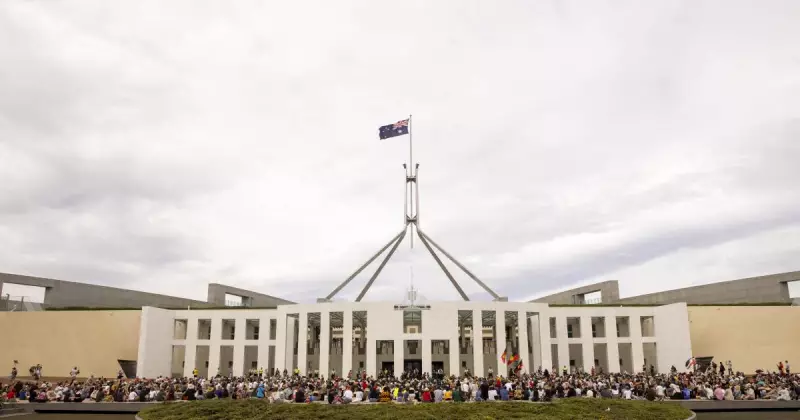
In response, the Aboriginal Tent Embassy has organised a Sovereignty Day event in Canberra on Monday morning, preceding a rally at the Old Parliament House lawns. As tensions mount, experts and community leaders alike are urging caution and highlighting the unprecedented nature of these converging protests on a day already marked by deep national division.