Carney's Canadian Challenge to Albanese
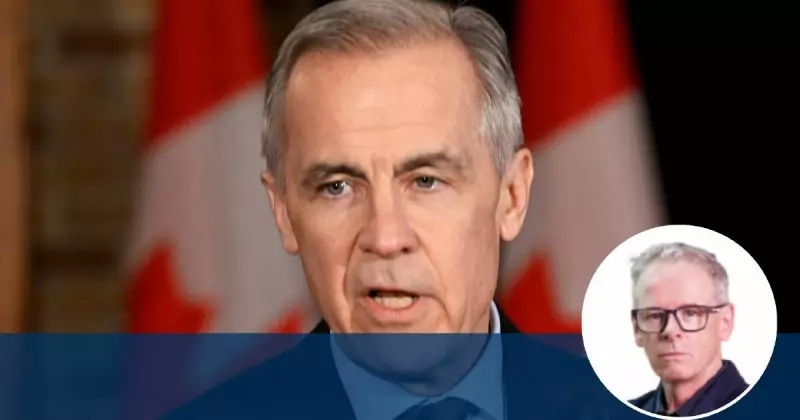
In a stirring address that has reverberated across international diplomatic circles, Canadian Prime Minister Mark Carney has issued a clarion call for middle-power nations to abandon their passive compliance and assert a new era of collective confidence. His powerful speech, delivered at the Citadelle in Quebec City on January 22, 2026, directly challenges leaders like Australia's Anthony Albanese to reconsider their approach to global governance amid escalating great-power rivalries.
A Stark Critique of Global Complacency
Carney, a former central banker with deep economic expertise, minced no words in his assessment of the current international landscape. He urged nations such as Canada, Australia, and European countries to stop invoking the hollow rhetoric of a rules-based international order that no longer reflects reality. Instead, he called for frank acknowledgment that the system has devolved into intensifying great power rivalry where economic integration serves as a tool for coercion rather than mutual benefit.
The Canadian leader's intervention comes at a particularly volatile moment in global affairs. Just days before his speech, former US President Donald Trump had retreated from bellicose threats to seize Greenland militarily and impose punitive tariffs on European governments. Trump's social media posts featured AI-altered maps depicting American territory extending through multiple nations, accompanied by juvenile justifications sent via SMS to world leaders.

The Perils of Diplomatic Silence
Carney reserved particular criticism for what he termed the cowardice of leaders who have maintained a low-conflict approach as Trump's behavior grew increasingly erratic. He condemned the habitual practice of going along to get along, arguing that such diplomatic silence effectively enables strongman tactics and validates affronts to international norms.
For decades, countries like Canada prospered under what we called the rules-based international order, Carney acknowledged. We knew the story was partially false, that the strongest would exempt themselves when convenient, that trade rules were enforced asymmetrically. This fiction was useful, but the gap between rhetoric and reality has become too wide to bridge.
An Immediate Test for Australian Leadership
The speech presents an immediate challenge for Prime Minister Anthony Albanese, who must navigate Australia's response to Trump's invitation to join a new Board of Peace alongside controversial figures like Vladimir Putin and Benjamin Netanyahu. Accepting such an invitation would undermine United Nations authority, compromise Australian independence, and contravene Labor's longstanding policy supporting a two-state solution for Palestine.
Australian Treasurer Jim Chalmers has already praised Carney's address as stunning, revealing it has been widely shared within government circles. Yet a more formal and systematic Australian response is now required, with Carney's framework providing the intellectual foundation for reevaluating Australia's position in an increasingly polarized world.
The Power of the Less Powerful
At the heart of Carney's argument lies his concept of the power of the less powerful - a call for middle-tier nations to coordinate their responses and assert collective influence. He warned that great powers have begun using economic integration as weapons, tariffs as leverage, and financial infrastructure as coercion, creating what he termed a rupture, not a transition in global affairs.
Carney's subsequent disinvitation from Trump's Board of Peace serves as what he might consider a badge of honor, validating his critique of the current international dynamic. His speech stands as a landmark articulation of what many diplomats have privately acknowledged but refused to publicly state, challenging nations like Australia to define their role in a world where middle powers can no longer afford complacency.