The federal government has taken a sledgehammer to an election promise, confirming the badly kept secret that negative gearing and capital gains tax (CGT) concessions will be wound back.
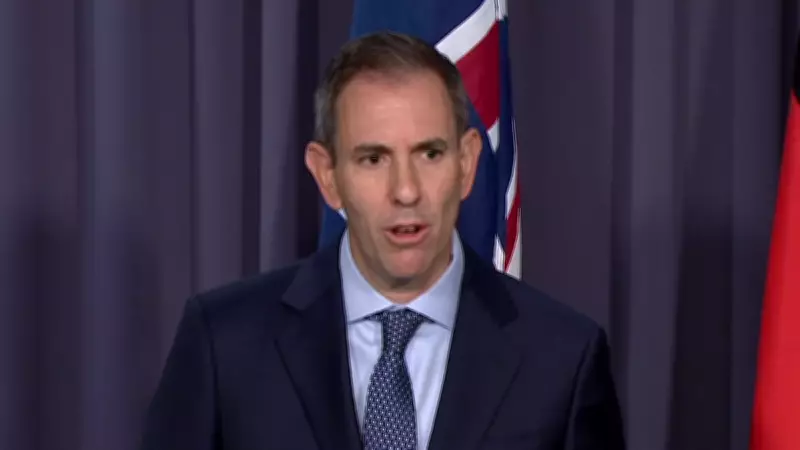
Delivering his fifth budget on Tuesday, Treasurer Jim Chalmers’ annual economic roadmap – which was described as one for first home buyers — also confirmed a new $250 cost-of-living sweetener for more than 13 million Australians, but there will be a wait.
Negative gearing, which had sparked plenty of discussion in the lead-up to Tuesday’s big reveal, will be limited to new resident property builds from 2027-28, in a move to boost supply.

Arrangements will remain unchanged for existing investments made before budget night, “until they are sold”.
“This means all Australians who currently negatively gear or own an investment property will not see any change to these arrangements,” the government said.
“They will still be able to deduct rental losses on these properties against other taxable income, like a salary, to reduce their overall tax liability.
“For people who want to invest in existing property after the start date, they will still be able to deduct losses against residential property income, like rent or capital gains, but not broader income like a salary.
“Investors will be able to carry forward losses to offset residential property income in future years.
“People who invest in eligible new builds after the start date will still be able to deduct rental losses from those properties against other taxable income.”
Capital Gains Tax Discount
Another major talking point has been the 50 per cent CGT discount, which will be replaced by inflation-adjusted indexation from July 2027.
It is a move the government said will “restore the taxation of real gains, with a minimum tax rate of 30 per cent on realised gains”.
“This will apply to all assets except new builds, where both new and old arrangements will be available to choose from,” the government said.
“It will be prospective, with gains accrued on existing investments prior to the start date to retain the 50 per cent discount.”
The main family home will remain exempt for CGT purposes.
Discretionary Trust Tax Arrangements
The government has also locked in reform for discretionary trust tax arrangements, with a minimum 30 per cent tax rate from 2028-29 “to create a more equal and sustainable treatment between workers and families who earn a living from wages and people with income from assets held in trusts”.
“There are many legitimate reasons to use discretionary trusts, but the number has doubled over the past 20 years, faster than the growth in the number of companies, making the system unsustainable,” the government said.
“Rollover relief will be provided for three years from 1 July 2027 to assist small businesses and others that wish to restructure.”
‘Level the playing field’
Anthony Albanese and Labor colleagues had gone to the 2025 election vowing that negative gearing and CGT concessions were not in the firing line.
Breaking those promises, the government argued reform was needed to make the tax system fair and “level the playing field” to help Australians buy a home.
House prices have increased more than twice as fast as average full-time earnings since 1999 and home ownership rates among people aged 25 to 34 fell significantly in the previous two decades to 2021.
“Our tax changes will help around 75,000 homeowners into the market over the next decade and are part of a package of housing reforms in this budget that will boost housing supply,” the government said.
“They will help level the playing field for first home buyers and build on the strong support we are already delivering through the expanded 5 per cent deposit program and the introduction of Help to Buy.
“Together, these programs now mean that more than half of all first home buyers are entering home ownership with the support of the Albanese Government.”
$250 Working Australians Tax Offset
The government has been under significant pressure over spending, given soaring inflation and the compounding effects of the war in the Middle East.

But it has found room, down the track, for some cost-of-living assistance, a new permanent $250 “Working Australians Tax Offset” (WATO).
The offset will apply from the 2027-28 financial year, “providing an ongoing annual tax cut for 13.3 million Australian workers”.
Combined with the previously announced $1000 instant tax deduction, and scheduled tax cuts, the government says the average Australian could be $2816 better off.
“This offset is targeted to workers and represents the most meaningful, permanent increase to the effective tax-free threshold since Labor last increased it more than a decade ago,” Chalmers said.