Albanese's Unwavering US Support Sparks Political and Global Concerns
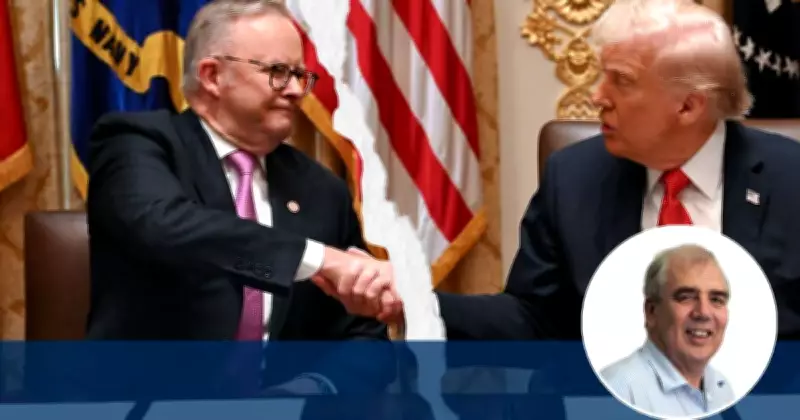
In the realm of international politics, crises often present opportunities, as noted by former Obama chief of staff Rahm Emanuel. Currently, Donald Trump faces mounting challenges from both American and global audiences, creating a potential opening for Australia to reassess its foreign policy stance. However, Prime Minister Anthony Albanese's administration appears to be missing this chance, instead doubling down on its alignment with the United States, a move that is increasingly viewed as politically risky and diplomatically isolating.
Labor's Political Dilemma and the Albanese-Marles Dynamic
The Australian government, particularly under Labor leadership, could benefit from creating distance from the US amid Trump's controversies. This is especially crucial for Prime Minister Anthony Albanese, whose close ties to American policies are becoming a political liability. While Defence Minister Richard Marles remains firmly attached to Trump's agenda, Albanese's failure to establish independence not only from the US but also from Marles is exacerbating internal party tensions. Marles, though largely unnoticed globally or domestically, symbolizes a broader issue: Labor's uncritical adoration of the US, led by Albanese and, to a lesser extent, Foreign Minister Penny Wong.
This alignment is particularly damaging because both Albanese and Wong once positioned themselves on the political left but have since shifted to the right, even surpassing some Liberal Party figures on key issues. Albanese needs maneuvering room to regain credibility among former allies, including the Greens and teal independents, and to reassure the general public. Voters expect dignified debate and transparency from their leaders, not blind deference to foreign powers.

Missteps in International Affairs and the Iran Conflict
Albanese's lack of detachment was starkly evident during the US-Israel war on Iran, where he offered wholehearted endorsement without articulating Australian interests or considering alternative perspectives. He cited Iran's nuclear ambitions as justification, despite intelligence suggesting these threats were exaggerated. This decision, made without prompting, aligned Australia with Trump's questionable rationale, ignoring assessments from both US and Australian intelligence agencies that Iran's nuclear program had been degraded.
When questioned about the attack's legality under international law, Albanese and Wong deferred to the US and Israel, a stance criticized as a badge of shame emblematic of their unfitness for office. The real motive behind Australia's involvement seems to be a longstanding desire to be perceived as a loyal ally, regardless of the conflict's merits. However, this strategy backfired, as most NATO partners and other nations condemned the attack, leaving Australia isolated and exposed rather than praised.
Global Repercussions and Economic Impacts
The war on Iran, likened by some observers to Israel's mowing the lawn tactic against Palestinians, aims to periodically reset regional dynamics but risks destabilizing the Middle East. The economic fallout, including oil price shocks, could trigger a global recession, disproportionately affecting Asia, Africa, and Europe. Australia, by eagerly supporting the action, has earned contempt from neighboring countries and traditional allies like Britain and Canada, undermining its reputation as a middle power capable of standing up to superpowers like the US and China.
Critics of the war do not necessarily support Iran, which is widely seen as a threat due to its nuclear ambitions and support for terrorism. However, unilateral military actions often worsen situations, as evidenced by decades of US interventions. Albanese eventually recognized his isolation, declining to send Australian ships through the Strait of Hormuz after other nations refused, but this late reversal may invite petty retaliation from Trump, further straining relations.

Domolitical Fallout and Voter Disillusionment
Albanese may have room to reinvent himself due to the opposition's chaos, but voter disillusionment is growing. More than half of Australians prefer Labor over the Coalition, but this support is fragile, driven more by opposition to figures like Peter Dutton than enthusiasm for Albanese. Labor's majority relies on preferences from the Greens, teals, and independents, groups it has taken for granted while abandoning core principles like integrity and transparency.
For instance, Labor's handling of the National Anti-Corruption Commission and freedom of information laws has alienated these voters. Albanese's government has also embraced authoritarian tendencies in national security, undermining civil liberties and failing to deliver on promises of honest governance. His attacks on the Greens and progressive independents disrespect their voters, including key demographics like young people, women, and migrants, whose support Labor should cherish.
Conclusion: A Precarious Political Future
Traditional Labor supporters and progressive voters alike are distressed by Albanese's style and policies. While Labor may currently outperform the opposition, issues like defence, refugees, indigenous affairs, and public services could trigger a breaking point. If Albanese continues to prioritize US loyalty over Australian interests, he risks alienating the very coalitions that sustain his government, potentially leading to a political reckoning where Labor is seen as not worth supporting. The diehards within the party should heed these warnings as they navigate an increasingly volatile landscape.