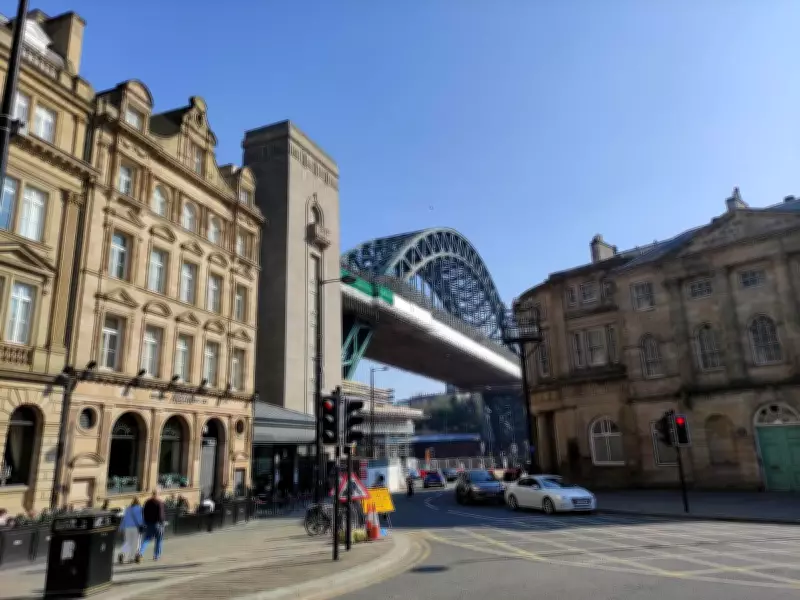
As the most northerly city in England, Newcastle-upon-Tyne is often among the chilliest, especially when the biting Arctic wind whips in off the nearby North Sea. But whatever the temperature, you can usually be assured of a warm welcome from the Geordies, as the residents of this city are nicknamed. Renowned for its buzzing pubs and high-energy nightlife — which typically sees revellers wearing as few layers as possible, even in winter, when it can be “baltic” (very cold) — Newcastle has many more strings to its bow. Here are three highlights.
The Tyne
Outside of London — 2½ hours by rail — few cities in England can match Newcastle for its splendid waterfront setting. Spanning the River Tyne here are seven bridges, the largest being the green arched Tyne Bridge erected by Dorman Long & Co, the contractors that built the Sydney Harbour Bridge. Completed in 1928, it’s one of five bridges you can walk across between central Newcastle and Gateshead, a town on the other side of the river with a pair of showstopping addresses: The Glasshouse International Centre for Music, a sleek concert hall designed by Sir Norman Foster; and the Baltic Centre for Contemporary Art, which occupies a converted flour mill.
Returning to Newcastle via the curving Gateshead Millennium Bridge (2001), you’ll find an assortment of places to eat, drink and sleep, and pleasing quayside walks and bike rides. Despite generally cooler temperatures, Newcastle tends to have drier, brighter weather than many English cities, so pack your sunnies and enjoy a beer on one of the terraces of the waterfront bars, or relax on one of the deckchairs that pop up between spring and autumn on the so-called Quayside Seaside.

You can glean other perspectives of the Tyne on kayaking tours and sightseeing cruises. Guides will reveal how this river helped power Newcastle’s development into a bustling industrial city, carrying coal from the local mines and transporting iron and steel to build ocean-going vessels at Tyneside’s shipyards. From central Newcastle, you can ride the Tyne & Wear Metro to some of England’s best surf beaches and seafood shacks. Try Tynemouth, a seaside resort where the river meets the North Sea, and where you’ll find the ruins of a medieval priory founded by Benedictine monks.
Grainger Town
From the Tyne riverfront, sloping streets and steep, breath-stealing staircases lead to Newcastle’s compact city centre, which is bursting with attractive buildings and landmarks — many funded with the fortunes generated during the industrial revolution. Strewn with retail, food and beverage purveyors, Grainger Town is the vibrant commercial core of Newcastle, fashioned in the late Georgian and early Victorian eras and characterised by its neoclassical sandstone architecture, which will impress as you stroll along thoroughfares like Grey Street and Grainger Street.
You can’t miss Grey’s Monument, a soaring 41m column that honours Earl Charles Grey, a local politician who was the UK’s prime minister in the 1830s (and has been credited with creating the eponymous brand of tea). Also causing a stir in that decade was Newcastle’s Theatre Royal, which is still an opulent stage for acclaimed dramas and musicals.
Grainger Market, meanwhile, has been a Newcastle fixture since 1835 and is sporting a recent $18 million refurbishment. It shelters more than 100 businesses, from classic English cafes and spicy Sri Lankan eateries to clothes and hardware stalls. Other sights and attractions can be found just beyond the boundaries of Grainger Town, including art galleries and museums showcasing Geordie ingenuity, and the 12th-century castle that gives this city its name. Visitors can enter this keep built by the Normans on the site of an ancient Roman fort above the Tyne.

Greenery
Although you may not realise it immediately, especially if you arrive on the train at Newcastle central station, there’s a lot of greenery in and around the city centre. The most hallowed piece of turf is the pitch at St James’ Park, the home of Newcastle United Football Club. They’re known as the Magpies, and are supported with gusto by their devoted fans, the “Toon Army”. If you’re here on a match day — the club competes in the English Premier League — see if you can get a ticket to take in the famous atmosphere at this 52,000-capacity arena, Newcastle’s home since 1892.
Behind-the-scenes stadium tours are available on non-match days. A soccer ball’s kick from this ground is Leazes Park, Newcastle’s first purpose-built park, adorned with a boating lake and tree-lined paths that change appearance with the seasons. A little further on, outdoor summer concerts are held in Exhibition Park, with Lewis Capaldi, Wolf Alice and Paul Weller due to appear in July. This park adjoins Town Moor, a 400ha parcel of common land that’s bigger than New York’s Central Park and London’s Hampstead Heath. It’s unusual to find somewhere so large and wild so close to a city centre, and walks by the grazing cattle of Town Moor will give you a flavour of the rugged beauty of Northumberland, the county that sprawls out from Newcastle and is packed with uplifting adventures.
Steve McKenna was a guest of Visit Britain and Visit Northumberland. They have not influenced this story, or read it before publication.
Fact file
- To help plan a trip to Newcastle and Gateshead, see newcastlegateshead.com
- Newcastle can be reached by train from major British cities like London, Manchester and Edinburgh. For rail times and tickets, see nationalrail.co.uk.
- For more information on visiting Northumberland and Britain, see visitnorthumberland.com and visitbritain.com.