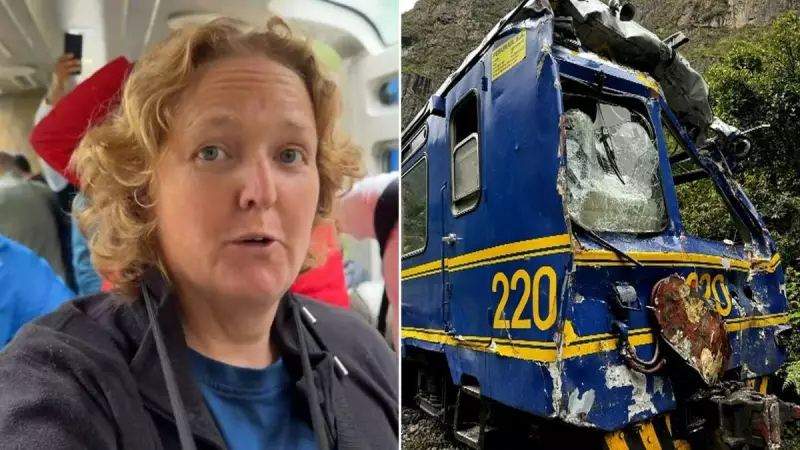
A tourist from Australia's Gold Coast has shared her harrowing experience of being caught in a devastating head-on train collision on the famous railway to the ancient Inca citadel of Machu Picchu in Peru.
Chaos and Shock After the Impact
Jo Needham was a passenger on one of the trains involved in the serious crash near the Qoriwayrachina archaeological site on December 30. The collision occurred between a service departing from Machu Picchu and another travelling towards the world-renowned destination, according to the operating companies.
In video footage captured on her phone moments after the impact, Needham described the scene of confusion. "We've just had a head on with another train. No one knows what's happening," she said. Recounting the terrifying moments to ABC News, she explained, "You heard both train whistles going, so really loud whistles, then I was kind've flung forward from my seat. My elbows and arm took a lot of the brunt."

Severe Casualties and Passenger Evacuation
The crash resulted in tragic consequences. The train driver was killed, and a total of 30 people were injured, with approximately 20 of those reported to be in a serious condition. While the injured included foreign tourists, the five Australians on board, including Needham, escaped physical harm.
Passengers were forced to evacuate along the tracks following the collision. Footage shows individuals walking with their luggage, one person with a bleeding nose, and another being carried away on a stretcher. Local media images revealed the damaged carriages with shattered windows and dented sides, lodged between dense forest and steep rock faces.
Investigation Underway as Services Resume
Authorities in Peru have launched an investigation to determine the cause of the accident. Police stated, "The process is ongoing and we will send specialized police to determine the circumstances and degrees of responsibility for this collision." In the immediate aftermath, services on the vital rail line connecting Machu Picchu with the city of Cuzco were suspended.
The trains were operated by Inca Rail SA and PeruRail SA, companies that primarily transport tourists to the iconic site. Machu Picchu attracts about 1.5 million visitors annually, with most reaching the nearby town of Aguas Calientes by train before visiting the UNESCO World Heritage sanctuary, built in the 15th century. Train services are now reported to be gradually returning to normal.