Europe's Travel Dilemma: Is Flying or Taking the Train Faster?
For many travelers, airports are a necessary evil—places where dreams of adventure begin but patience is tested. While plane spotters and duty-free shoppers might find joy in these hubs, most people see them as mere stepping stones to their destinations. In Europe, however, there's often a compelling alternative: the continent's extensive railway networks.
The Paris to Zurich Conundrum
Consider the journey from Paris to Zurich. On paper, flying seems the clear winner, with a flight time of just one hour and 15 minutes compared to a four-hour, four-minute train ride over 686 kilometers. But travel isn't that simple. When you factor in the time spent getting to the out-of-town airport, checking bags, navigating security, waiting for luggage, and traveling into the city center, the time difference shrinks dramatically.
Price-wise, booking in advance shows little disparity between the two modes of transport. So, which should you choose? For the Paris-Zurich route, the train offers distinct advantages beyond mere convenience.

Why the Train Wins on This Route
Opting for the train between Paris and Zurich reduces stress, lowers your carbon footprint, and eliminates worries about luggage restrictions and fees. Another perk is the journey itself, which begins and ends at two of Europe's iconic 19th-century railway stations: Paris Gare de Lyon and Zurich Hauptbahnhof.
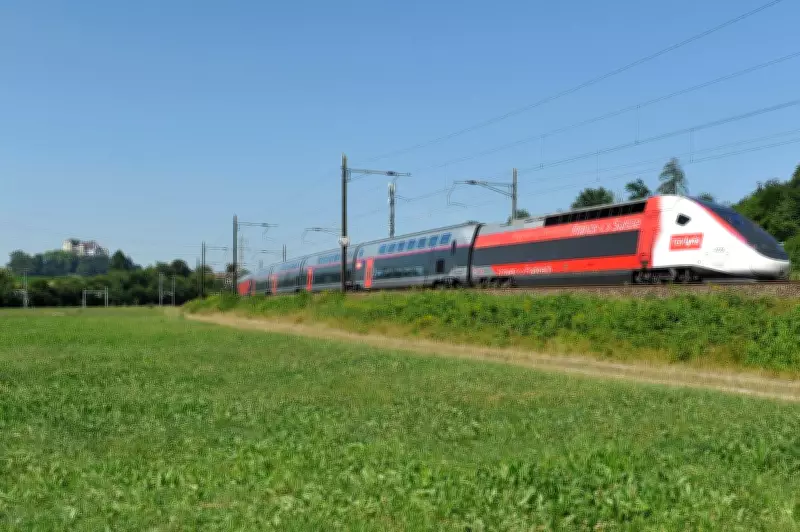
This route is served by TGV Lyria, a joint French-Swiss service that connects Paris with Swiss destinations like Lausanne and Geneva. With six daily departures, it's a reliable option for travelers.
Onboard the TGV Lyria Experience
Boarding the 10:22 departure to Zurich, passengers find double-decker carriages with seating options for couples and solo travelers. In Premiere class, armchair-style seats with head-neck rests and ample legroom provide comfort, while Standard class offers slightly less padding but remains cozy. The gap between classes here is narrower than that between business and economy on most long-haul flights.
Food and drink can be ordered to your seat, featuring Franco-Swiss produce and wines, or you can visit the bistro-cafe car for a coffee and snack like a croque monsieur. Free wi-fi allows access to an entertainment portal with films, TV shows, podcasts, and games.
Practical Tips and Scenic Views
Luggage storage can be tight on the lower level, so arriving early to secure space is wise. The journey progresses smoothly, with carriage screens displaying speed—often nearing 320 km/h—and upcoming station information.
Scenery shifts from Burgundy's vineyards and sunflower fields to small villages and cow-dotted pastures. After passing through Dijon and Mulhouse, the train enters Switzerland seamlessly, thanks to Schengen Zone agreements that avoid passport checks in Basel.
Between Basel and Zurich, the landscape becomes more picturesque, with stone churches and bucolic views. As the train approaches Zurich, it parallels the emerald River Limmat, arriving punctually at 14:26 at Zurich Hauptbahnhof.
Final Thoughts
Stepping off the train relaxed, you're just minutes from Zurich's tram-filled streets. This experience highlights how, in Europe, trains can rival flights not just in time and cost, but in overall travel satisfaction. Whether for sustainability, comfort, or avoiding airport hassles, the rail option deserves serious consideration for many intercity journeys.
Travel Details: One-way TGV Lyria fares from Paris to Zurich start at €49. For more on routes, visit tgv-lyria.com and sncf-connect.com. Globus offers a nine-day Best of Switzerland tour from Zurich, with prices from $6,740 per person.