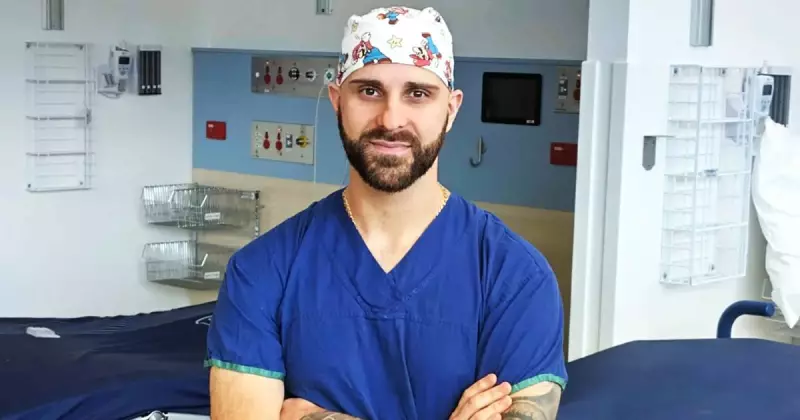
Behind the scenes at Canberra Hospital, a man with a bandana and tattooed arms pushes beds and trolleys, covering up to 24 kilometres in a single shift. Denis Milicevic might look like he belongs on a Harley-Davidson, but his true calling is steering patients through some of their most vulnerable moments.
The Humble Wardie with a Heart of Gold
Reporter Steve Evans returned to Canberra Hospital a year after suffering a major knee injury to thank staff and learn what drives them. He found Denis Milicevic, a key member of the roughly 200-strong team of wardspersons—affectionately known as ‘wardies’—who are the backbone of the hospital's daily operations.
Contrary to his rugged exterior, Milicevic is described as a "great big teddy bear" who uses astute psychology and humour to ease patient anxiety. His approach is vital during high-pressure situations, such as when an expectant mother needs an urgent spinal injection for a caesarean section.

"Hi, my name is Dennis," he introduces himself, holding the patient steady. "I'm sorry, I'm the ugly thing you have to stare at for the next 20 minutes." This simple, self-deprecating joke breaks the ice at a critically tense moment.
More Than Just a Porter: A Critical Role in Crisis
The term ‘wardsperson’ is deliberately used over ‘porter’ at Canberra Hospital, reflecting a role that goes far beyond transporting patients. In life-or-death emergencies, wardies are trained to step in and administer crucial resuscitation.
"If they've had an arrest or anything like that, we come in and we will go onto the sternum and we'll do our compressions so the doctors and the nurses can focus on whatever drugs they have to give," Milicevic explained.
He emphasises the importance of reading people. "Sometimes it's better to listen rather than just talk... Some people like to be quite reserved and some people are looking for a laugh. Laughter can be the best medicine." This philosophy was something Evans experienced firsthand when a wardie relaxed him before surgery by saying, "I'll be your taxi driver today."
The Man Behind the Tattoos and the 30,000 Steps
Milicevic’s ornate arm tattoo is a piece of personal history, depicting a battle with severe depression in his youth and his ultimate triumph over it. "It's actually meant to be a depiction of what my life was like as a teenager... and there's also a representation of beating it," he shared.
His physical endurance is remarkable. Using his phone to track steps, he walks between 23,000 and 26,000 steps during a typical 12-hour shift starting at 7:30am. On exceptionally busy days, he has hit 30,000 steps—which, with an 80-centimetre stride, equates to roughly 24 kilometres of walking, much of it while pushing patients.
He works four or five consecutive days followed by an equal number off, spending his free time with family and doing labouring work. This trade background helps him cope with the more confronting aspects of his hospital role in and around the operating theatre, from the sound of surgical saws to the dignified handling of amputated limbs and deceased patients.
For Milicevic, a strong Christian, the work is humbling. He finds profound meaning in the hospital's teamwork, especially during major trauma cases like car crash victims. "When there's that real sense of need, dire circumstance, we're all there for the one individual. We all come together in unison," he said, appreciating the quiet solidarity that defines his essential, yet often overlooked, profession.