WA Son Shares Mum's Voluntary Assisted Dying Journey on TikTok to Spark National Conversation
A West Australian man who shared his mother's story on TikTok says he hopes it will ignite a national conversation about voluntary assisted dying. This comes after he watched her battle cancer for years before she chose to go in her own peaceful way.
Lynette Sullivan's Long Battle with Cancer
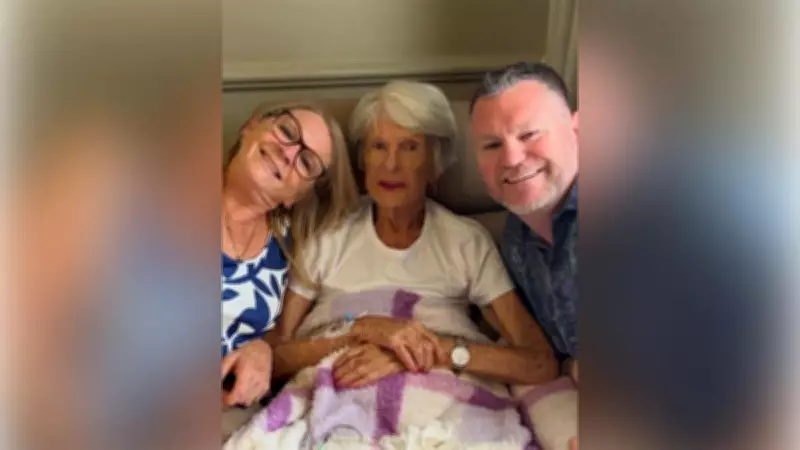
Jeffrey Eaton has opened up about the death of his 84-year-old mother Lynette Sullivan, who accessed voluntary assisted dying in WA earlier this week after a long and exhausting journey. "Mum had stage four lung cancer for five years — she'd been through the ringer," he told PerthNow.
Years earlier, Ms Sullivan had also battled breast cancer, undergoing a mastectomy before later being diagnosed with lung cancer. She endured radiotherapy, but Mr Eaton said the tumour "didn't shrink." At the start of 2025, the family was dealt another blow when Ms Sullivan was diagnosed with a brain tumour.

Declining Health and the Decision for Care
Described by her son as "fiercely independent," Ms Sullivan had lived in a granny flat behind her daughter's house in Bullsbrook. But as her health declined and falls became more frequent, Mr Eaton said that he knew a difficult decision was looming.
"My sister and I said to her it's time for you to go into care," he said. When she eventually moved into care in Ellenbrook, her condition continued to fluctuate. "Ups and downs like every elderly unwell person," Mr Eaton described.
By November, she was formally marked as palliative. Mr Eaton questioned why further treatment options were still being raised. "She's bloody terminal. She didn't need to go through more treatment," he said.
Exploring the Voluntary Assisted Dying Pathway
In late December, the family began exploring the voluntary assisted dying pathway. "I want to explore more of the VAD route," Ms Sullivan told her family. Together, they contacted the VAD care team's main phone number and began the formal process.
The service gathered Ms Sullivan's medical records to determine eligibility before assigning her a VAD practitioner — in her case, a GP signed her onto the program. The initial assessment process took about a week and a half. Two weeks later, a second doctor provided approval.
Last Thursday, the doctor returned for a second visit to finalise consent. "We asked the doctor, 'What's the process from here?'. She said, 'I will go to the coffee shop, I'll pop this into the system and book a time'," Mr Eaton recalled.
The Final Peaceful Moments
The days that followed were emotional, with Ms Sullivan deciding that this past Monday was her time to go. On the morning she chose to go to sleep, Mr Eaton said that she declined morphine — despite being on a two-hour schedule for pain relief in her final weeks. "Mum didn't once ask for her morphine," he said.
Instead, family and friends gathered together. There was an anaesthetic administered and a cannula inserted. The doctor gave Lynn a thumbs up — and Lynn gave him one back, signalling she was ready to go. "The look on her face was so peaceful," Mr Eaton said.
Call for Broader Conversation and Breaking Stigma
Mr Eaton said the bigger conversation needs to focus on aged-care facilities and communication with homes and families, as well as breaking down the stigma on voluntary assisted dying. "We watched this go through Parliament and now we're a product of the service," he said. "Quite often there's so many complaints — but we are a byproduct of how it does work."
Mr Eaton acknowledged that not everyone qualifies under WA's strict eligibility criteria, which require assessments by at least two doctors and confirmation of advanced, progressive and terminal illness causing intolerable suffering. Voluntary assisted dying is legal in WA and across all Australian States and the ACT, though each jurisdiction has its own requirements.

Normalising End-of-Life Discussions
For Mr Eaton, sharing his mum's story was about normalising the discussion and sharing their family's positive experience with VAD. "Have these conversations with your loved ones," he urged. After five years of cancer, multiple treatments and medications, he said his mum was ready.
"I have never met someone in my life who was so ready to move on from their life more so than mum," he said. Mr Eaton urged people with terminal illnesses, and in situations like his mum, to ask questions and have the conversations with their family.