A pioneering clinical trial set to begin in Western Australia is testing a novel nerve implant designed to revolutionise treatment for obstructive sleep apnoea. The University of Western Australia-led study will evaluate a device that stimulates key nerves to prevent airway collapse during sleep, offering a potential alternative to often poorly tolerated CPAP machines.
How the Innovative Implant Works
The device involves electrodes implanted onto two specific nerves located under the chin: the hypoglossal and ansa cervicalis nerves. Once activated by a remote control at bedtime, the implant triggers these nerves, causing a slight contraction in the tongue muscle. This action stiffens the muscles and stops the tongue from falling backwards and obstructing the throat, which is a primary cause of snoring and breathing interruptions.
Professor Jen Walsh, Director of UWA’s Centre for Sleep Science, explained the mechanism. "It controls predominantly the tongue muscle, causing it to contract slightly," she said. "That stops the tongue flopping backwards and pushing on all the other structures in the back of the throat." A key advantage of this new device is its minimally invasive insertion method, performed percutaneously through the skin rather than via a large open incision.

A Pressing Need for New Treatments
The trial addresses a critical health issue with widespread prevalence. Research from the WA Raine study in 2022 found 70 per cent of 1005 middle-aged West Australians had some form of sleep apnoea, with the condition deemed clinically significant in 34 per cent of cases. Untreated moderate to severe obstructive sleep apnoea (OSA) significantly increases the risk of high blood pressure, heart attack, stroke, diabetes, and depression.
While CPAP therapy is effective, many patients struggle with it. Dr. Walsh noted that compliance is a major issue, with many people wearing their masks for only a few hours a night or a few nights a week. Problems with mask fit, discomfort, and inconvenience while travelling are common complaints that lead people to abandon treatment.
Broader Breakthroughs in Sleep Apnoea Care
The UWA trial coincides with other encouraging Australian research. A separate Flinders University study tested an implant that stimulates only the hypoglossal nerve. That research, involving 14 sedated patients during a 90-minute insertion procedure, found 93 per cent of participants experienced "significant improvements" in breathing, with airflow increases comparable to traditional CPAP therapy.
Furthermore, the treatment landscape is expanding beyond devices. Dr. Walsh highlighted that recent research has identified three non-anatomical causes of OSA—ineffective muscle activity, a low arousal threshold, and the brain's responsiveness to carbon dioxide—which can potentially be treated with pharmaceuticals. The UWA sleep centre is also investigating tetrahydrocannabinol (THC) as a potential treatment.
In a significant move, Australia’s Therapeutic Goods Administration approved the weight loss drug Mounjaro in June 2025 to treat moderate to severe OSA in obese adults. Given that obesity is a major risk factor and affects about 80 per cent of sufferers, this offers a powerful medical tool. "These weight loss drugs are going to be huge for the sleep field," Dr. Walsh stated.
One Patient's Lifelong Struggle for Rest
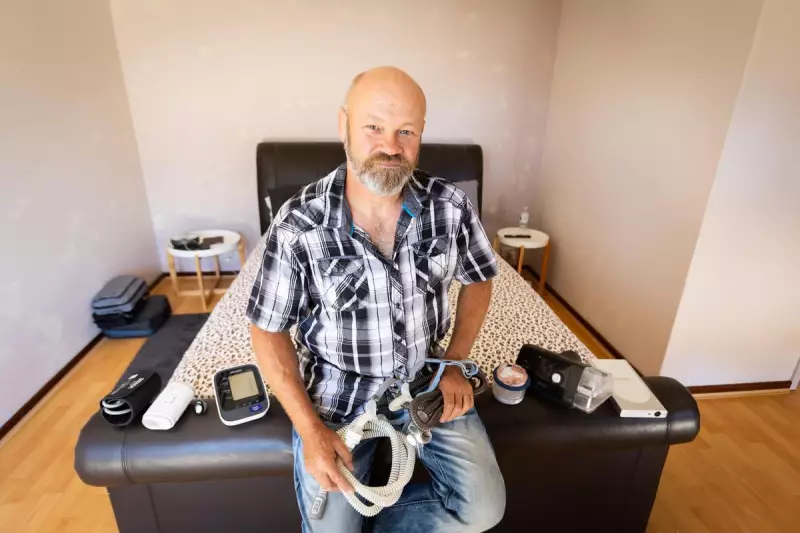
The human cost of the condition is starkly illustrated by the experience of 52-year-old Adrian Hawke, who has suffered from obstructive sleep apnoea since childhood. Misdiagnosed for years, he endured sleep paralysis, extreme daytime fatigue, and severe sleep deprivation that impacted every aspect of his life.
"It’s literally physically painful to be that tired and not be able to lie down," Mr. Hawke said. He described the toll on his work, social life, and family, noting, "Disrupted sleep is so exhausting. You get depressed and it’s like, ‘How am I going to even get through what I’ve got to do?’." Determined for relief, he has already participated in the THC trial and hopes to be a candidate for the new nerve implant study.

Professor Walsh expressed excitement about offering West Australians access to this cutting-edge therapy, which is not otherwise available in Australia. She emphasised the desperation of many patients for whom CPAP has repeatedly failed and who have exhausted surgical options. This trial represents a beacon of hope for those seeking a restful night's sleep and a better quality of life.