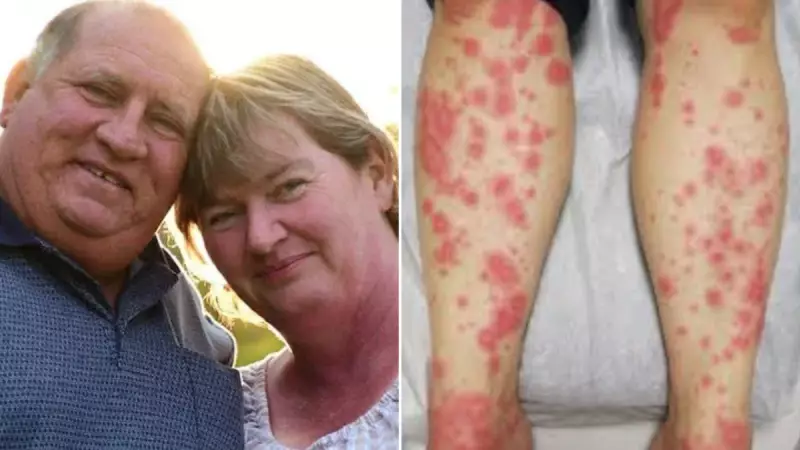
A New South Wales mother of ten children was rushed to a Sydney intensive care unit after suffering a catastrophic and rare reaction to a common antibiotic, an ordeal her family described as her body "burning from the inside out."
A Routine Treatment Turns to Crisis
Elizabeth Mohr, from the Riverina town of Narrandera, had been taking antibiotics for a dental infection when her health took a terrifying turn on December 1. She began experiencing severe pain and a spreading rash, symptoms that rapidly worsened over the next 72 hours.
Her daughter, Samantha, detailed the family's distressing experience on a GoFundMe page, explaining that Elizabeth presented to Narrandera Hospital three times as her condition deteriorated. Each time she was sent home with antihistamines and steroids, with one treating doctor reportedly calling her a "mystery patient."

"By December 4, the rash had become 'aggressive' and Elizabeth was still not responding to any treatment," Samantha wrote. "She was shivering and shaking with no fever."
The Race for Specialised Care
With the situation becoming critical, Elizabeth was transferred to Wagga Wagga Base Hospital before being airlifted overnight to specialists in Sydney. There, doctors confirmed the terrifying nature of her reaction: her body was overheating internally, causing damage akin to severe burns.
"Turns out the rash was burning her body from the inside out," Samantha revealed. Elizabeth was treated as a burns patient in the ICU for several days before being discharged home just ahead of Christmas.
Understanding a Rare but Dangerous Reaction
According to Professor Deshan Sebaratnam, a dermatologist at The Skin Hospital, such severe reactions are rare but not unknown. "Antibiotics can commonly cause mild rashes but they can also trigger life threatening rashes," he warned.
He identified two particularly dangerous conditions:
- DRESS (Drug Reaction with Eosinophilia and Systemic Symptoms): Where the immune system attacks the skin and internal organs.
- TEN (Toxic Epidermal Necrolysis): Where the immune system causes the skin to die and blister off.
"The drug triggers the immune system to cause inflammation in different organ systems. In some patients, all their skin dies and blisters off which can be life-threatening," Professor Sebaratnam explained.
He highlighted a significant challenge in rural healthcare, noting that dermatology is taught poorly in Australian medical schools and many hospitals, even in major cities, lack funded dermatologist positions. "This means that when patients present to hospital with a skin problem, there are no experts who can diagnose or treat them. The situation is even worse for Australians in rural areas," he said.
While the prevalence of such severe reactions varies by ethnicity—with people of East Asian heritage at higher risk—Professor Sebaratnam stressed the condition can affect anyone. He estimated that across Australia, only a few dozen people might develop TEN each year.
Critical Warning Signs to Watch For
Professor Sebaratnam urged anyone who develops a rash after starting a new medication to seek immediate medical advice, especially if symptoms worsen. He listed critical red flags that distinguish a mild reaction from a potentially severe one:
- Rashes that are painful, not just itchy.
- Facial swelling.
- Blisters or pus formation.
- Involvement of the eyes, mouth, or genitals.
- Rashes that look like bruises and do not blanch (get lighter) when pressed with a glass.
- Feeling generally unwell alongside the rash.
Elizabeth Mohr's harrowing experience serves as a stark reminder of the importance of recognising these warning signs and the critical need for specialised dermatological expertise across the Australian healthcare system, particularly in regional communities.