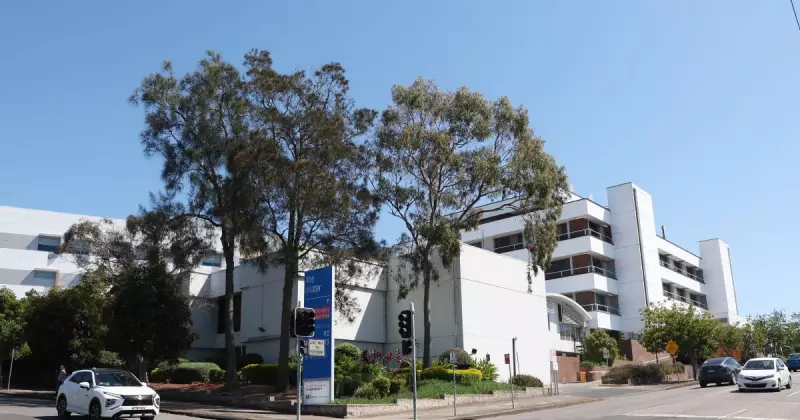
Maggots Fall on Patients as Mater Hospital's Maintenance Crisis Deepens
A second ward in as many weeks was forced to close at Waratah's Calvary Mater Hospital this week, after a shocking incident saw maggots fall from ceiling vents directly onto patients in the inpatient haematology ward. The event triggered a Code Yellow internal emergency declaration, underscoring a severe and ongoing maintenance crisis that has plagued the facility for close to a year.
A Year of Neglect and Systemic Failures
For nearly twelve months, the Newcastle Herald has been investigating the deteriorating state of the hospital's infrastructure, uncovering a litany of alarming issues. These include a deadly mould infestation within the cancer ward's air conditioning vents, which was kept secret from patients for six months by the maintenance contractor, leading to a class action lawsuit. Additional problems have involved persistent leaks so severe they forced the cancellation of critical chemotherapy treatments, alongside serious concerns that mouldy and corroded water tanks have rendered the drinking water unfit for consumption.
The maggot incident appears to have been the final straw for Calvary Health Care, the hospital's manager. The organisation has expressed frustration over being caught in a relentless blame game between the New South Wales government and Novacare, the private company responsible for the hospital's infrastructure under a public-private partnership arrangement.

Finger-Pointing and Hollow Apologies
In a strongly worded statement published in the Herald, Calvary Health Care CEO Damien Bruce accused both the state government and Novacare of ignoring repeated warnings about the deteriorating conditions. He emphasised that the "consequence of continued inaction is now undeniable", labelling the Mater's PPP as plagued by "ongoing systemic failures".
NSW Health Minister Ryan Park issued a public apology for the maggot incident, stating that "staff and patients deserve better". However, when pressed by the Newcastle Herald for further details following Calvary's criticism, Minister Park declined to address specific questions. He later commented that the government is "continuing to examine the contract carefully to see how we can more strongly compel these private operators to meet their obligations".
Public-Private Partnership Under Scrutiny
This response has raised significant concerns, given that the PPP contract has been in effect for fifteen years. It begs the question of whether the government has only now begun to properly scrutinise the agreement, or if the necessary enforcement mechanisms were never adequately established within the contract's framework.
Calls are growing to terminate the public-private partnership entirely, though current political will appears lacking. When questioned about ending the Mater's PPP, Minister Park noted, "We need to get these services back in public hands, it's not that easy, though... When government has these contracts with these operators, then we have to honour those contracts otherwise, the taxpayer is up for a very significant sum of money."
A Tale of Two Hospitals
This stance contrasts sharply with the government's recent actions regarding the Northern Beaches Hospital. Just four months ago, Minister Park announced the successful buyback of that facility, ending its PPP. He hailed the achievement, stating, "We have done in a matter of months what would have otherwise taken years - undoing one of the most complex privatisation arrangements in the state's history." NSW Treasurer Daniel Mookhey added that the deal ensured no windfall gains for private investors at the expense of taxpayers.
This discrepancy raises critical questions about the government's commitment to resolving the Mater crisis. Is the reluctance to act decisively in Waratah influenced by geographic bias, with Sydney-based hospitals receiving preferential treatment? The Minns government's rhetoric suggests that tearing up PPPs does not necessarily burden taxpayers, yet the Mater situation remains unresolved, leaving patients and staff in limbo amid hazardous conditions.