As Australian summers intensify, finding relief from the heat becomes a priority for many households. Author and gardening columnist Jackie French, writing from her Canberra home, has discovered that surprisingly simple adjustments can lead to a dramatic difference in indoor comfort. She notes that even small potted seedlings can literally cook in the shade on a scorching day, a stark reminder of the power of the summer sun.
Harnessing Nature's Shade: The Fast-Track Solution
One of the most effective long-term strategies for a cooler home is strategic planting. Deciduous trees and climbers are ideal because they provide dense shade during the hot months but allow warming sunlight through in winter after they lose their leaves. While trees like ornamental pears, flame trees, and magnolias are excellent for cooling the broader garden area, they can take five years or more to become truly effective.
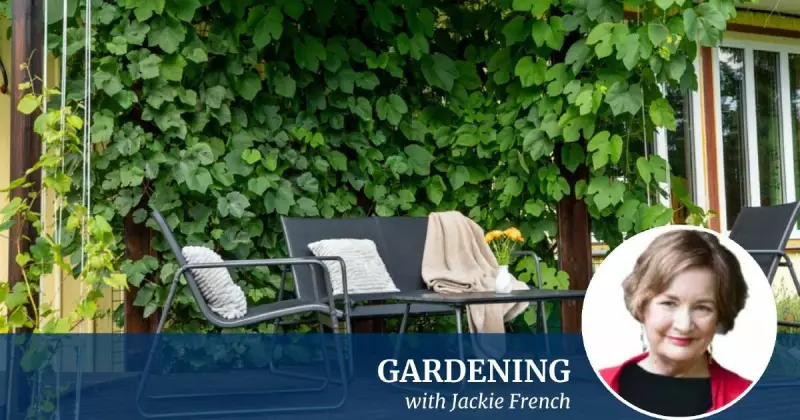
For faster results, French advocates for deciduous climbers grown on pergolas. Planting one vine per post can quickly create a living sunshade. Excellent choices include ornamental grapes for their stunning autumn colour, rambling roses for a floral arbour, and the fast-growing wisteria, which offers beautiful spring blooms. For the truly adventurous, kiwi fruit vines are hardy and productive, though they require one male plant for every six females and specific pruning.

For the fastest coverage, consider hop vines or perennial scarlet runner beans. Four well-fed hop plants can cover a garage-sized pergola in about two years, and their leaves conveniently shrivel and blow away in winter. Scarlet runner beans grow even faster, providing gorgeous red-orange flowers all summer and edible beans if picked young.
Instant Cooling Tricks and Evaporative Principles
Beyond planting, immediate actions can yield significant results. French found that simply pulling down blinds on the sun-facing side of her house led to a five-degree Celsius drop in temperature by midday. Conversely, opening windows and doors at night to let in cooler air is crucial, though its effectiveness depends on how much heat has been absorbed by the building's structure.
A clever and effective method involves using water evaporation. A pergola with tiles or gravel can become a heat sink, but installing drippers or microjets transforms it into a giant evaporative air-conditioner. As the water evaporates, it cools the air, the tiles, and subsequently the house. This technique works best with a breeze and in dry heat, not humid conditions.
This principle can be adapted even for apartment dwellers. Dangling hanging baskets outside windows with a small dripper system above them creates a micro-evaporative cooling effect as the water from the pots evaporates.
Additional Strategies for a Cooler Sanctuary
The range of cooling benefits varies based on shade depth, wind, and building materials, but some experiments show a reduction of 10 to 15 degrees Celsius or more. Other effective options include:
- Shade sails: Retractable ones above windows offer instant, adjustable shade.
- Reflective window film: This can significantly reduce heat gain, depending on the product.
- White roofs: Painting a roof white may provide up to ten degrees of cooling.
- Solar panels: Covering a roof with panels also lessens the heat reaching the interior.
- Bushfire-proof shutters: These are designed to block out intense heat.
French emphasises that the collective action of planting gardens cools not just individual homes but entire local areas. She encourages community campaigning for tree-lined streets. When building a pergola, she notes that in the ACT, structures without walls and under three metres high typically don't require permission, while in NSW, pergolas under 20 square metres and not attached to the house are often exempt.
A final word of caution: vigorous climbers like wisteria and kiwi need regular control. An untamed wisteria is powerful enough to lift roof tiles, a cooling method definitely not recommended.