In the heart of Penang, far from the tourist trails of George Town, lies the story of a unique coffee culture born from adaptation and community spirit. This is the tale of Nanyang coffee, a distinctly Malaysian Chinese brew with a rich history intertwined with the island's post-colonial identity.
The Birth of a Local Brew in Rifle Range
In the Padang Tembak area, also known as Rifle Range, charismatic local guide Teoh Shan Tatt, nicknamed Tiger, recounts the origins of Nanyang coffee. He explains that as Malaysian Chinese communities prospered, they sought to emulate Western trends, including coffee drinking. However, they found traditional English coffee too sour for their palates.
"The Chinese never liked the English coffee because it was too sour," says Tiger. "That's why they experimented to adjust the flavour to their liking, and that's how the Nanyang variety, which means South-East Asia, was born."

Drawing on their culinary tradition of stir-frying, early coffee makers began roasting beans in a wok, adding butter to create a smoother, richer flavour profile. Initially, they used robusta beans from Java, Indonesia, but later incorporated locally grown liberica beans from the southern Malaysian peninsula.
More Than Just a Drink: A Community's Story
The coffee experience is deeply connected to the history of the Rifle Range flats, an area often overlooked by tourists. Built rapidly between 1967 and 1969 using a novel French prefabricated system, the 17-storey Padang Tembak flats were once Malaysia's tallest building. They provided affordable housing after Penang lost its free port status and entered a recession.
Tiger, who runs tours with Penang Hidden Gems, pairs the coffee story with an exploration of this tight-knit community. "It still has a bad reputation because it was kind of a bad neighbourhood filled with gangsters, a bit like Hong Kong's Kowloon," he says with pride. "But, in fact, it was and still is a very tight-knit community where everything is in walking distance."
The area embodies a complete life cycle, with homes, markets, food courts, and even a cemetery nestled on the foothills nearby.
The Art of the Roast: A Hands-On Experience
The true essence of Nanyang coffee is revealed in the roasting process, a method that would surprise many Western baristas. In a 28-square-metre apartment within the flats, Tiger demonstrates the technique. He starts by warming a deep frying pan and pouring in half a kilo of beans.
The unorthodox method involves constant stirring in one direction while adding butter, sugar, and sometimes flaxseeds to enhance a nutty flavour. The butter melts into a dark sauce, evaporates, and binds to the beans like molasses. Once roasted, the beans are smashed with a hammer and ground into powder.
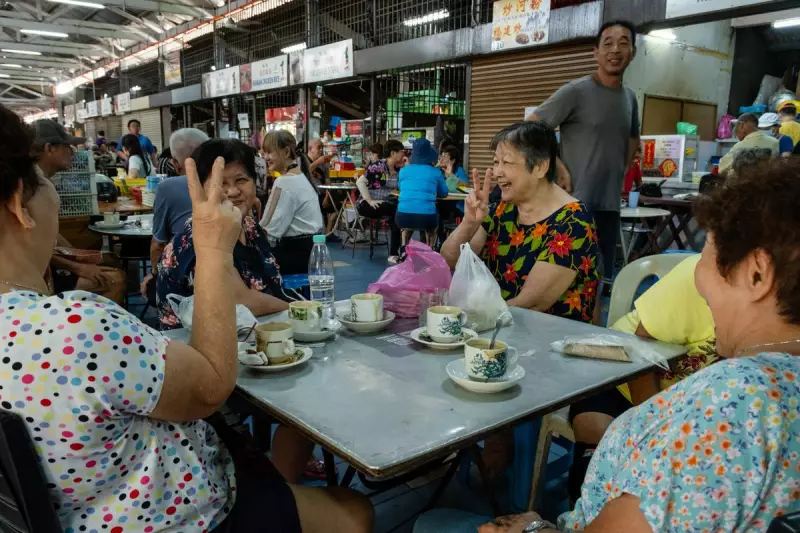
The final test is getting approval from the master: Tiger's father, Teoh Sing Kong, known as Ah Kwang. Hailing from a family of coffee makers in Perak, Ah Kwang has run the Kwang Coffee Stall since 1982. His rickety stall at the base of the Rifle Range flats is an institution. After sampling the apprentice's brew, he serves his special Deities Coffee—a unique mix of milk, coffee, and barley—as a prize for a job well done.
From its practical serving style—sometimes drunk from the saucer to cool it down—to its specific local terminology, like ordering an "aircond" (coffee cooled by a tray of ice around the cup), Nanyang coffee is a cultural artifact. It's a robust, velvety brew that tells a story of migration, adaptation, and community resilience in the heart of Penang.