Sharks Still Lurk in Newcastle's Popular Waterways, Historical Attacks Reveal
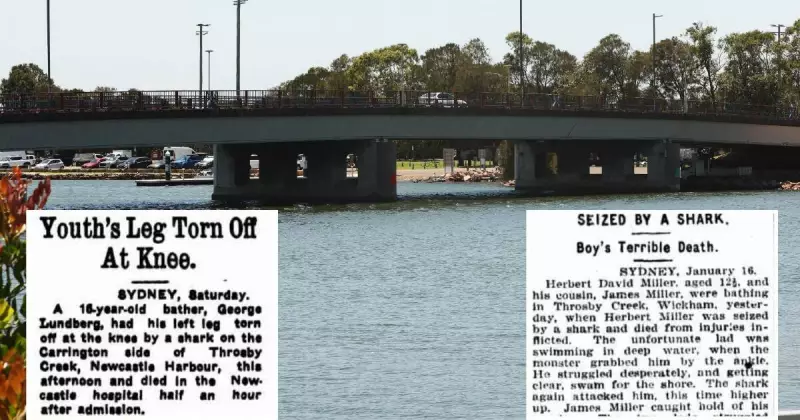
It has been nearly a century since the tragic death of George Lunberg, a 16-year-old who fell victim to a horrific shark attack at Carrington Bridge. The incident, which occurred on the morning of December 14, 1936, serves as a stark reminder of the dangers that once plagued Newcastle's picturesque waterways.
Lunberg was swimming on the harbour side of the bridge when what is believed to be a bull shark attacked, ripping his left leg off at the knee. Witness James Connor recounted the terrifying moment, stating, "We thought he was joking at first, but after a few moments I saw his face and was terrified." Connor added, "I didn't see the shark; all I could see was its tail, which swished out of the water after Lunberg cried out." Despite being rushed to hospital, the youth succumbed to his injuries soon after.
Historical Incidents and Changing Landscapes
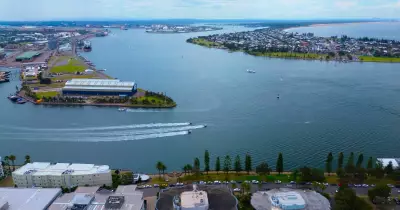
This was not an isolated event. In another grim account, twelve-year-old Herbert Miller died from severe leg injuries sustained during a shark attack at Wickham on January 15, 1920. These ghastly historical reports contrast sharply with the serene scenes of today, where the area is frequented by small sailing boats, paddleboarders, and recreational fishermen.

However, experts and locals caution that bull sharks continue to inhabit these waters, albeit in reduced numbers. Recent sightings have kept regular waterway users on alert, underscoring that the threat, while diminished, has not vanished entirely.
Recent Sightings and Local Insights
In May 2019, a shark estimated to be three metres long was reported between the Hannell and Cowper Street bridges. Mark Bretag, Secretary of the Newcastle Rowing Club, noted, "The last time one of our members saw one was about 12 months ago." He added, "We are always joking about not falling off your skis," highlighting the underlying awareness among water sports enthusiasts.
Long-time Throsby Creek resident Rick Banyard shared historical context, revealing that numerous dogs and even horses were taken by sharks in the creek during the first half of the last century. "Sharks were common; it wasn't unusual to see them in the creek as far as the Union St bridge at Tighes Hill," Mr Banyard recalled.
Expert Analysis on Shark Behavior
Shark researcher Nicolas Lubitz, who has studied bull sharks in river systems from Cairns to Sydney, explained that these predators are primarily driven by food. Dr Lubitz, who completed a PhD on movement drivers in sharks and rays at James Cook University, stated, "They don't really care if there are boats around. It's really just about what's in it for them."
He emphasised that bull sharks are often attracted by food scraps from fishermen cleaning their catch, leading them to linger in populated areas. Notably, juvenile bull sharks can swim in ankle-deep water, and adults have been found in less than two metres of depth. "I have seen them on a live scope on a boat when they have been swimming around people jumping off a bridge. They couldn't care less," Dr Lubitz said, adding that human interactions typically occur only when conditions are right and food is present.
Contrasting Perspectives on Current Risks
While the risk of shark encounters remains a concern for events like the annual Australia Day harbour swim, commercial fisherman Peter Robinson offered a different view. He reported not seeing any sharks in the area for years, attributing their disappearance to harbour deepening activities. "Before they deepened the harbour they were everywhere. You would see a fin sticking out of water on any day of the week, but they disappeared when blasting began and didn't come back," Mr Robinson explained.
This divergence in observations highlights the complex and evolving nature of shark presence in Newcastle's waterways. As the community balances historical warnings with modern experiences, vigilance and awareness are key for those enjoying the city's popular aquatic spaces.