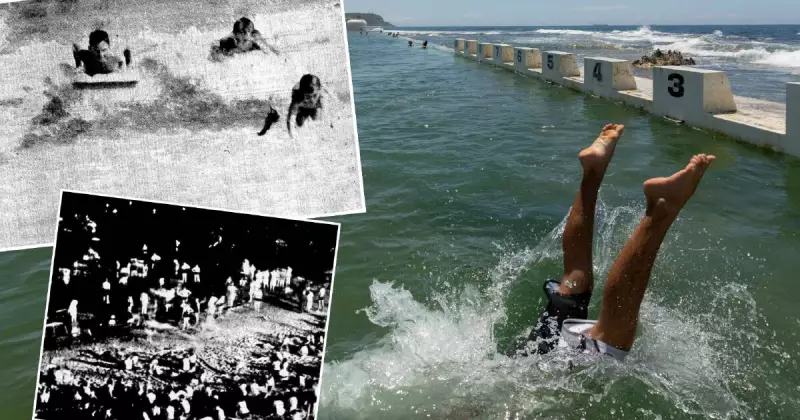
As forecasters warn of a severe heatwave building over mainland Australia, residents of the Hunter region are being urged to prepare for sweltering conditions. This impending blast of heat invites a sobering look back at a legendary and deadly event that scorched the same landscape generations ago: the infamous six-day heatwave of January 1939.
A Furnace Descends on the Hunter
Long before the term 'climate crisis' entered common parlance, the Hunter Valley endured a natural disaster of blistering intensity. For six relentless days, from January 11 to January 16, 1939, temperatures across the region soared into the high 40s Celsius.
The coal-mining towns were among the first to feel the extreme heat. On January 11, thermometers in the coalfields registered readings between 45.8 and 47.9 degrees. But the peak of the catastrophe arrived on January 14. In Singleton, the mercury reportedly climbed to a staggering 49.4 degrees Celsius. The human cost was immediate and devastating, with local reports confirming five people lost their lives in Singleton on that single, horrific day.

The Tragic Toll and Unbearable Conditions
Contemporary reporting from The Newcastle Herald and Miners' Advocate painted a grim picture of widespread suffering. The newspaper noted the difficulty in accurately counting the dead, but stated plainly that reports from towns across the Hunter indicated many elderly people had failed to withstand the oppressive heat.
This human tragedy is starkly reflected in the burial records of Sandgate Cemetery. Historian Terry St George examined the data, revealing a shocking anomaly. "Our records from 1880 to 2012 show January has always been one of the quietest months of the years, except for 1939," Mr St George said. The records show seven burials on January 15 and nine on January 16, 1939, directly following the heatwave's peak.
For those who survived, daily life became a battle. The Herald described working conditions as "utterly beyond human endurance." Outdoor labourers were forced to radically adjust their schedules, beginning work at 4am and finishing by 11am to avoid the worst of the sun's fury.
The heatwave's impact extended far beyond human hardship. The region's agriculture and livestock were decimated. The Herald reported that thousands of poultry birds perished. One farmer, Mr H. Holmes of Henholme farm, returned from a holiday to discover his flock had been reduced by 100 birds.
Echoes of History in Modern Forecasts
The memory of 1939 feels particularly poignant as the Bureau of Meteorology issues warnings for a new severe to extreme heatwave. Senior meteorologist Dean Narramore said this event would be the first major burst of heat for south-eastern Australia this summer, notable for its duration.
"You normally get that one hot day ... then it gets cool again. With this event, we're looking at three days in a row - in some areas, possibly four days in a row - of daytime temperatures in the mid to high 40s, but even minimum temperatures in the mid-20s," Mr Narramore explained. He attributed the prolonged event to a large high-pressure system in the Tasman Sea creating a kind of atmospheric 'traffic jam'.
Forecasts for the Hunter region predict temperatures ranging from the high 30s near the coast to the mid-40s in the valley, a stark reminder of the enduring potential for extreme weather in the region. As communities brace and take precautions, the legacy of 1939 serves as a powerful testament to the profound and deadly impact a sustained heatwave can have on a population and its way of life.