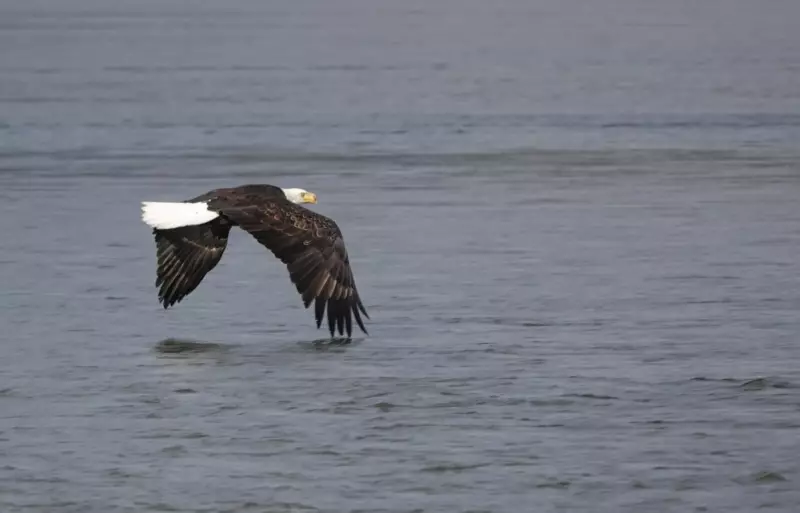
Every year, a breathtaking natural phenomenon unfolds along a short stretch of river in southern British Columbia. Between October and February, the skies fill with the iconic white heads and broad wings of bald eagles, arriving by the tens of thousands for an annual feast. This is the largest gathering of these revered raptors in all of North America.
The Harrison River Hotspot
About ten kilometres down the Harrison River, the landscape opens up. Here, at a place locally known as Bald Eagle Flats, the Chehalis River merges with the Harrison. It carries gravel from the Coast Mountains, creating perfect spawning channels for salmon. "This is the hotspot," confirms Molly Nootebos, a guide with Harrison Eco Tours.
From the water, the spectacle is staggering. Dozens of eagles line the gravel bars, pecking at the carcasses of spawned-out salmon and fiercely defending their meals from seagulls. In the bare branches of a single tree, more than a dozen eagles perch, sunning themselves—a sight Molly jokingly calls "the eagle Airbnb." The river, though only 18km long, is a vital tributary of the mighty Fraser and a salmon stronghold where all five Pacific salmon species come to spawn.

An Ecosystem Feast and a Conservation Comeback
The migration is driven by necessity. As lakes and rivers in Alaska and northern BC freeze, the eagles can no longer fish. They travel south, with the open waters of the Fraser River system being their first major stop. "In 4km of land, you'll get 10,000 to 15,000 eagles feeding at a time sometimes," says local biologist and eagle expert David Hancock. He compares the awe-inspiring scene to the great wildebeest migrations of the African plains.
The bounty of dead salmon, each fish averaging eight to ten pounds, fuels the entire ecosystem, nourishing insects, waterfowl, and more. It even attracts North America's largest freshwater fish, the white sturgeon, which can grow to 3.5 metres long. The scent of salmon draws them into the channels, where they use their tails to stir up gravel and feed on the eggs.
This abundance is a stark contrast to the past. David Hancock recalls a time in the 1950s when he could find only three breeding pairs of bald eagles in the entire Fraser Valley. Across the border in Washington, fishermen were shooting them for a bounty, believing the birds threatened their salmon catch. Hancock's shocking discovery of buckets filled with eagle legs ignited his lifelong passion for conservation.
Planning Your Eagle Encounter
Today, thanks to dedicated conservation efforts, the Fraser Valley is home to about 700 breeding pairs. Their numbers are swelled every autumn by the thousands of northern migrants, creating an undeniable eagle extravaganza. For 25 years, the region celebrated with the Fraser Valley Bald Eagle Festival. Now, Tourism Harrison promotes the months from October to January as the "Season of the Wild."
Visitors can experience this wonder up close with operators like Harrison Eco Tours, which runs boat tours on the Harrison River three times daily from mid-October to mid-February. The journey offers more than just eagles; Molly shares stories of even witnessing a cougar chasing a deer across the river. The village of Harrison Hot Springs, roughly a two-hour drive east of Vancouver, serves as a perfect base for exploration, offering a memorable escape into the heart of one of Canada's greatest wildlife displays.