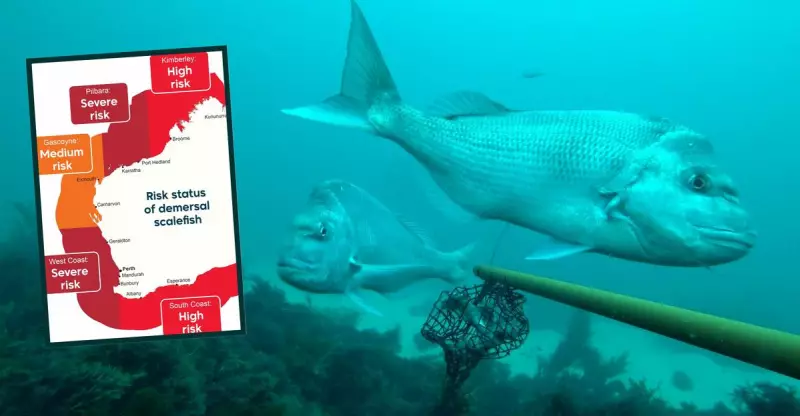
The Western Australian government has announced sweeping, long-term fishing restrictions for prized demersal scalefish species along the state's west coast, marking a critical move to recover severely depleted stocks.
Permanent Commercial Closure and Extended Recreational Ban
In a decisive action, Fisheries Minister Don Punch declared a permanent ban on all commercial fishing for demersal species within the West Coast Bioregion. This region stretches from the Zuytdorp Cliffs, north of Kalbarri, all the way down to the South Australian border.
Concurrently, the existing seasonal recreational fishing closure, which typically runs from mid-October to mid-December, will be dramatically extended. Recreational anglers will now be prohibited from catching demersal fish in the bioregion until at least spring 2027. This measure will be reviewed in 2026 to assess stock recovery progress.

The decision follows the latest scientific stock assessment, which painted a grim picture. The data indicated that key species like pink snapper (squirefish) and dhufish remain severely depleted, with the overall biomass estimated to be at just 17% of pre-fishing levels. This is well below the 40% target considered sustainable for a healthy population.
Why Such Drastic Measures Are Needed
The government's move underscores the critical state of these slow-growing, late-maturing fish. Demersal species are highly susceptible to overfishing due to their life history. They inhabit reef systems and are a prized catch for both commercial operators and recreational fishers, leading to sustained pressure over decades.
"This is a difficult but necessary decision to ensure the long-term sustainability of these iconic WA fish species for future generations," Minister Punch stated. The previous seasonal closures and bag limit reductions, while helpful, have proven insufficient to drive a meaningful recovery. The extended and permanent bans aim to provide the breathing space needed for stocks to rebuild significantly.
Impacts and Future Outlook for Fishing Community
The announcement has significant implications. For the commercial sector, the permanent closure represents the end of an era for a specific fishery within the bioregion. The government has indicated it will work with affected commercial licence holders on future options.
For the large recreational fishing community, the extended closure means a major shift in fishing activities for the next three years. Anglers are encouraged to target alternative pelagic and nearshore species. The government will support this transition through initiatives promoting other fishing opportunities and experiences.
The recovery plan hinges on this period of minimal catch. If the 2026 review shows stocks are on a strong recovery trajectory, the recreational ban could be lifted as planned in spring 2027, potentially with revised, sustainable rules in place. If not, the closure may be extended further. The ultimate goal is to restore a healthy, fishable population that can support limited recreational catch in the future without jeopardising its survival.
This landmark decision places Western Australia at the forefront of conservative fisheries management in Australia, prioritising long-term ecological health over short-term catch. The success of this strategy will be closely watched by scientists, conservationists, and fishing communities alike.