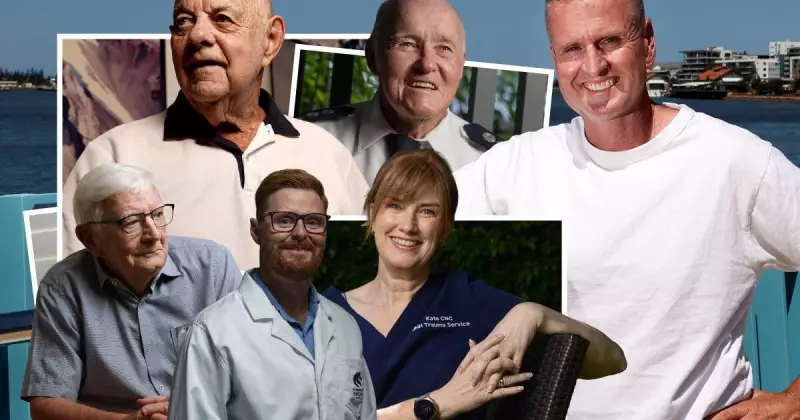
The Hunter region has proudly recognised its outstanding citizens in the 2026 Australia Day honours, celebrating individuals who have made significant contributions across diverse fields including medical research, community service, and emergency response.
Mark Hughes: From Rugby League to Brain Cancer Research
Former Newcastle Knights premiership player Mark Hughes has been awarded an Order of Australia Medal for his exceptional service to the community through charitable initiatives. Hughes, diagnosed with brain cancer in 2013, co-founded the Mark Hughes Foundation with his wife Kirralee in 2014, which has raised over $35 million for research.
"Firstly, my wife, Kirralee, it's her award as much as mine. The strength and drive she's shown on this journey has been amazing," Hughes said, emphasising the teamwork behind his recognition. The foundation established the Mark Hughes Foundation Centre for Brain Cancer Research at the University of Newcastle, employing 24 researchers and collaborating with 100 more nationwide.

Hughes highlighted the foundation's latest achievement: "We are about to install an MRI machine in the HMRI that we believe is the best of its kind in Australia." He remains dedicated to accelerating research, working as a volunteer to ensure funds are directed effectively.
Dr John Manning: Mapping Antarctica's Frozen Frontier
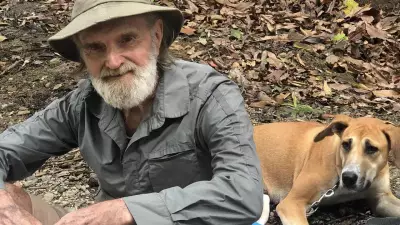
Cooks Hill resident Dr John Manning, 88, received an Order of Australia for his pioneering work in mapping Antarctica. From 1967 to the 1990s, he spent 11 summers and one winter conducting fieldwork, helping claim Australian territory on the frozen continent.
"I mapped a 5000-kilometre area from Davis Station to Mawson Station to a Russian Station," Dr Manning recalled. His legacy includes Manning Island, Manning Lagoon, Manning Glacier, and Manning Massif, all named in his honour. He faced perilous conditions, once losing consciousness at 25,000 feet due to frozen oxygen during an aerial photography mission.
Dr Manning also contributed to mapping Australia's centre and advancing geodesy, the study of Earth's shape. "People think the Earth is a round ball, but it's not. It's lumpy," he explained, detailing his role in developing satellite-based GPS systems.
Professor Matthew Dun: Turning Personal Tragedy into Hope
Professor Matthew Dun was awarded an OAM for his service to haematology and oncology research, driven by the diagnosis of his daughter Josephine with diffuse intrinsic pontine glioma in 2018. With no existing treatments, he redirected his research at the University of Newcastle and HMRI to focus on DIPG.
"Josephine's diagnosis compelled me to do all that I could," Professor Dun said. His team has discovered two drugs for DIPG, one with FDA approval. He co-founded the charity RUN DIPG to support affected families and is optimistic about future breakthroughs: "I'm confident that within the next five years, we will have long-term survivors."
Bob O'Toole: Advocating for Survivors of Childhood Abuse
Bob O'Toole received an OAM for his service to the community through support for survivors of childhood abuse. A key advocate for the Royal Commission into Institutional Responses to Child Sexual Abuse, he co-founded the Clergy Abused Network to provide independent support.
"People tend to say 'it's all in the past'. Well, it's not in the past for the person that's been abused," Mr O'Toole emphasised. He also established a victim suicide and death register to honour those who did not survive, stating, "Part of my mission was to give a voice to those that didn't have one."
Kate King: A Lifetime Dedicated to Trauma Nursing
Trauma clinical nurse consultant Kate King was awarded an OAM for her service to nursing, inspired by her own childhood experience after being hit by a car at age 12. "They were just lovely, kind, funny and seemed to have this endless supply of red frogs," she recalled of the nurses who cared for her.
Specialising in trauma for 20 years at John Hunter Hospital, Ms King also volunteers with Hunter Heart Safe, teaching CPR and defibrillation. "It reminds me of what a profound privilege it is to care for people in one of the worst moments of their lives," she said.

Graeme O'Brien: Five Decades of Fire Service
Graeme O'Brien received the Australian Fire Service Medal for distinguished service with the NSW Rural Fire Service, which he joined in 1970. Initially recruited by his father-in-law in Singleton, he served as captain for 18 years and focused on training and community education.
"When people are sent out to fires, you want them to put the fire out, but also to come back safely," Mr O'Brien said, highlighting the importance of safety standards. He continues to mentor younger firefighters, embodying the community spirit he values.
Additional Honourees from the Hunter Region
Other recipients include Lee-Anne Watts, recognised for service to local government and the Scone community; Bruce Townsend, honoured for contributions to Raymond Terrace; Dr Gordon Robert Campbell, for obstetrics and gynaecology; Gavin Fry, for arts leadership; Neville John Holz, for horse sports and community service; Edgar Jackson, for aged welfare in Cessnock; and Jill Stuart, for community health in the Hunter Valley.
These individuals exemplify the dedication and resilience that define the Hunter region, making significant impacts in their respective fields and inspiring future generations.