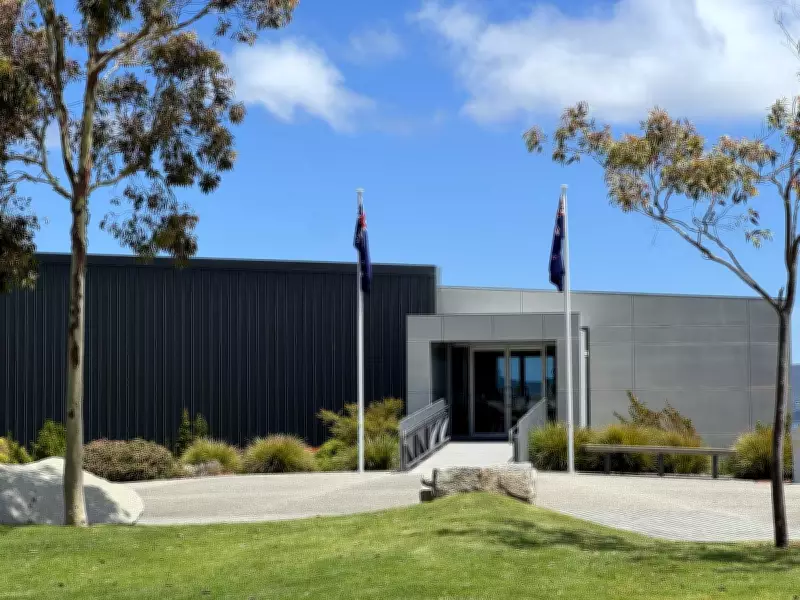
As I look out over King George Sound from this high spot on Mt Clarence, a remembered black-and-white photograph of World War I fleets superimposes itself over the steel-blue water. For this was the final departure point for Australian and New Zealand troops heading to fight in late 1914. This was their last view of Australia. For many, this would be their last view of Australia, ever. And I can see the ghosts of the ships out there.
I am standing next to the National Anzac Centre, looking towards the Southern Ocean, where the first and second convoys to WWI converged, carrying 41,265 Australians and New Zealanders. The sound was peppered with ships. Sixty-seven transport ships sailed across two sailings. The first convoy, of 48 ships carrying about 30,000 troops and 11,700 horses, sailed on November 1, 1914. The second, of 19 ships carrying more than 12,000 men and 5,000 horses, left several weeks later, on December 31. Many troops would train in Egypt before fighting on the battlefields of Gallipoli and the Western Front.
Personal Stories Brought to Life
In the National Anzac Centre, this is brought back to the human level. I pay my $25 and I am handed a card and an audio set. The card has a picture and the name of “my person”. A private, he becomes sick, is wounded, survives the war, and then drowns in an accident back home in Australia quite soon afterwards. Following an individual brings home the human story of war. Through documents and photographs, we see the personal challenges and hardships, triumphs and heartbreaks.

There are 32 characters from World War I to follow through recruitment, training and embarkation on the ships which sailed to war. With them, we come to terms with shipboard life on the convoys, and then face the action in Gallipoli, the Middle East and on the Western Front. And, for those who return, there is the postwar life to reckon with.
Albany's Older Military History
But Albany has an older military story than even that. For the National Anzac Centre is in the grounds of the heritage-listed Princess Royal Fortress. This is one of only two pre-Federation fortresses built to protect intercontinental trade routes. Albany had been founded in 1826 as a British military outpost, established to stop the French from colonising this corner of Australia. It controlled the strategically important King George Sound and Princess Royal Harbour.
In 1899, Albany was a key gathering point for Australian troops heading to the South African Conflict (the Second Boer War). The first contingent sailed on the SS Medic in November, followed by other transport ships which were large ocean liners, repurposed, carrying thousands of Australian soldiers to support the British fighting the Boers. There are more hints of Albany’s military past in the old gaol museum, with its slouch hat and the medals of Major Eric Samuel Everett MC. In World War I he was awarded the Military Cross, British Medal and Victory Medal. And then he fought again. In World War II, he was awarded the British Service Medal and Australian Service Medal. Just imagine living through all that.
Memorials and Reflections
Back up on Mt Clarence, I stroll around the heritage buildings of the fortress, and consider the Naval Discovery Trail and the Convoy Walk, but just feel I need to be high up on Mt Clarence — in the breeze, letting all this blow off me. And so I stride up the steps to the Desert Corps Memorial. This commemorates all Australian and New Zealand units and formations that served in Egypt, Palestine and Syria from 1916 to 1918. The epic statue itself is also more commonly known as the Light Horse Memorial — reflecting the actions of the Australian Light Horse Brigade, New Zealand Mounted Rifles, Imperial Camel Corps and Australian Flying Corps.
It shows a mounted Australian light horseman defending a New Zealand mounted rifleman who is standing beside his wounded horse. It is said to be based on an incident in the charge at El Arish in 1917, and is a copy of one originally standing in Port Said, which was attacked during the Suez war of 1956. It was salvaged, remade and erected in Albany in 1964 by then prime minister Sir Robert Menzies. That is a lot of history for one small town.
Walking back down the hill, I am following a chap wearing a T-shirt which reads: “Albany, home of the Anzacs”. It is undoubtedly right.