Perth's Ambitious Blueprint for a Car-Lite City Center
Perth stands on the brink of a dramatic urban metamorphosis, with comprehensive plans unveiled to fundamentally reshape the city center into a pedestrian-first environment. The visionary proposal seeks to dramatically reduce automobile dependency while introducing innovative transport solutions including a potential light rail network and a cable car connection to Kings Park.
Radical Transport Overhaul and Pedestrian Priority
The comprehensive strategy outlines a fundamental shift in how people move through Perth's central business district. Key elements include implementing 30km/h speed limits throughout the CBD core to enhance pedestrian safety and creating dedicated multi-modal corridors along St Georges Terrace and Wellington Street that prioritize walking and cycling infrastructure.
Most significantly, the plan resurrects the concept of light rail for Perth, despite previous government reservations about costs. The proposed "Tram Boulevards" represent the most substantial investment but are considered essential to unlocking the broader transformation. Professor Peter Newman, a leading design and built environment expert, emphasized that "the tramway systems are going to unlock most of the rest of the development."

Reimagined Public Spaces and Connectivity
Beyond transportation, the blueprint envisions completely redefined public spaces and connectivity throughout the city. William Street would undergo a dramatic transformation from a traffic-dominated corridor into a "Green Spine" with reduced vehicle lanes to accommodate expanded pedestrian and cycling facilities. This redesign becomes particularly crucial as the new ECU campus at Yagan Square is expected to bring thousands of additional students to the area.
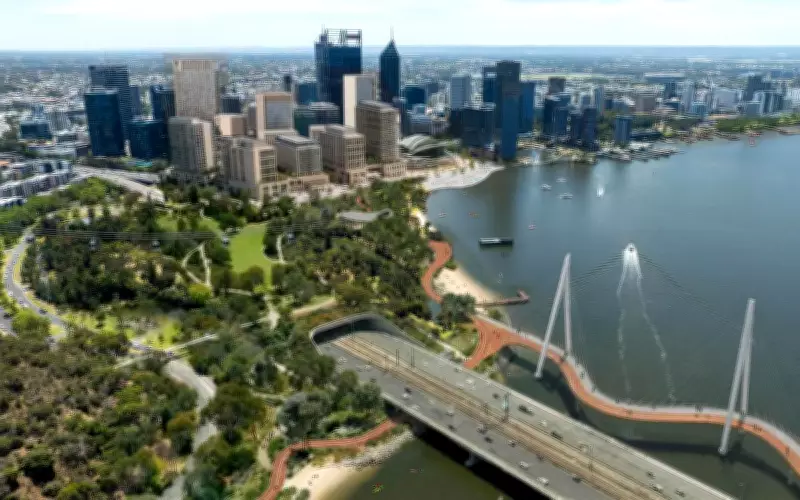
The plan also proposes a new "People's Walk" guiding pedestrians from an upgraded Perth Station through redeveloped areas down to Elizabeth Quay. Barrack Street would be reinforced as a "Cultural Spine" preserving views of the Bell Tower while strengthening connections to major arts institutions.
Shopping Precinct Redefinition and Residential Development
The city's retail landscape would receive targeted redevelopment with specific roles assigned to the two main shopping areas. Murray Street Mall would solidify its position as the premier retail destination for high-end stores, while Hay Street Mall would evolve into a vibrant entertainment hub focused on hospitality, food, beverage offerings, and independent businesses.
Simultaneously, the plan advocates for creating "inner-city suburbia" through supporting new residential neighborhoods in King, Pier, Irwin, and Queen Streets. This residential expansion would be accompanied by timely delivery of essential community services including kindergartens, schools, and health facilities to support growing urban populations.
Riverside Expansion and Recreational Enhancement
Beyond the immediate city center, the proposal includes the innovative "Buneenboro Loop" extending the riverside recreational experience from Elizabeth Quay toward Crawley and the University of Western Australia. This continuous circuit would better connect the city with the Swan River while expanding public access to natural spaces, potentially including currently underutilized areas like the fenced-off Government House Gardens.
Political Hurdles and Funding Challenges
The ambitious vision faces significant political and financial obstacles. Transport Minister Rita Saffioti has previously expressed strong reservations about light rail costs, noting in October that "the cost of those projects is very, very high" while praising the existing CAT service and bus network efficiency. Professor Newman suggests overcoming these challenges through innovative funding models involving developer partnerships, proposing that "land value created by the stations could fund the tracks."
The cable car connection to Kings Park represents another revived concept, originally proposed in 1972 but never implemented. This aerial transport link would provide both practical connectivity and tourist appeal while reducing vehicular traffic to the popular parkland.

Global Inspiration and Local Leadership
Developed by Danish urban design company Gehl, the document draws inspiration from global cities including Paris, London, Berlin, and Copenhagen while incorporating best practices from Australian examples like Sydney's George Street tramway. The ten-year timeline aims to prepare Perth for an expected population increase of 55,000 residents by 2036.
Lord Mayor Bruce Reynolds expressed strong optimism about the proposal, describing it as "bigger than a planning document" and "a lighthouse in the distance moment for the city." He emphasized that "every successful city has a clear direction" and that with this shared vision, Perth can "attract investment, talent, residents and global interest" to become "a global destination."
City councillors will vote on Tuesday whether to adopt the comprehensive plan as official policy, potentially setting Perth on course for its most significant urban transformation in decades. The proposal represents a bold attempt to balance growth with sustainability while creating a more livable, connected, and attractive city center for residents and visitors alike.