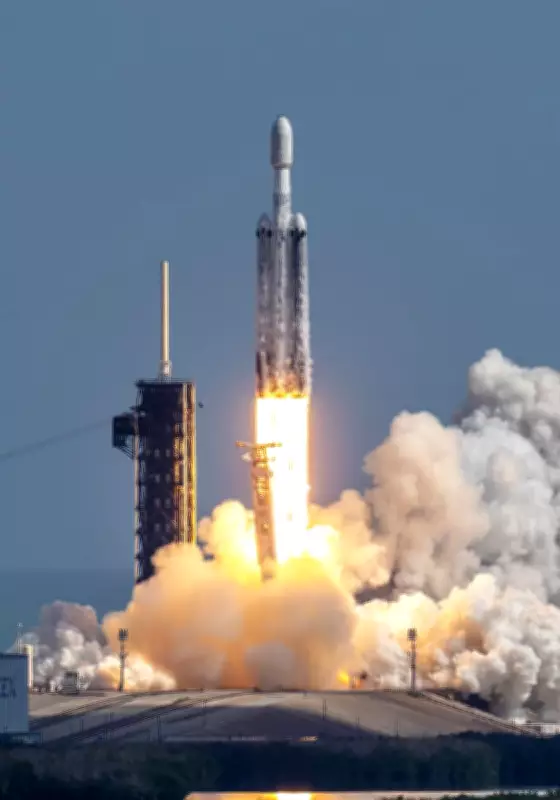
The West Australian can reveal that the new ViaSat-3 F3 satellite is set to revolutionise internet access across regional Australia. Launched on Friday, 1 May 2026, this state-of-the-art satellite promises to deliver high-speed, reliable connectivity to some of the most remote areas of the country.
Bridging the Digital Divide
Regional and rural communities have long struggled with inadequate internet infrastructure, hampering everything from education to business. The ViaSat-3 F3 satellite aims to change that by providing speeds comparable to urban fibre-optic networks. This will enable residents in the outback to access telehealth services, online learning platforms, and digital commerce with ease.
How It Works
The satellite operates in geostationary orbit, using advanced beamforming technology to direct signals precisely to user terminals. With a capacity of over 1 terabit per second, it can support thousands of simultaneous users without degradation. The system is designed to be resilient against weather interference, a common issue in Australia's harsh climate.

According to telecommunications experts, the deployment of ViaSat-3 F3 represents a significant leap forward. "This is not just an incremental improvement; it's a game-changer for regional Australia," said Dr. Emily Carter, a satellite communications analyst. "The potential for economic growth and social inclusion is immense."
Economic and Social Impact
Improved internet connectivity is expected to boost local economies by enabling small businesses to reach global markets and attract remote workers. Education will also benefit, with students gaining access to virtual classrooms and resources previously unavailable. Health services can expand telemedicine, reducing the need for long-distance travel to see specialists.
Challenges and Considerations
While the satellite promises great benefits, there are challenges. The cost of user terminals and monthly plans may be prohibitive for some households. However, the Australian government has announced subsidies to ensure affordability. Additionally, environmental concerns about space debris and radio frequency interference are being addressed through strict regulatory compliance.
Launch Details
The ViaSat-3 F3 satellite was launched aboard a SpaceX Falcon Heavy rocket from Cape Canaveral, Florida. It is the third in a series of high-capacity satellites designed to provide global coverage. The first two satellites cover the Americas and Europe, while F3 focuses on the Asia-Pacific region, with Australia as a primary market.
Local internet service providers are already preparing to offer plans based on the satellite's capacity. "We expect to roll out services within the next few months," said a spokesperson for a major Australian ISP. "Pricing will be competitive, and we are committed to ensuring no one is left behind."
Looking Ahead
The ViaSat-3 F3 satellite is part of a broader trend towards space-based internet, with competitors like Starlink also expanding in Australia. This competition is likely to drive down prices and improve service quality further. For regional Australians, the future of connectivity looks brighter than ever.