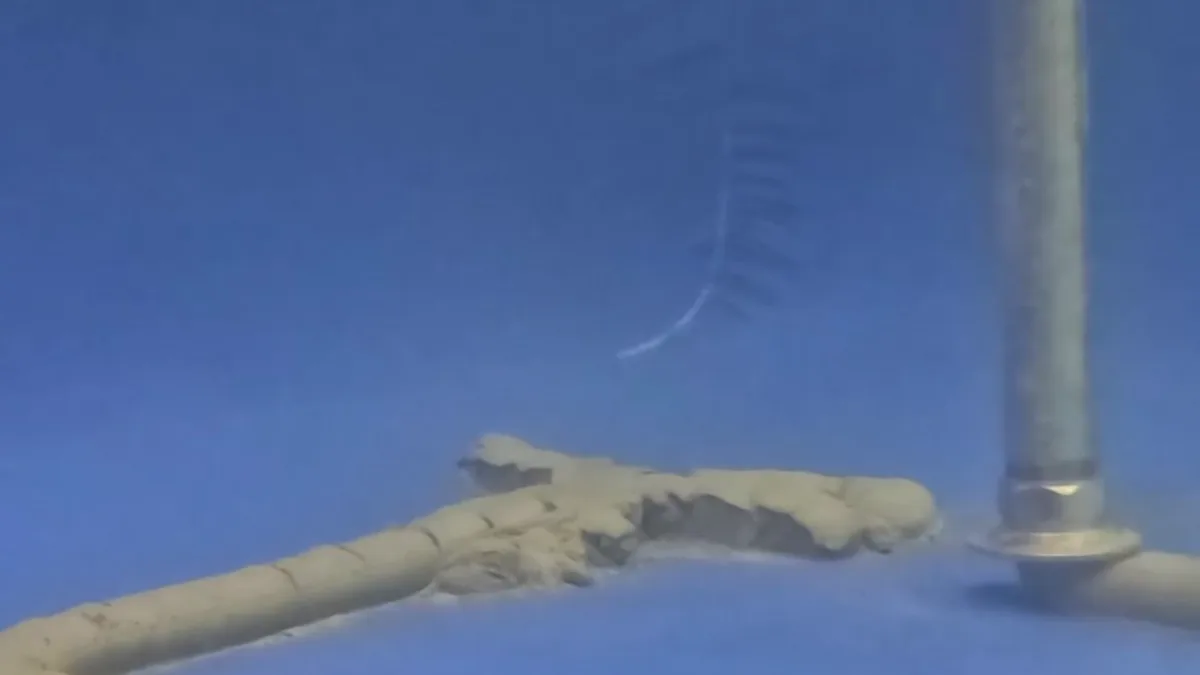
An Australian breakthrough is set to open a new frontier for construction underwater, with Melbourne-based company Luyten 3D unveiling world-leading technology expected to have a big impact on our oceans.
It is being touted as the future of marine construction: 3D printing in water using a top-secret concrete mixture that doesn’t disperse or need moulds or formwork. The technology could construct pier pylons, wharves, bridge girders and floating wind farms, plus help protect fibre optic internet cables on the seabed and defence installations like hidden submarine stations.
“It is the first in the world where we used seabed sand and saltwater without adding chemicals that would complicate this process,” said Ahmed Mahil, CEO and global president of Luyten 3D. Aziz Ahmed, a senior lecturer at the University of Wollongong, explained the simplicity of the process: “You just add water, and then there you go, then you can print with it.”

“Now there will be a swarm of smart robots going under sea and laying concrete without disturbing the environment,” Mahil added. “This is Australian engineering coming to the global stage again.” The technology could reduce the cost of underwater structures by 60 per cent compared to traditional offshore construction methods, while remaining chemically safe for marine environments.
Four years in the making, it’s from the same company that made a 3D printed double storey home in suburban Melbourne. “Australia seems to be the leader for sure, and it gives us the comfort level we were looking for to make this kind of investment,” said Wade Lestage from Concretta Homes.