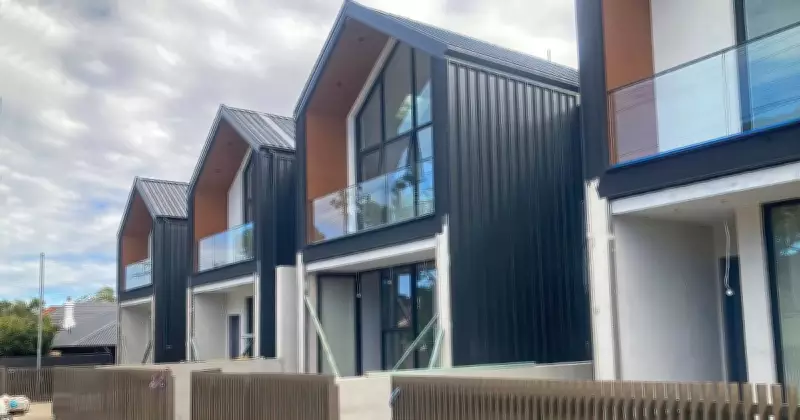
Hunter's Urban Future: Townhouse Planning Solution for Housing Density
The Hunter region faces a significant opportunity to address housing shortages through increased townhouse development. According to urban planning perspectives, this approach represents one of the most effective strategies for boosting dwelling supply while simultaneously containing urban sprawl across New South Wales.
The Townhouse Opportunity in Urban Planning
Replacing detached houses with townhouses offers substantial benefits for urban density. While apartment buildings often dominate discussions about densification, most Australian residents demonstrate clear preferences against high-rise living arrangements. Meanwhile, detached houses on large lots have become prohibitively expensive for many younger Australians, contributing directly to housing affordability challenges.
Townhouses present an excellent compromise solution. Typically, three or more townhouses can replace a single detached house, dramatically increasing population density within established neighborhoods. This means more residents enjoy convenient access to local shops, public transport routes, and community amenities without extending urban boundaries further into rural areas.

The New South Wales government has recognized this potential through its Low and Mid-Rise Housing policy, actively promoting townhouse redevelopment near suburban centers and transportation corridors. Several Hunter locations including Charlestown, Hamilton, Mayfield, Waratah, East Maitland, and Boolaroo already feature designated zones for such development.
The Challenge of Narrow Residential Lots
Despite the clear advantages, a significant obstacle hampers optimal townhouse implementation. Many Australian residential lots, particularly in older suburbs, feature narrow, deep rectangular configurations that prove unsuitable for traditional street-facing townhouse designs. When developers attempt to place multiple dwellings on these constrained sites, they often create dark, tunnel-like residences with limited natural light and minimal outlook.
This architectural challenge frequently forces developers toward shared-driveway configurations. While practical for site utilization, this approach creates several disadvantages for residents. Properties typically require strata title arrangements, which many homeowners find undesirable due to associated fees and governance structures. Additionally, residents lose traditional street-facing orientations, often finding themselves looking directly at neighboring fences rather than across streets to other homes and gardens.
Shared driveways themselves consume approximately one-quarter of available land, while providing limited aesthetic appeal or community connection. Despite architects' best efforts to optimize these configurations, shared-driveway townhouse developments fundamentally represent a compromised housing solution.
A Creative Solution: Transforming Driveways into Public Lanes
A proposed solution involves strategic planning to convert shared driveways into future public lanes. The concept envisions adjacent developments eventually joining their driveways to create six-meter-wide public thoroughfares managed by local councils. This transformation would occur gradually as neighboring properties undergo redevelopment over coming decades.
Under this scheme, when a second development occurs beside an existing shared-driveway configuration, the separating fence would be removed. The new development would contribute additional land to widen the combined driveway to public lane specifications. Once completed, this newly created lane would be transferred to council management as crown land, while the original development's strata title arrangement would convert to individual Torrens titles.
This approach delivers multiple benefits. Residents gain direct property ownership without strata complications while enjoying views across lanes to neighboring townhouses and their front gardens. Developers of subsequent sites benefit from not needing to provide full driveways, allowing larger house designs with premium Torrens title pricing. The gradual lane formation occurs through natural development processes rather than requiring immediate government infrastructure investment.

Implementation Considerations and Community Impact
Successful implementation requires careful urban planning. Municipal authorities would need to designate future lane locations across city maps, while developers would align their shared driveways accordingly. These lanes would likely feature one-way traffic with reduced speed limits around 15km/h to discourage through traffic, creating safer, quieter residential environments.
Existing examples like Mathieson and Rodgers streets in Carrington demonstrate that six-meter widths can create charming, cozy streetscapes rather than cramped corridors. Architectural designs could incorporate upper-storey setbacks to ensure adequate sky visibility, while three-story configurations might accommodate Australian preferences for spacious residences.
Parking considerations represent another factor, though evolving transportation trends including potential robotaxi services may alleviate pressure on street parking over time. Council maintenance responsibilities for new lanes would be offset by increased rate revenue from denser populations.
This innovative approach to townhouse development offers a practical pathway toward increasing Hunter region housing supply while improving resident satisfaction. By transforming problematic shared driveways into community-enhancing public lanes, urban planners can facilitate more townhouse construction while creating more desirable living environments for future residents.