Drilling Results Point to Major Copper-Gold-Molybdenum System in Chile
Southern Hemisphere Mining and its joint venture partner FMR Resources are making significant strides in their exploration efforts at the Llahuin project in Chile. Recent assays from diamond drilling have provided compelling evidence that the companies are closing in on the core of a substantial copper-gold-molybdenum porphyry system, known as the "Southern Porphyry" target.
Promising Assays from Key Targets
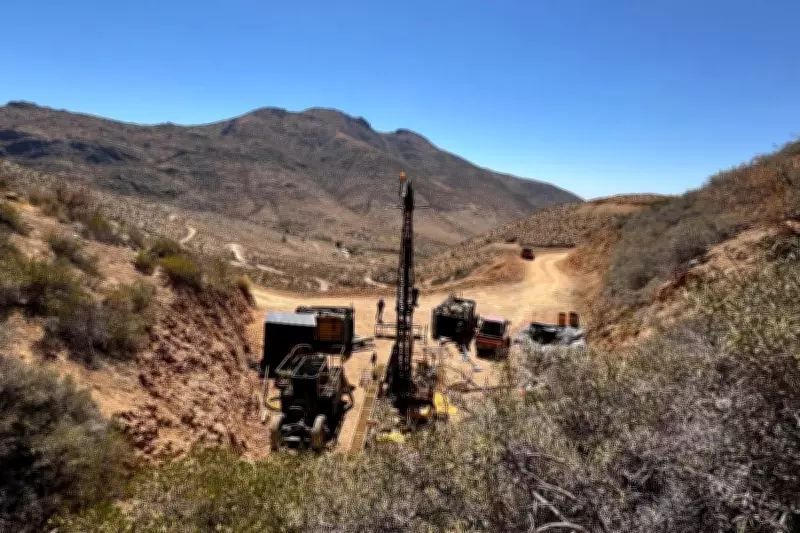
The latest drilling campaign focused on three primary targets within the Southern Porphyry area: Targets A, C, and K. The most impressive results came from Target C, where a hole returned 124 meters at 0.31 per cent copper equivalent from a depth of 258 meters. This interval included a higher-grade section of 20 meters at 0.48 per cent copper equivalent. The drilling at Target C intersected intense veining and broken rock, indicative of a dynamic geological plumbing system, with mineralization dominated by gold alongside copper and molybdenum in sulphide veins.
At Target K, located 375 meters east of Target C, a second hole yielded 104 meters at 0.16 per cent copper equivalent from 522 meters. Meanwhile, Target A, situated 560 meters east of Target C, produced shorter but encouraging intervals, including 1 meter at 0.4 per cent copper equivalent and 10 meters at 0.45 per cent copper equivalent. These results confirmed the presence of porphyry intrusions and strong veining throughout the area.

Insights from Geological Analysis
FMR Resources managing director Mr. Oliver Kiddie commented on the findings, stating, "These results confirm our visual observations that we have intersected the outer zones of a large and fertile mineralised system. Importantly, detailed petrographic and lithogeochemical analysis shows that while we are intersecting fertile intrusions, we have not yet drilled the causative porphyry." Laboratory studies have supported field observations, revealing multiple pulses of intrusive porphyry within host volcanics, with chemistry suggestive of a copper-generating system. However, the primary source body remains undrilled.
In essence, the drilling has identified a broad halo of copper, gold, and molybdenum mineralization with extensive veining, but the richer core of the system has yet to be reached. FMR interprets this as drilling on the margins of a significant mineralizing system, necessitating a more focused search toward the center where higher grades are typically expected.
Ongoing Exploration and Future Plans
This update aligns with previous reports from February, when FMR noted visible copper and molybdenum sulphides associated with a magnetotelluric geophysical anomaly at Target C. Subsequent drilling at nearby Targets K and L aimed to trace the main fluid source, with Target L also showing broad mineralized breccias and porphyry with visible copper and molybdenum in late March.
The higher gold-to-copper ratios and stronger molybdenum signals in recent holes suggest the drilling is progressing closer to the porphyry "engine room," though alteration minerals indicate the joint venture is still on the outer shoulders of the system. The next phase involves integrating assay data with geology, structure, and geophysical surveys, such as magnetotellurics and induced polarization, to refine targets for phase two drilling.
If successful, this could lead to a porphyry-scale discovery, with the market eagerly awaiting signs of a higher-grade core. The upcoming phase two drilling at Llahuin is now guided by clearer indicators, positioning Southern Hemisphere and FMR Resources for a potential breakthrough in Chilean copper exploration.