Marmota Gears Up for Major Uranium Exploration Campaign in South Australia
Marmota Limited is poised to reignite its search for uranium at the Junction Dam project in South Australia, having finalised a comprehensive drilling program design. The company has completed plans for its fourth and final target area, known as Jason's, located in the northwest corner of its tenure, adjacent to Boss Energy's Jason's uranium resource.
Strategic Drilling Targets and Geological Insights
Earlier this month, Boss Energy upgraded its adjacent Jason's inferred resource to 13.3 million pounds of uranium oxide at an average grade of 410 parts per million. Marmota's Jason's target lies within three kilometres of this deposit and is situated along the same ancient palaeochannel system, which is a buried river channel that can host porous sedimentary units favourable for uranium mineralisation.
The drilling design for Jason's was developed using South Australian State gravity imagery, revealing a north-trending extension of the Yarramba Palaeovalley. This ancient, buried drainage system is a major host for sandstone-hosted uranium deposits. Marmota interprets this extension within its ground to be up to 3.7 kilometres long, providing a significant corridor for exploration.

Additionally, the company plans 15 holes in an area 600 metres east of the priority corridor, where gravity data indicate similar channel depressions that may represent additional uranium prospects.
Drilling Methodology and Mining Potential
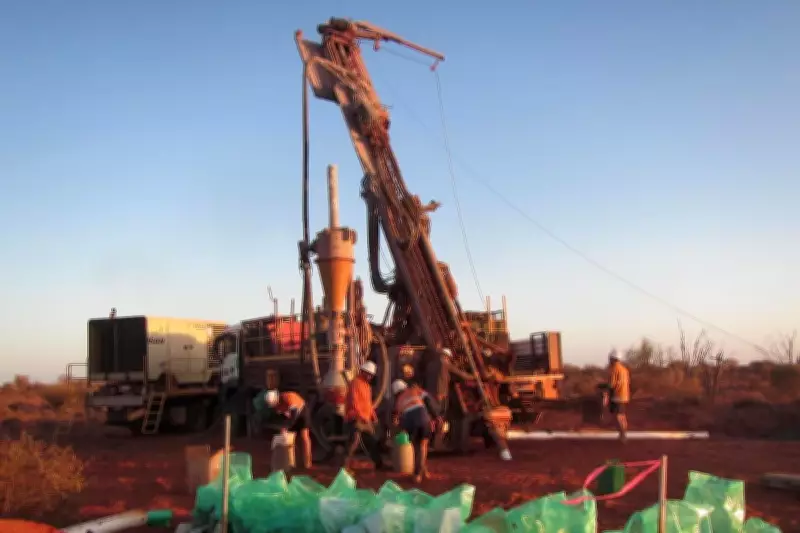
The planned holes will be drilled using a rotary mud rig and logged with downhole probes, including gamma and resistivity, to define stratigraphy and identify mineralised intervals. The target is the sands of the lower Eyre Formation, the same host unit found at Boss Energy's Honeymoon and Jason's deposits and within Marmota's existing Junction Dam resource.
The porous and permeable geology of the palaeochannel is considered amenable to in-situ recovery mining using pumped solvent methods, which could offer efficient extraction if uranium is discovered.
Comprehensive Exploration Program and Financial Backing
Marmota has now wrapped up reviews and drilling plans across four target zones at Junction Dam, including Saffron, Bridget, Yolanda, and Jason's. The Saffron area already holds an inferred 5.4 million pounds of uranium oxide. The overall restart program involves 400 holes across two stages: 164 at Saffron, 114 at Bridget, up to 83 at Yolanda, and 39 at Jason's.
The company has allocated $2 million for stage one and another $2 million for stage two. Native title clearances are required before drilling can commence, and Marmota is maintaining exploration momentum through ongoing gold work in the interim.
Marmota Limited chairman Dr Colin Rose stated, "Marmota put Junction Dam on the map. It is one of the most exciting uranium discoveries in Australia, and we are delighted the forward program is fully designed and fully funded. The company is in its strongest financial position ever, with the strongest suite of exploration projects in its history, including outstanding projects in gold, titanium, and uranium."
Future Catalysts and Industry Context
With its uranium drilling blueprint now locked in, Marmota's next steps include securing native title clearances, mobilising field teams, and commencing drilling at Jason's. This initiative marks a significant effort in Australia's uranium exploration sector, leveraging advanced geological data and strategic positioning near established resources.
The renewed focus on uranium comes amid global interest in nuclear energy as a low-carbon power source, potentially enhancing the economic viability of discoveries in South Australia.