Viridis Mining and Minerals has shoved its giant Colossus rare earths project in Brazil another big step towards construction after lodging the crucial Installation Licence application, a pivotal permitting milestone that swings the project closer to full-scale development and execution.
The company says the submission has reset Colossus as a near-construction rare earths project, with permitting, financing, engineering and downstream processing planning now all running in parallel.
The application is the second stage in Brazil’s three-step environmental approvals process, following the preliminary licence secured in December, widely viewed as the toughest regulatory hurdle for rare earths projects in the country.

Once the latest application gets the nod, it will mark the penultimate hurdle before the final Operating Licence needed for production and will clear the decks for Viridis to begin site development and construction works as financing, EPCM selection and offtake talks gather momentum.
Colossus sits in the prolific Poços de Caldas region of Minas Gerais and is rapidly shaping as the largest ionic adsorption clay rare earths resource outside China.
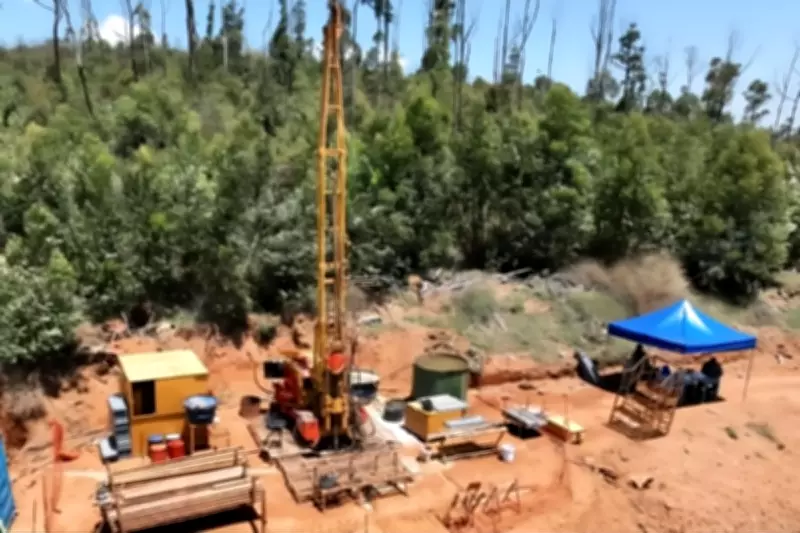
Recent infill drilling completed in May reinforced the scale and grade profile underpinning Colossus, with standout results delivering 8m grading 7076 parts per million (ppm) total rare earth oxides (TREO), 16m at 7434ppm TREO and 12m at 6754ppm TREO. The shallow high-grade results strengthened resource confidence and fed directly into the updated resource estimate.
The global resource stands at 493 million tonnes grading 2508ppm TREO and 601ppm magnet rare earth oxides. The project carries rich exposure to dysprosium, terbium, neodymium and praseodymium, the magnet rare earths critical for electric vehicles, wind turbines and advanced electronics.
Viridis recently expanded the tenure by 46 per cent along the eastern boundary. The new ground has already delivered dysprosium and terbium oxide grades exceeding 500ppm.
The new submission specifically covers the project’s Northern Concessions, which host a substantial 215Mt resource base and underpin the planned initial mining areas. The concessions sit away from environmental protection areas and indigenous communities, a factor likely to simplify development and approvals.
Management says the application to Minas Gerais’ environmental regulator, FEAM, includes years of technical, environmental and social studies, alongside a completed definitive feasibility study for mining, processing and infrastructure.
The paperwork also includes a detailed environmental control plan covering construction, operations and mine closure obligations. It aligns with both state and federal environmental and compensation requirements.
“The submission of the Installation Licence marks another significant milestone for Viridis as we continue to advance the Colossus Project towards a targeted FID in 2H 2026,” said Viridis Mining and Minerals managing director Rafael Moreno.
Meanwhile, the company has been keeping itself busy, recently securing environmental approval for its mixed rare earth carbonate demonstration plant and producing the first material from Colossus clay this month. Additionally, procurement of long-lead items and selection of the EPCM contractor are ongoing.
Viridis has spent recent months strengthening both its technical and financial bench. Rare earths veteran Geoff Bedford, former chief executive of Neo Performance Materials and Molycorp, recently joined the board, bringing deep downstream processing and magnetics expertise.
Global capital markets specialist Marcus Silberman was also appointed earlier this year to help steer financing and strategic partnership negotiations.
The broader financing picture also appears to be taking shape. Colossus has already been selected for Brazil’s Climate and Ecological Transformation Investment Platform, backed by development bank BNDES. Export credit agencies from France and Canada have also flagged support. Brazilian investment groups ORE Investments and Régia Capital have committed US$30M in staged equity funding.

Neighbouring rare earths activity in Minas Gerais continues to reinforce the district’s growing strategic importance as Brazil pushes to emerge as a major non-Chinese supplier of ionic clay rare earths. The region’s clay-hosted deposits are attracting increasing global attention because they can often be processed using lower-impact flowsheets than those used in traditional hard-rock operations.
With approvals falling into place, financing channels opening and engineering now marching onto the critical path, Viridis looks to be pulling Colossus out of the explorer ranks and onto the runway for development.
If the remaining pieces land as planned, the company could soon find itself holding one of the Western world’s more strategically important new rare earths projects at exactly the right point in the market cycle.