Sunrise Hosts Fiery Energy Debate as Power Bills Set to Soar
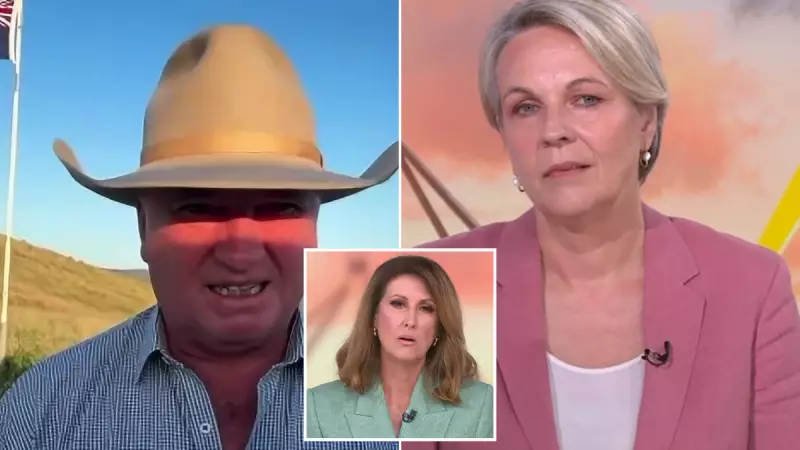
A heated exchange erupted on Channel Seven's Sunrise program between Social Services Minister Tanya Plibersek and One Nation MP Barnaby Joyce, as Australian families brace for the end of federal energy rebates and face substantial increases to their electricity costs.
Power Prices Projected to Jump by Up to 24 Percent
New data from the Australian Bureau of Statistics indicates electricity prices could surge by as much as 24 percent by July. This significant rise means the average three-person household might find themselves up to $500 worse off annually, placing additional strain on already stretched household budgets.
Plibersek Defends Government's Renewable Energy Strategy
Minister Plibersek acknowledged the financial pressure on families but defended the government's position, stating the rebates were always intended as temporary relief. "We're always worried about families' cost of living," she said. "We know when it comes to energy, the rebates couldn't last forever, but the best thing we can do to bring down prices is get more cheaper, cleaner and renewable energy into the grid."

She highlighted the government's progress in renewable energy, citing the addition of over 18 gigawatts of capacity. Plibersek pointed to the widespread adoption of rooftop solar by 4.2 million households and the installation of batteries by more than 200,000 homes as evidence of this transition. "Their prices are coming down. There'll be three days free power for a lot of households from the 1st of July," she added.
The Minister also listed other government measures designed to alleviate cost-of-living pressures, including:
- Cheaper medicines under the Pharmaceutical Benefits Scheme
- More affordable childcare options
- Lower personal income taxes for many Australians
- Increases to the minimum and award wages
Plibersek agreed with host Nat Barr that many Australians continue to struggle financially while waiting for these initiatives to take full effect. She attributed high energy costs primarily to elevated global prices for oil, gas, and coal. "So the solution is cheaper, cleaner, renewable energy, you've just got to build it," she argued, expressing regret that more wasn't done a decade ago. "We're playing catch-up, but we are doing the best we can to get that into the grid as quickly as we can."
Joyce Launches Fierce Attack on Renewable "Swindle"
Barnaby Joyce offered a starkly contrasting view, launching a vigorous critique of the government's renewable energy rollout, which he labelled "the intermittent power swindle." "The intermittent power rollout of wind and solar has been a disaster. They keep on promising us that it's going to go down," he stated.
Joyce expressed deep skepticism about repeated government promises of lower power prices. "How many times have we heard the promise power prices are going to go down? How many times have we been taken for a ride? I don't think the governments are fooling anybody," he said. He characterised the situation as a "complete fiasco" that is becoming more unreliable, arguing that previous price reductions were solely due to taxpayer-funded rebates.
Coal vs Renewables: The Core of the Debate
Joyce advocated for a return to coal-fired power generation, suggesting that high energy costs are forcing major manufacturers to relocate overseas. "Go back to coal-fired power. There's your answer," he declared, proposing that subsidies currently directed toward renewable projects should instead finance the refurbishment of ageing coal power stations.
Nat Barr challenged this position, noting that fossil fuels have been a primary driver of recent price hikes. She pointed to the sustained price spike following Russia's invasion of Ukraine and highlighted that many coal plants are so old that taxpayers are already subsidising their continued operation.
"We all want cheaper power," Barr said. "If there is a better solution, Australians want it." Plibersek supported this argument, emphasising the frequent unscheduled outages at the nation's ageing coal-fired stations, some of which are over 50 years old.

Specifics Demanded on Coal Station Plans
During the debate, Plibersek repeatedly pressed Joyce for concrete details on his coal power proposal. She challenged him to specify where new coal-fired stations would be built, estimate their cost, and identify who would construct them.
Joyce was hesitant to provide specific answers, suggesting instead that funding should be redirected from existing wind and solar investments. "They are probably not even half the way through rolling out these wind towers and solar panels, and they're all going to be subsidised by secret agreements," he claimed. "So why not do it transparently, why not have the government build coal-fired power stations?"
Climate Action Dismissed as "Absurdity"
Joyce also dismissed the rationale behind climate action and Australia's renewable energy push, questioning the nation's ability to influence global temperatures. "People think we are going to cool the planet, that's what's driving it, people think we are going to cool the planet, which is another absurdity," he stated.
He characterised Australia's renewable energy efforts as a "fool's errand" that would continue until what he called a collective "epiphany" occurs. The debate on Sunrise underscores the deep political divisions over energy policy in Australia as households confront the reality of rising power bills in the coming months.