Opposition Slams Government Over Mixed Messages on Australia's Fuel Crisis
The Opposition has launched a sharp critique against the government, accusing it of delivering conflicting messages regarding Australia's escalating fuel crisis. This criticism emerges as ongoing questions swirl about the impact of a significant refinery fire in Victoria on the nation's fuel supply chain.
Deputy Opposition Leader Highlights Widespread Shortages
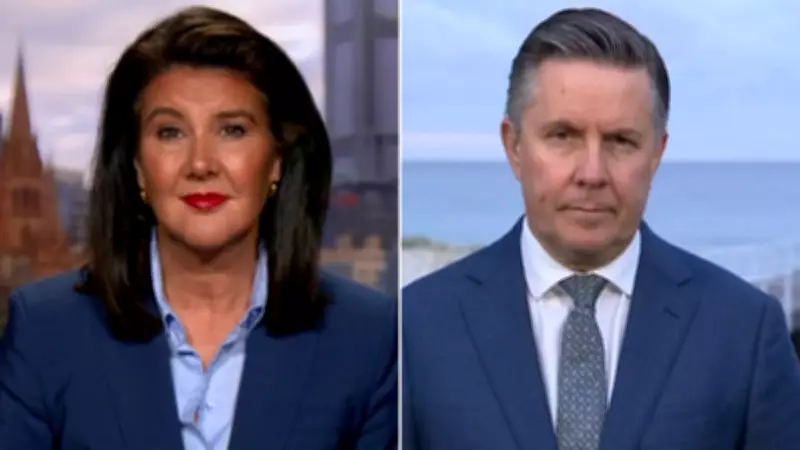
Deputy Opposition Leader Jane Hume addressed the issue on Sunrise, stating that Australians are receiving mixed signals about the severity of the situation. She warned that the effects are already being felt across the country, with immediate consequences for businesses and consumers alike.
"There are already 468 petrol stations around the country that still haven't got one or both kinds of fuel," Hume revealed, emphasising that the situation could deteriorate further following the Geelong refinery fire.

Hume pointed to specific examples in Perth, where mining equipment hirers and car dealerships have seen their operations "simply dried up" due to the fuel crisis and a pervasive lack of certainty. She urged the government to implement a national dashboard that would display fuel distribution, shortages, and incoming shipments, arguing that enhanced transparency is crucial for restoring public confidence.
Government Response and Ongoing Challenges
The government is actively working to manage the fallout from the fire at Viva Energy's Geelong refinery, one of Australia's few remaining fuel production facilities. Prime Minister Anthony Albanese cut short his trip in Malaysia to return to Victoria for an urgent briefing at the Corio refinery near Geelong, as concerns mount over potential disruptions to fuel production and supply.
Albanese reported that the majority of fuel production continues despite the damage, with approximately 80 percent of diesel and aviation fuel output proceeding and around 60 percent of petrol production still operational.
Health Minister Mark Butler, also speaking on Sunrise, acknowledged the incident has already impaired the refinery's capacity to produce petrol and aviation gasoline. He described it as "an event that couldn't have happened at a worse time for Australia."
While the government has secured additional fuel from overseas sources, Butler admitted the outlook remains uncertain. "We're out there getting as much fuel from the global market that we possibly can get, but of course, we've got to prepare for the possibility that this will get worse before it gets better, and we will start to see shortages," he stated.
Butler noted that current supplies are stable in the short term, with good supply expected until the end of May. However, he cautioned against relying solely on optimism, highlighting the implementation of the National Fuel Security Plan as a proactive measure.
Expert Analysis on Global and Local Pressures
Energy analyst Sol Kavanek provided insight on Sunrise, explaining that the fire has occurred at a critical juncture, exacerbating already severe global supply pressures linked to the Middle East conflict and the closure of the Strait of Hormuz.
"We now have a double whammy effect where 10 percent of our national refined fuels are disrupted at exactly the same time that we're hitting a major crunch point in global fuel shortages due to the closure of the Strait of Hormuz in the wake of the Iran war," Kavanek said.
He elaborated that replacing the fuel typically produced at the Geelong refinery will require scrambling for additional sources on the international market, which currently has very limited spare supply available. Kavanek called for swift government action to shore up supply and rebuild confidence, stressing the need for greater self-sufficiency in fuels to prevent future vulnerabilities.
The ongoing crisis underscores the urgent need for coordinated efforts between government and industry to address both immediate shortages and long-term energy security strategies for Australia.