Australia Cannot Remain Passive on Strait of Hormuz Stalemate, Editorial Warns
As a fragile ceasefire in the Iran war teeters on the brink of collapse, critical geopolitical realities demand Australia's immediate attention and action. The ongoing blockade of the Strait of Hormuz by Iran is not merely a regional dispute but a global economic threat, with approximately 20 percent of the world's oil and a fifth of its liquefied natural gas transiting through this vital waterway. This strategic chokepoint's closure is inflicting severe pain on international markets, underscoring the urgent need for coordinated Western response.
Iran's Destabilizing Influence Extends Globally
Iran has long functioned as a major sponsor of terrorism across the Middle East, supporting groups such as Hamas in Gaza, Hezbollah in Lebanon, and Houthi rebels in Yemen. The murderous October 7, 2023, attack on Israel, orchestrated by Iranian proxy Hamas, which involved kidnappings and atrocities, highlights Tehran's aggressive regional posture. Moreover, Iran's malign reach has directly impacted Australian soil. In August, Australian intelligence agencies presented compelling evidence to the Government linking Iran to arson attacks, including one targeting the Adass Synagogue in Melbourne.
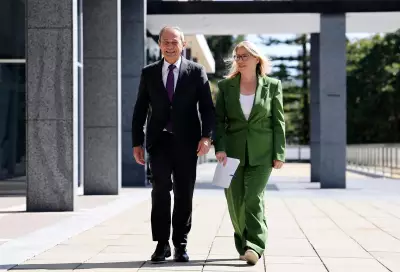
This evidence prompted Prime Minister Anthony Albanese to expel Iran's ambassador and initiate steps to designate the Iranian Revolutionary Guard Corps as a terrorist organisation. Mr Albanese's firm stance was reiterated following US and Israeli strikes on Iran, where he emphasised, "The threat to international peace and security of the Iranian regime is real. The fact that they orchestrated attacks here in Australia on the other side of the world underlines the threat that this regime presented to the rule of law and to international norms of behaviour."

International Coalition Efforts and Australian Capabilities
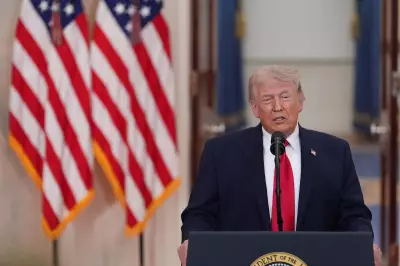
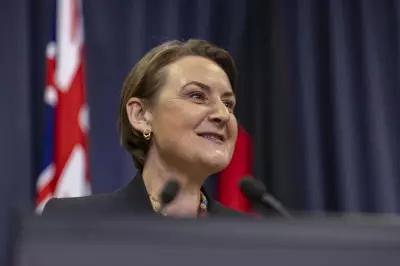
Foreign Affairs Minister Penny Wong has echoed support for actions preventing Iran from obtaining nuclear weapons, stating, "For decades we know the Iranian regime has been a destabilising force through its ballistic missile and nuclear programs, support for armed proxies, and brutal acts of violence and intimidation. Australia supports action to prevent Iran from obtaining a nuclear weapon." Despite this clear alignment, the US-led mission has faltered, contrary to President Donald Trump's optimistic boasts.
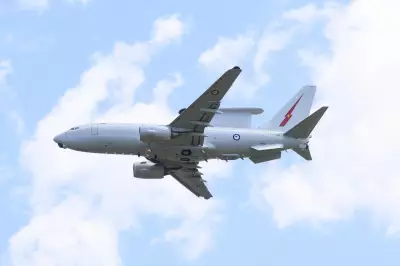
In response to the Strait blockade, the US announced on Monday that maritime traffic to and from Iranian ports would be halted, while vessels heading to non-Iranian ports could pass. Although the US has not formally requested Australian assistance, there is no operational barrier preventing Australia from contributing. Newly appointed Chief of Defence Mark Hammond confirmed the Royal Australian Navy's capability to deploy a warship in support of US-led efforts to reopen the Strait.
Earlier this month, Senator Wong noted Australia's participation in a 40-member international coalition planning "diplomatic and civilian initiatives" to restore oil flow, though updates have since been scarce. This silence raises concerns about the coalition's effectiveness and momentum.
The Imperative for Proactive Australian Engagement
President Trump's rhetoric has at times been alarming, with verbal attacks on Western allies, including Australia, for perceived insufficient support in the conflict. However, Australia cannot afford to treat this crisis as a distant US-Iran confrontation. The West must move beyond wounded pride and recognise that these are not mere parlour games; the stakes involve global economic stability and security.
Australia does not seek to commit to war, but it must adopt a front-foot approach with the US to devise practical ways to help resolve the stalemate. Passive observation is not an option when national interests and international norms are under threat. The editorial, under the responsibility of Editor-in-Chief Christopher Dore, stresses that proactive diplomacy and military readiness are essential to navigating this complex crisis and safeguarding Australia's strategic position in an increasingly volatile world.