The Immense Challenge of Prosecuting War Crimes: The Roberts-Smith Case
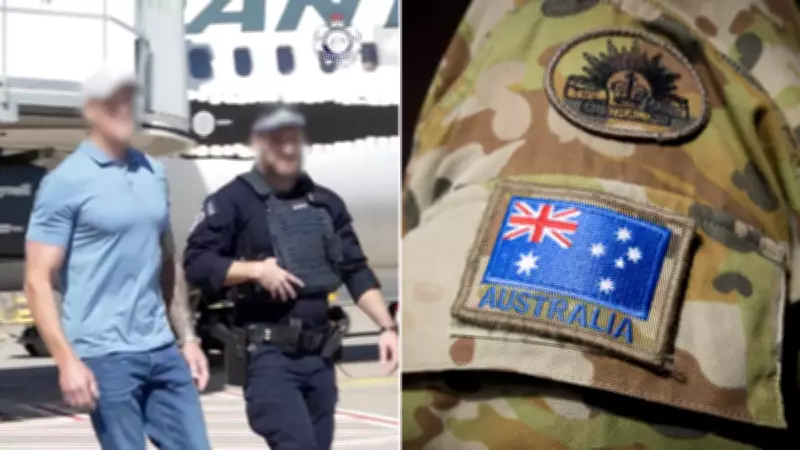
War crimes stand among the most severe allegations that can be presented in a court of law, and they are notoriously among the hardest to substantiate. Recent charges brought against decorated Australian soldier Ben Roberts-Smith have refocused public attention on this critical issue, with accusations tied to his deployment in Afghanistan between 2009 and 2012. From crime scenes that are impossible to access to memories that fade over time and a scarcity of forensic evidence, constructing a criminal case years after events transpire in a war zone is an extraordinarily complex endeavor.
This reality, as investigators emphasize, defines these matters from the very beginning, where assembling the sequence of events can be just as daunting as proving them in a legal setting.
A 'Very Challenging Starting Point'
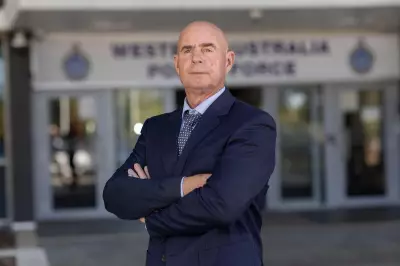
War crimes investigations differ fundamentally from conventional criminal cases, according to Ross Barnett, director of investigations at the Office of the Special Investigator, who spoke at a press conference regarding Roberts-Smith's arrest. "Unlike a conventional investigation conducted in Australia, the OSI has been tasked with investigating literally dozens of murders alleged to have been committed in the middle of a war zone in a country 9,000km from Australia that we can no longer access," Barnett explained. "The challenge for investigators is that because we can't go to that country, we don't have access to the crime scene."

Without the ability to enter Afghanistan, investigators are deprived of the forensic evidence typically relied upon in domestic prosecutions. "We don't have photographs, site plans, measurements, the recovery of projectiles, blood splatter analysis, all of those things we would normally get at a crime scene," Barnett noted. "If you add to that we don't have access to the deceased, there's no post-mortem examination results, therefore there's no official cause of death ... there are a lot of practical challenges that confront the investigators."
Consequently, cases of this nature often commence with very limited material. "Often, we have to start our investigation only with one or two photographs of the battlefield and some contemporary ADF reporting, and potentially some third-party eye-witness testimony about what's alleged to have occurred," he said. "It's a very challenging starting point for all these investigations."
The Burden of Proof
Even when evidence can be gathered, the legal threshold in criminal proceedings presents another significant hurdle. Criminal psychologist Tim Watson-Munro highlighted that the "bottom line" is proving guilt beyond a reasonable doubt. "In other words, if there's a shadow of any doubt ... you're entitled to an acquittal," he stated. This standard means every element of an alleged offence must be proven to a near-certainty, leaving minimal room for ambiguity or inconsistency in the evidence.
It also represents a substantial shift from civil proceedings, where findings are made on the balance of probabilities—a lower standard that requires something to be more likely than not. In complex cases, particularly those built on events that occurred years earlier and relying heavily on witness accounts, the absence of traditional physical evidence can make meeting that criminal standard especially challenging.
Time, Memory, and Evidence
One of the defining challenges in these cases is the passage of time. Allegations may not surface or be formally investigated until many years after the events in question, creating immediate obstacles for investigators attempting to reconstruct what happened. In numerous instances, any potential forensic evidence is either no longer available, was never collected, or cannot be accessed, forcing investigators to piece together events without the physical evidence typically relied upon in criminal cases.

In the absence of such evidence, witness testimony often becomes central to how these cases are constructed. Former South Australia director of public prosecutions Stephen Pallaras KC explained that investigators must carefully assess both reliability and credibility when building a case. "They would then have to ... take statements ... make sure that they come to the assessment that the statements are reliable ... and do they make out the alleged offence," he said. This process becomes significantly more complex in a war zone, where events unfold rapidly and under extreme pressure. "How reliable is your memory ... when somebody's shooting at you?" Pallaras questioned.
Watson-Munro added that the scale and complexity of these matters mean they can take years to prepare and prosecute. "The time and work required to prosecute this case is going to be enormous ... you're talking about years and years." As that time elapses, the reliability of witness evidence can become increasingly difficult to test. "Memories fade with the affliction of time ... we tend to fill in the gaps," he noted. "If that falters, it kind of raises the issue of potential doubt."
Witness accounts may also be shaped by trauma, further complicating how events are recalled and later presented as evidence. "People who have been exposed to highly traumatic events either suppress the memory ... or they have continuous flashbacks," Watson-Munro said. This can result in accounts that are either fragmented or intensely vivid, but not always consistent over time. While those memories may feel clear and compelling to individuals, the absence of corroborating evidence can make them harder to substantiate in court, particularly when tested under cross-examination. In such circumstances, even minor inconsistencies can be seized upon, with credibility and reliability becoming central battlegrounds in determining whether a case can ultimately be proven beyond a reasonable doubt.
A Complex Path to Trial
Even after investigators have gathered evidence and formed a case, the path to trial presents its own set of challenges. In high-profile matters, one of the most immediate concerns is ensuring a fair and impartial jury, a task that becomes increasingly difficult when allegations have been widely reported over many years. "Where in Australia are you going to find any person that doesn't have a view on this case?" Watson-Munro asked. Extensive media coverage, public debate, and prior legal proceedings can all shape perceptions long before a jury is selected, raising questions about whether those tasked with deciding a verdict can set aside what they have already seen or heard.
Simultaneously, the sheer scale and complexity of these prosecutions, often involving multiple allegations, international elements, and large volumes of evidence, can mean cases take years to reach trial. As time passes, those same challenges around memory, evidence, and witness reliability continue to compound, adding further pressure to an already demanding legal process.
'Two Different Worlds'
Ultimately, experts assert that war crimes cases expose a deeper tension at the heart of the justice system—the challenge of applying courtroom standards to events that unfold in fundamentally different conditions. Decisions made in combat are often taken in seconds, in high-pressure and chaotic environments, far removed from the structured and methodical processes of a court. By contrast, criminal trials require clear, consistent, and verifiable evidence, tested against strict legal thresholds and scrutinised in detail. "We're living in two different worlds, the reality of the soldier and the reality of the courtroom," Pallaras said. This divide sits at the centre of war crimes prosecutions, where events from a battlefield must be tested against the highest legal standards.