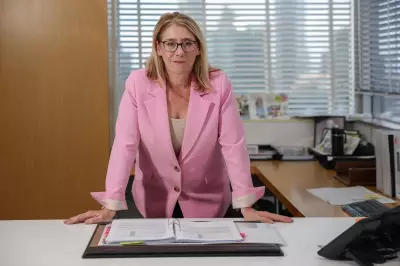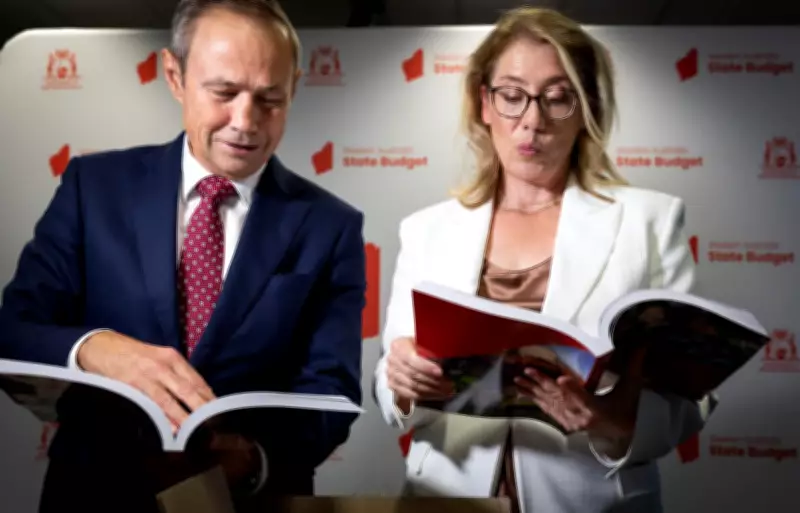
Western Australian Treasurer Rita Saffioti has robustly defended the state's 2026-27 budget, asserting that the government's increased spending is not exacerbating inflationary pressures. In a detailed address to parliament, Saffioti outlined a series of investments aimed at bolstering the state's economy while maintaining fiscal responsibility.
Budget Highlights
The budget, delivered on Thursday, projects a surplus of $2.3 billion for the 2026-27 financial year, supported by strong iron ore royalties and a resilient labour market. Key allocations include $1.5 billion for health infrastructure, $800 million for education, and $600 million for housing initiatives. Saffioti emphasized that these expenditures are carefully calibrated to avoid overheating the economy.
Inflation Outlook
Critics have warned that the government's spending spree could stoke inflation, which remains above the Reserve Bank's target band. However, Saffioti countered that the budget's design incorporates measures to mitigate such risks. 'We are not pouring fuel on the fire of inflation,' she stated, pointing to targeted investments in productivity-enhancing projects and supply-side reforms.

The treasurer highlighted that Western Australia's economy continues to outperform the national average, with employment growth and business investment remaining robust. She noted that the state's debt-to-GDP ratio is among the lowest in the country, providing ample fiscal space for strategic spending.
Key Investments
- Health: $1.5 billion for new hospitals and mental health services, including a major expansion of the Fiona Stanley Hospital.
- Education: $800 million for school upgrades and vocational training programs to address skills shortages.
- Housing: $600 million for social and affordable housing projects, aiming to increase supply and reduce homelessness.
- Infrastructure: $400 million for road and rail upgrades, including the Metronet project.
Economic Forecasts
The budget forecasts state gross state product (GSP) growth of 3.5% in 2026-27, down from 4.2% in the previous year, reflecting a moderation in global demand. Unemployment is expected to remain low at 3.8%, while wage growth is projected to pick up to 4.1%. Saffioti acknowledged headwinds from global economic uncertainty but expressed confidence in the state's diversified economy.
Opposition leader Shane Love criticized the budget as 'reckless,' arguing that it fails to address cost-of-living pressures faced by ordinary West Australians. He called for tax relief and more direct support for households. Saffioti responded by noting that the budget includes $200 million in cost-of-living measures, including electricity bill rebates and free public transport for seniors.
Debt and Deficit
Net debt is projected to rise to $35 billion by 2029-30, but Saffioti insisted this remains sustainable given the state's strong revenue base. She pointed out that Western Australia's net debt as a percentage of GSP is 12%, compared to the national average of 30%. The budget also includes a $1 billion contingency fund for unforeseen events.
In conclusion, Saffioti framed the budget as a balanced approach that invests in the state's future without compromising fiscal discipline. 'We are building for the long term while ensuring that our economy remains resilient,' she said.