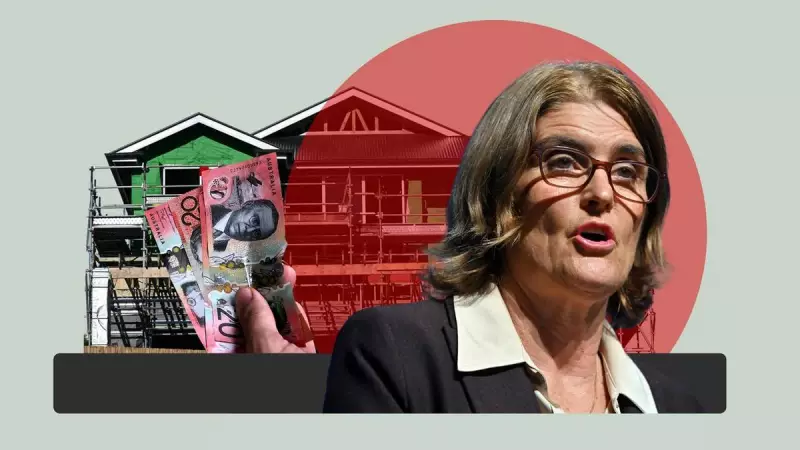
Australian homeowners have been dealt a significant blow, with economists declaring that interest rate cuts are now completely off the table for the remainder of 2026. The grim forecast comes as inflation proves more stubborn than expected, remaining above the Reserve Bank of Australia's target band.
Inflation Resurgence Dashes Hopes for Relief
The Australian economy finished 2025 in what analysts describe as an "awkward position." Just as markets were anticipating a period of monetary easing, inflation reaccelerated, catching forecasters off guard. The core inflation figure, which the RBA prefers as it excludes volatile items, was recorded at 3.2 per cent for the year to November 2025. This places it firmly above the central bank's desired 2-3 per cent target range.
Harry Murphy Cruise, Head of Economic Research and Global Trade at Oxford Economics Australia, admitted the resurgence was a surprise. "As recently as August, both we and the RBA expected trimmed-mean inflation to be comfortably around the mid-point of the target band by year-end. That clearly didn’t happen," he stated.

Rate Cuts Fuelled a Spending Spree
The analysis points to a direct link between last year's rate cuts and the current inflationary pressure. The cuts delivered in February, May, and August of 2025 provided households with a more substantial financial boost than predicted. According to Oxford Economics, consumers not only responded to the immediate relief but also began spending the savings they anticipated from future cuts.
"As expectations of easier policy filtered through, households began to spend the anticipated mortgage repayment savings," the report explained. This surge in domestic demand coincided with price rises in essential areas such as electricity, tobacco, childcare fees, and local government charges, creating a perfect storm for persistent inflation.
The Path Forward: Hike, Hold, or Wait?
With inflation back above target and demand surging, the conversation has shifted dramatically. The pressing question is no longer when cuts will come, but whether the RBA will need to tighten policy further. Economists are now debating if the bank will play a waiting game, hoping that maintaining moderately restrictive rates will eventually curb inflation, or if more aggressive action is required.
Mr Murphy Cruise expects patience from the RBA, particularly as the labour market shows signs of cooling. Oxford Economics forecasts the unemployment rate to rise to 4.6 per cent by mid-2026, up from the current 4.3 per cent. "The combination of still restrictive rates and higher unemployment will push underlying inflation down to 2.8 per cent by the end of the year and return to the middle of the target band by 2027," he projected.
However, other major banks are preparing for a more hawkish stance. The Commonwealth Bank of Australia anticipates a potential rate hike at the RBA's February 2026 meeting. Similarly, the National Australia Bank forecasts increases in both February and May, which would push the cash rate to 4.1 per cent and effectively reverse the cuts from May and August 2025. In contrast, ANZ and Westpac believe rates will remain on hold throughout the year.
The hawkish sentiment was echoed by RBA Deputy Governor Andrew Hauser last week, who strongly hinted that the next move in the cash rate was more likely to be an increase than a decrease. For Australian mortgage holders, the era of anticipated rate relief has been postponed, with the focus now squarely on controlling a resilient inflationary environment.