Victoria Implements Fuel Price Caps to Combat Rising Costs
In a significant move to protect consumers, the Victorian government has introduced new anti-price gouging laws that will cap increases in fuel prices across the state. Premier Jacinta Allan announced these measures on Tuesday, responding to a sharp spike in fuel costs triggered by Iran's closure of the Strait of Hormuz, a critical passage for approximately one-fifth of the world's fuel supply.
How the New Fuel Price Regulations Work
Under the new laws, petrol stations in Victoria are required to set their fuel price by 2pm each day for a 24-hour period starting at 6am the following day. While stations have the flexibility to reduce prices during this timeframe, they are strictly prohibited from raising prices above the established cap. This system aims to provide stability and predictability for drivers, preventing the common scenario where prices jump unexpectedly throughout the day.
Premier Allan emphasized the benefits for families, stating, "How often do you see a cheap price in the morning only for it to jump by the afternoon? We're stopping families from getting ripped off at the servo and helping them save hundreds a year." Breaches of these regulations will result in substantial penalties, including a minimum fine of $3,000 for individual stations, which can escalate to at least $24,000 if the matter proceeds to court.

Enhanced Transparency and Consumer Tools
To support the new caps, each station's price limits will be published on the Service Victoria app through the Servo Saver feature by 4pm daily. Launched in October last year, Servo Saver has already proven effective, with the state government reporting that it has saved Victorian drivers up to $333 annually at the pump. Government Services Minister Danny Pearson highlighted the app's role, saying, "The Service Victoria app is putting fuel price information in your pockets to make life easier and more affordable."
Consumer Affairs Minister Nick Staikos added that these caps will empower Victorians to "shop around for the best deal and put more downward pressure on prices," fostering a more competitive market environment.
Global Context and Broader Economic Impacts
The introduction of these laws comes amid a turbulent global energy market. The price of oil has surged above $100 per barrel for the first time since the Russian invasion of Ukraine in 2022, driving the average cost of petrol in Australia beyond $2 per litre. This increase is not limited to fuel alone; it is expected to ripple through the economy, leading to higher grocery prices as transportation costs escalate.
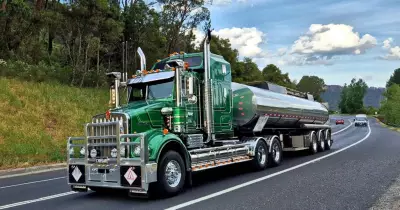
South Australian truck driver Steven shared his experience, noting that his vehicle operating costs have doubled from $1,200-$1,500 to $3,000 due to diesel prices reaching $2.40 per litre. He explained, "Who absorbs that cost? The boss, and he has to pass it onto the customers for sure." Economists caution that the duration of the conflict in the Middle East will be a key factor in determining the long-term impact on inflation, with a short-lived conflict potentially resulting in only temporary effects.
Overall, Victoria's proactive measures aim to shield residents from volatile fuel prices while addressing broader economic challenges in an increasingly uncertain global landscape.