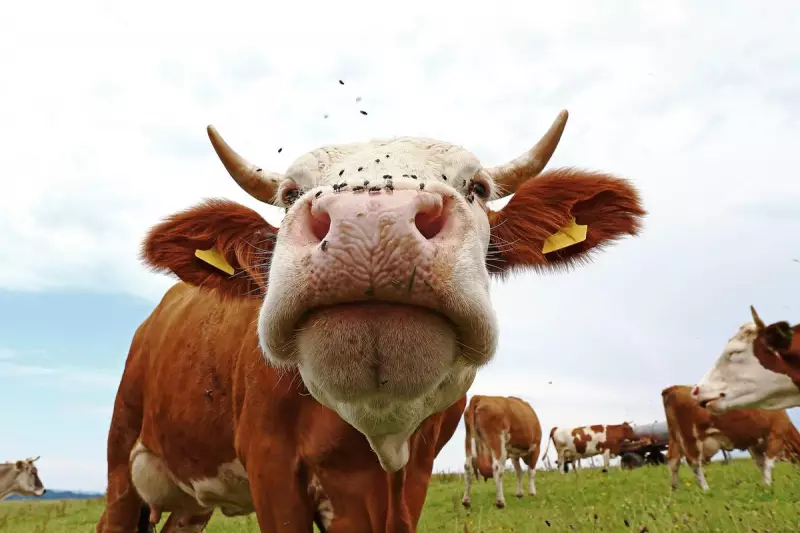
Western Australia is currently battling one of the most severe fly infestations in living memory, with experts declaring it the worst seen in forty years. The relentless plague is a direct consequence of an unusually prolonged and wet winter, which established perfect breeding grounds for the insects across the state.
The Perfect Storm for a Fly Explosion
The crisis is set to intensify for Perth and the South-West region in the coming weeks. Strong northerly and easterly winds are forecast to blow billions of flies from their primary breeding grounds in the livestock-dense Mid-West towards coastal population centres.
While late spring and early summer typically mark peak fly season, this year's conditions have been exceptionally favourable for the pests. The heavy winter rains led to a lush growth of green feed for livestock. This, in turn, resulted in moist animal droppings that serve as an ideal food source and nursery for flies and other insects.

Compounding the problem is a critical absence of nature's clean-up crew: dung beetles. The soil temperatures remain too cold for summer-active dung beetle species to emerge and process the waste. This leaves the massive population of fly larvae to develop completely undisturbed across pastures and bushland.
Why Dung Beetles Are the Unsung Heroes
Dung beetles play a vital dual role in managing waste. First, the beetle larvae are voracious consumers of animal dung as they mature. Second, adult beetles excavate tunnels and bury droppings up to a metre underground, where they use it for food and breeding, effectively removing it from the surface.
Associate Professor Theo Evans from the University of Western Australia's School of Biological Sciences explains we are in a 'Goldilocks period' for flies. "The fly population dies off when temperatures consistently drop below 15C," he said.
"At the moment the air temperature is high enough for flies to thrive but the soil temperature is still quite low. The summer-active species of dung beetles we have in WA won't come to the surface until the soil is warmer, and until that happens the animal poo remains where it is."
He attributes the extreme season to a winter reminiscent of those common four decades ago. "It's a shock for people who can't remember what living in WA was like up until the 1980s," Associate Professor Evans noted.
Historical Context and Future Hope
The issue of bushflies escalated in Australia with the introduction of livestock from Europe, as native dung beetles were adapted to the dry, pellet-like droppings of marsupials like kangaroos. A CSIRO-led program between 1968 and 1985 introduced dozens of new beetle species to tackle the problem. Of 55 species reared, 43 were released and 23 successfully established themselves.
However, a seasonal gap in beetle activity persists. Winter-active species vanish around September, and summer beetles don't emerge until near Christmas, leaving October, November, and much of December uncovered.
There is hope on the horizon. Scientists are monitoring new species of spring-active dung beetles released in recent years, including a 'dung roller' released between Pinjarra and Gingin just last year. "We're hopeful that by the end of the decade there will be dung beetle activity during the period we're in now," Associate Professor Evans said, aiming to close the current activity gap.
Beachgoers in the South-West should brace for a particularly annoying holiday season. The winds will drive flies to the coast, where they avoid the ocean and seek moisture from humans. "When we go to the beach they see us as a living drinking fountain," Associate Professor Evans explained, adding that their wing muscles are most efficient in temperatures above 25C.