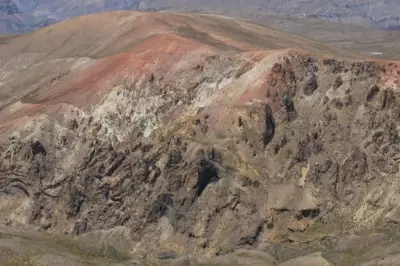
Siren Gold is steadily unravelling what could be one of New Zealand's more intriguing forgotten mineral systems, stretching its Queen Charlotte antimony-gold project out to an impressive 8 kilometres of strike.
Endeavour Shear Zone: A Key Structure
At the heart of the project is the Endeavour Shear Zone in New Zealand's Marlborough District, a long-lived mineralised structure now traced for up to 12 kilometres from Titirangi Bay in the north to Resolution Bay in the south.
Siren has identified two main parallel reefs, the Skyline and Maria, sitting about 100 metres apart and effectively bracketing the shear zone. These have now been traced and sampled across three separate historic mining areas: Endeavour Inlet, Endeavour East and Resolution Bay.

Fresh soil sampling and surface mapping have stitched together a continuous mineralised corridor along the Endeavour Shear Zone, linking historic workings from Endeavour Inlet through to Resolution Bay. Importantly, the system remains open in both directions.
High-Grade Channel Sampling Results
The latest round of channel sampling has returned standout numbers from both new and previously reported outcrops. New samples include 5 metres at 3.4 grams per tonne (g/t) gold and 0.4 per cent antimony from the Maria Reef at Endeavour Inlet, and 0.6 metres at 4.9 g/t gold from the Maria Reef at Resolution Bay.
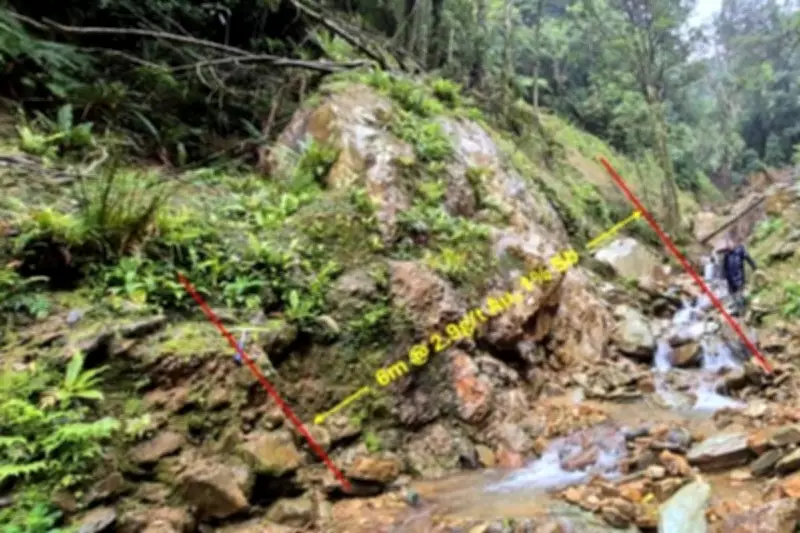
Previously reported highlights from the Maria Reef included a hefty 6 metres at 2.9 g/t gold and 1 per cent stibnite, antimony's main ore mineral, and another 6 metres running 2.8 g/t gold.
Siren says the Skyline Reef is showing serious antimony firepower, with previous intercepts from massive stibnite veins on either side of the shear running at 0.6 metres at 3 g/t gold and an impressive 36.1 per cent antimony. Another intercept delivered 1.2 metres at 1.5 g/t gold and a whopping 18.5 per cent antimony.
Building the Geological Model
The latest soil geochemistry is filling in the gaps between mines that were once worked almost exclusively for their antimony, with the gold largely overlooked.
Zane Padman, Siren Gold's chief executive officer, commented: "These results continue to build out the mineralisation footprint at Queen Charlotte and reinforce the scale and continuity of the Endeavour Shear Zone across multiple historic workings. Systematic surface work is steadily improving our geological understanding and gives us growing confidence in the depth and strike potential of this system."
The historic Endeavour Inlet mine is New Zealand's largest antimony mine. It produced around 3,700 tonnes of high-grade stibnite ore, shipped to England between 1873 and 1906, and was mined across 1.5 kilometres of strike.
Those historic workings also offer an important clue. Extending over about 400 vertical metres, Siren believes the mineralisation continues significantly deeper. Remnants of that early mining still dot the landscape — old adits, mullock heaps and even ore dumped on beaches — providing Siren with a geological breadcrumb trail that is now being systematically followed up with modern exploration.
Despite that history, modern exploration has been surprisingly limited. Aside from a handful of short underground drill holes in the 1970s, the system has never been properly tested with modern drilling.
Drilling Approvals in Progress
That is about to change. Siren has lodged an access agreement application with New Zealand's Department of Conservation to establish drill pads and a field camp, targeting an initial 1.5-kilometre section of the shear zone centred on the old Endeavour mine.
In the meantime, the company is continuing to build its geological model the old-fashioned way — through boots-on-the-ground mapping, sampling, and extending the footprint.
Dual Commodity Advantage
While the gold is compelling in its own right, it is the dual commodity angle that gives Queen Charlotte a sharper edge. Antimony is firmly on the critical minerals list, with supply dominated by China. Siren appears to be sitting on a system that carries both precious metal upside and strategic relevance.

Interestingly, the character of mineralisation shifts along the strike of the shear zone. At Resolution Bay, gold grades remain strong while antimony drops away, hinting at zonation within the system and potentially different mineralising pulses over time.
That variability could ultimately play in Siren's favour, offering multiple development pathways depending on how the metals distribute at depth.
For now, the company is focused on securing drilling approvals — a key catalyst that could unlock the true scale of Queen Charlotte.
With an 8-kilometre mineralised trend already defined, high-grade hits from surface and a rich mining history to guide the way, Siren Gold appears to be closing in on a system that may have been hiding in plain sight for more than a century.