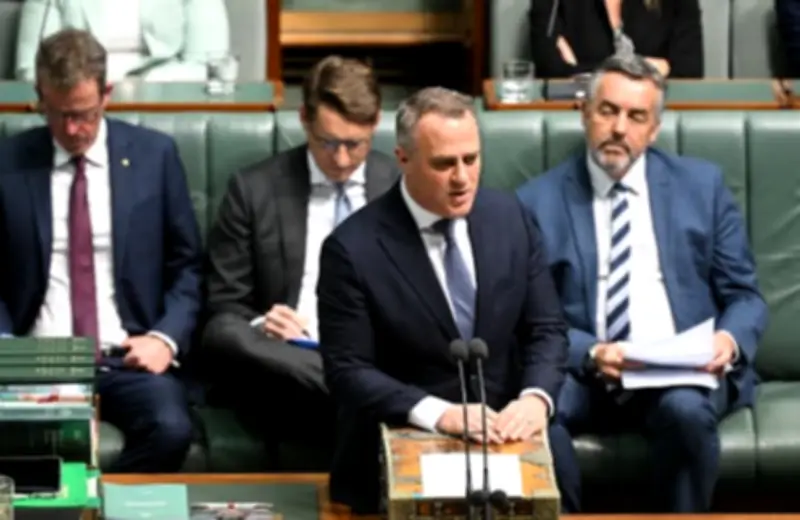
Shadow treasurer Tim Wilson has been vocal in his opposition to Labor's budget proposals to reduce the capital gains tax discount and abolish negative gearing on existing properties. However, as Treasurer Jim Chalmers pointed out in parliament, Wilson's own 2020 book, The New Social Contract, advocates for similar changes.
In the book, Wilson writes: "Capital gains from appreciation of having and holding assets are taxed at half the applied rate, effectively entrenching the benefit of having and holding assets that can only exist if you are established. There is no intergenerational justice in such preferential arrangements."
While the capital gains and negative gearing changes passed the lower house last week, they still face the Senate. When Wilson became shadow treasurer earlier this year, Chalmers criticized his "dangerous ideology," citing his lack of support for Medicare, penalty rates, superannuation, and work-from-home arrangements.

Chalmers defended the budget's modest attempts to shift the balance between taxing labour and capital, aiming to create a more level playing field. He could have also quoted Wilson's book stating: "Favourable treatment should not be extended to income derived from the holding or investment of capital that is principally beneficial to established interests. Indeed such income should be treated consistently with the income derived from labour and the application of skills."
This suggests that tax on labour income should align with tax on investment income, supporting the budget's proposed changes to capital gains and negative gearing.
Intergenerational Injustice
Wilson's book argues for a far more radical tax overhaul than the budget proposes, including increasing the GST and reconsidering preferential treatment of the family home and superannuation. He writes: "There is a lack of intergenerational justice when those who have had the opportunity to hold (and do hold) the wealth of the nation are paying lower tax rates while having the most redistributed to them by the taxpayer."
He highlights a direct transfer of wealth from younger people "having a go" to older ones who have "had their go," and worries that more Australians rely on parental help to buy their first home, entrenching privilege. This breaches Australian liberalism's promise of equal opportunity through hard work, he argues. However, he stops short of recommending an estate or inheritance tax to weaken inherited privilege.
What is the New Social Contract?
Wilson's book calls for small-l liberals to offer a social contract placing individual interests at the core of government, focusing on decentralizing power and increasing home ownership. He argues liberals must restore balance between freedom and justice after neoliberalism tilted too far towards freedom. "We need to rediscover the place of justice within a liberal world view that leaves neoliberalism behind," he writes.
Wilson analyzes justice in terms of equality of opportunity and intergenerational equality, invoking Isaiah Berlin's distinction between negative liberty and positive liberty. While his effort to rethink liberalism is commendable, his book has a glaring fault: it treats the Liberal Party as the sole vehicle of liberalism, ignoring that the Labor Party shares many liberal values.
Labor Shares Many Liberal Values
Wilson correctly identifies liberalism as Australia's foundational political philosophy and uses David Kemp's history of Australian liberalism. But he writes as if only the Liberal Party embodies it. There is little discussion of Labor, which has always supported civil liberties, private property, and a mixed economy. The difference lies in the balance between private and public provision, between market and government roles. Labor for more, Liberals for less, but neither for all or none.
There is scope for fruitful policy debates. For instance, Wilson presents plausible arguments against compulsory superannuation for those who cannot afford a house. But the Liberal Party must respond to Labor as it is, not demonize it as socialist. Wilson approvingly quotes Adam Smith: "While individuals can disagree, if they have a continuing interest in the way their interests are advanced by the existing order, then the disagreement will never escalate to risk the legitimacy of the existing order."

On paper, Wilson is thoughtful. In parliament, his performative outrage overwhelms his thinking and his capacity to contribute to good policy.