Have you ever wondered how much you need to earn to truly live a happy life in Australia? Well, the folks at Purdue University in the US and Remitly, a digital services provider, have you covered – and you might just be shocked by what they found.
The National Figure
Remitly analysed the study which looked at the relationship between income and happiness and found in Australia, happiness levels off at an annual income of $231,025 AUD ($161,302 USD) – the second-highest in the world. Also known as “income satiation”, this is when increases in income no longer provide meaningful benefits to happiness, according to Purdue University.
That figure is even higher if you’re living in a major Australian city, according to digital services provider Remitly, which analysed figures from the study.

City-by-City Breakdown
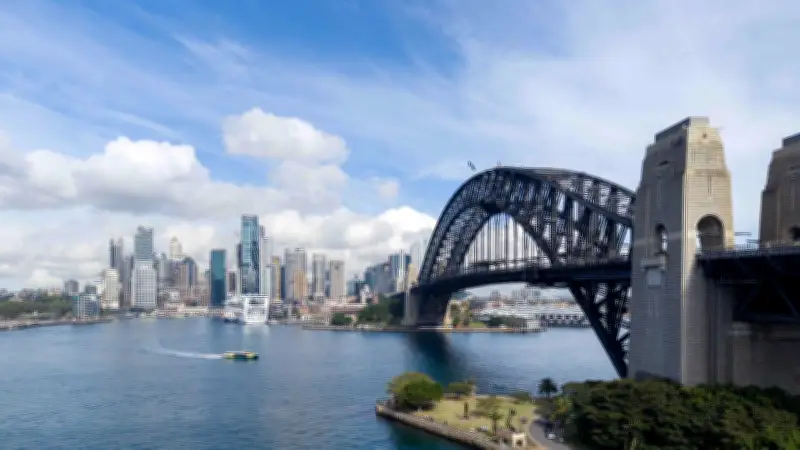
The cost of happiness in Sydney is $255,524 per year, making it Australia’s most expensive place to be happy, according to the metrics. That’s around $24,500 – or 10.6 per cent – more than the national average wage of $231,025. In second place is Canberra with $242,254, followed by Melbourne at $240,893 and the Gold Coast in fourth place at $239,532. Adelaide placed fifth with $232,047, then Perth with $231,366 and in last place was Brisbane at $220,478.
A study by SGS Economics and Planning found the Greater Sydney area to have the second-highest levels of well-being after the ACT. Brisbane – the cheapest of these seven cities for happiness – had the next highest levels of well-being. But the study found a boom in immigration from other Australian states to Brisbane has contributed to rising property prices and an ongoing housing crisis.
Global Comparisons
Remitly’s analysis found Iceland to be the most expensive country to find effortless happiness, costing $163,579 USD. In third place was Switzerland at $154,504 USD, followed by New Zealand with $137,361 USD and the US in fifth with $134,827. The ten countries with the lowest price of happiness are spread across Africa and Latin America. The least expensive was Ethiopia where the price of happiness would cost you $10,176 USD.
“Where you have gender equality, the social, economic and political aspects tend to be more stable and better for people and the natural surroundings,” author Hrund Gunnsteinsdóttir told the BBC. “In countries with greater gender equality, people are healthier, happier and have better wellbeing.”
According to the study, Slovenia, a former member of Yugoslavia, is the only country where incomes cover the “price of happiness”. The average salary of $42,754 USD is 16.3 per cent higher than the point at which increasing life evaluation levels out ($36,769 USD).
Cost-of-Living Pressures
It comes as cost-of-living pressures and shrinking household budgets has led to younger Australians giving up date nights. Millennials, renters, and those working in trades, labour-intensive, and construction-related occupations are bearing the brunt of Australia’s cost-of-living squeeze. Jirsch Sutherland partner Chris Baskerville told NewsWire the problem with economic data is it takes months to collate and does not accurately reflect how Australians are feeling today.
“When we are fearful about our future and the (overall) economic conditions, we go into savings mode and we absolutely cut discretionary spending,” he said. “We haven’t seen the full impact of it yet, even though we are hearing noises of the immediate impact.” As an example Mr Baskerville said in his day-to-day dealings he is hearing about pressures in the real estate market, hospitality, freight, construction and from individuals working in the healthcare sector.
“All of this is yet to play out,” he said. “I feel for the small business owner with the entire family reliant on that business. If we as a consumer body have fear and go into savings mode, the family business that needs that spending is now impacted. When you see one family business go down, you actually put pressure on two adults and potentially kids.”