The United States has declared its military operation against Iran officially concluded, yet a former Navy SEAL has cautioned that the risk of conflict remains far from eliminated. The White House has confirmed that it notified the US Congress that hostilities under Operation Epic Fury had been terminated, with the focus now shifting to reopening the strategic Strait of Hormuz.
Political and strategic motivations behind the declaration
Former Navy SEAL and FBI special agent Jonathan T. Gilliam stated that the decision reflects both political pressure in Washington and a strategic pivot in the region. He noted that one reason the president declared the operation over is due to ongoing battles with Congress over the War Powers Act, as lawmakers sought to take control and force a withdrawal for political reasons. While the administration framed the move as the end of the combat phase, Gilliam emphasized that it does not signify an end to the threat posed by Iran.
Assessment of military gains and remaining risks
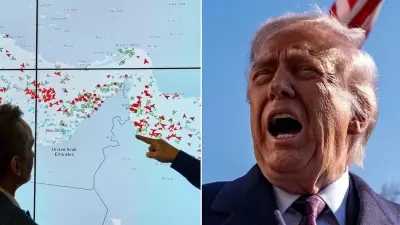
Gilliam acknowledged that the United States achieved dominance and effectively eradicated Iran's navy, air force, and its ability to control the Persian Gulf and the Strait of Hormuz. However, he warned that Iran still retains the capability to launch smaller-scale attacks that could have major consequences. He referenced past incidents such as the USS Cole bombing, highlighting that Iran's small boats can still inflict significant damage.

The declaration marks a transition into a new phase, with the United States now focused on tightening pressure on Iran's oil revenue and securing key shipping routes. Gilliam described this as a strategic tightening of the squeeze on Iran's oil, which funds its ability to carry out wars, proxy conflicts, and terrorist activities. He noted that what may appear chaotic to many is actually a calculated strategy moving toward a larger objective.
Official statements and Iranian response
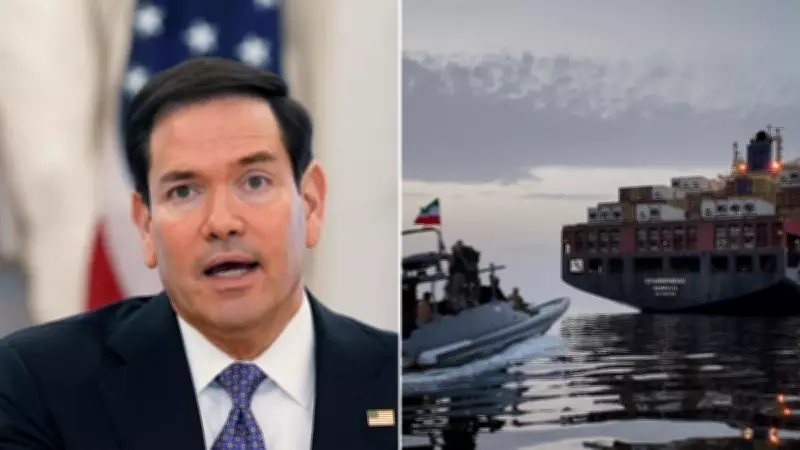
US Secretary of State Marco Rubio confirmed that the operation had concluded and that the administration is now moving to what it calls Project Freedom to guide merchant vessels through the strait. Meanwhile, Iranian parliament speaker Mohammad Bagher Ghalibaf warned on social media platform X that a new equation is forming in the Strait of Hormuz. He accused the United States of undermining shipping security and stated that the continuation of the status quo is intolerable for America, adding that Iran has not even begun its response.
Uncertain ceasefire and future escalation
On the ground, the situation remains unstable. The US has accused Iran of attacking US forces and commercial vessels since the ceasefire came into effect, raising questions about the truce's stability. Chairman of the Joint Chiefs Dan Caine stated that those actions had not yet met the threshold for a return to major combat operations. President Donald Trump has refused to define what would constitute a breach, stating that he will let the public know when it happens and that Iran knows what to do and what not to do.