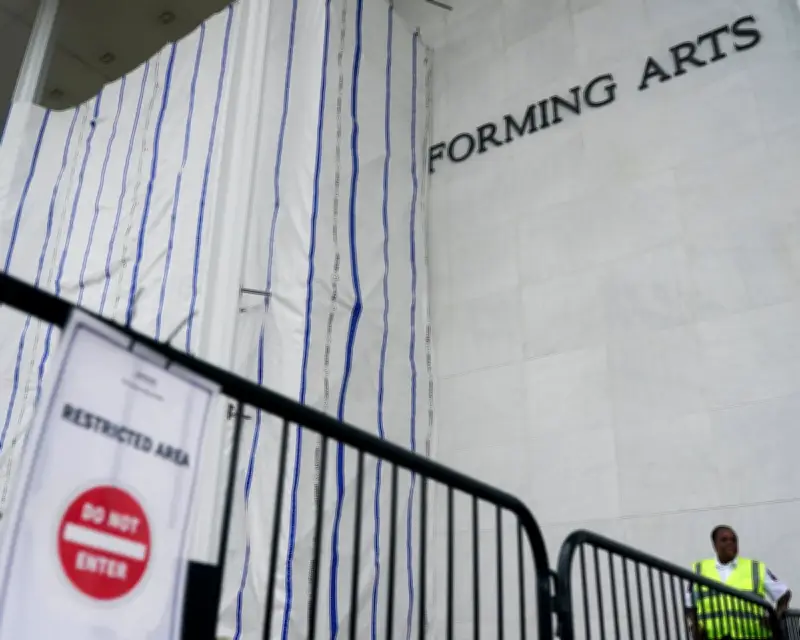
A federal judge has ruled that the John F. Kennedy Center for the Performing Arts can remove Donald Trump's name from its building, rejecting the former president's lawsuit that claimed the decision was politically motivated and violated his free speech rights.
Ruling Details
U.S. District Judge Timothy J. Kelly, appointed by Trump in 2017, issued the ruling on Wednesday, stating that the Kennedy Center, as a private institution, has the right to control its own property and messaging. The judge noted that the removal of Trump's name from the building's exterior did not constitute government censorship or infringe upon his First Amendment rights.
The Kennedy Center's board of trustees voted in January 2021 to remove Trump's name from the building, following the January 6 Capitol riot. The board cited Trump's role in inciting the violence as the reason for the decision. Trump's name had been affixed to the building in 2006 after he donated $10 million to the center's renovation fund.

Trump's Legal Challenge
Trump filed the lawsuit in February 2021, arguing that the removal of his name was a form of viewpoint discrimination and that the Kennedy Center, which receives federal funding, was acting as a state actor. His legal team contended that the board's decision was a direct response to his political speech and therefore unconstitutional.
Judge Kelly, however, found that the Kennedy Center is not a state actor and that its decision to remove Trump's name was a private action. The judge wrote, "The Kennedy Center is a private, nonprofit corporation, and its decision to remove the plaintiff's name from its building is not attributable to the government."
Impact and Reactions
The ruling is a significant blow to Trump, who has frequently used his name as a brand and symbol of his political influence. The Kennedy Center's decision to remove his name was seen as a symbolic repudiation of his actions leading up to the Capitol attack.
In a statement, the Kennedy Center said it was "pleased with the court's decision" and reiterated that the removal was "a necessary step to uphold the values of the institution." Trump's legal team has indicated they will appeal the ruling.
According to legal experts, the case highlights the complexities of free speech claims in the context of private institutions that receive public funding. "The ruling reinforces the principle that private organizations have broad discretion over their own property, even when they receive government support," said First Amendment scholar Geoffrey R. Stone.
The removal of Trump's name from the Kennedy Center is one of several instances where institutions have distanced themselves from the former president following the January 6 attack. Other organizations, including the PGA of America and the Boy Scouts of America, have also taken steps to sever ties with Trump.