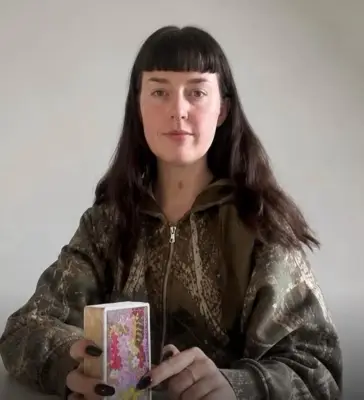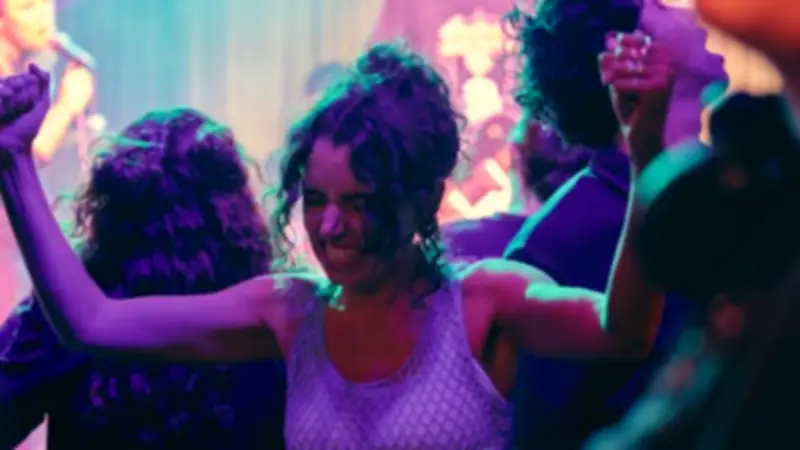
The compelling new New Zealand comedy-drama Head Girl, based on the debut poetry collection from writer and performer Freya Daly Sadgrove, centres on three 20-something flatmates living in Wellington, each at a moment of personal crisis. The six-part series is a bold and thought-provoking work that veers between hilarity and dread, while exploring what it means to understand oneself – or not.
The Characters and Their Crises
Uni dropout Flo (Nī Dekkers-Reihana) has gone viral after reading her shocking poem Head Girl online. Despite debilitating anxiety – she vomits spectacularly after a live poetry event – she is trying to capitalise on her new role as “New Zealand’s own literary Banksy”. Apparently, she’s the next “voice of her generation” – a clear nod to the HBO series Girls, to which this show is indebted. She’s also entering her villain era, using poetry to build herself up by viciously taking down her perceived “enemies”, all while trying to navigate her fraught relationship with her wealthy, overbearing mother (Michelle Langstone).
Sadie (Tatum Warren-Ngata) is a high-achieving PhD student and entrepreneur who is developing a real-time Māori language translation app – the “Māori Alexa” – using the voice of her fluent father. She’s caught between a Māori way of being that foregrounds connection and whānau – the app is called Te Tūhono, which means to connect or join – and her embrace of an individualistic Western lean-in type feminism that privileges success and money at any cost. She feels the weight of her people as well as the weight of corporate success, and frustration at her sweet but dim rich kid boyfriend Djared (Lachie Oliver-Kerby). It’s driving her towards self-destruction.

Dee (Liv Parker), the flat’s id, is repulsed by “normal” life – job, uni, boyfriend. When she’s not nursing an injured hedgehog in her bedroom (she’s also livestreaming the little guy) she’s compulsively hooking up with strangers, as many and as quickly as possible. An odd friendship with Mormon Elijah (Arlo Gibson) might offer a more satisfying sort of intimacy.
The three flatmates clearly don’t like each other, or themselves. When they are not getting in each other’s way, they move past one another like ghosts. Flo basks in online admiration.
A Spiralling Mental Health Crisis
There’s something else brewing, though. At times the women are hounded by whispered overlapping lines of poetry that grow to a scream. There are dream-like images of the house glitching, or being destroyed by a storm. We are watching a spiralling mental health crisis, and things are coming to a head.
As each woman implodes, the series questions what it means to “succeed”, or to have a “normal” life. It finds the clash between internal and external pressures, between ambition and social expectation, to be potentially irreconcilable. The question becomes more about how an individual finds their own meaningful path – but how can you do this when you can’t find your voice, and don’t even know who you are?
Production and Performances
The show is very well made. The episodes, all directed by Robyn Grace, are well balanced and the character arcs and conflicts are compelling. It is shot beautifully by cinematographer David Paul, particularly scenes set on the streets of Wellington at night. The performances are also impressive. These are complex, demanding roles: physical and intense, sometimes hilarious and often laced with pathos.
In a time where reboots, sequels and literary adaptations are cornerstones of the entertainment industry, Head Girl is also a fascinating and possibly unique exercise in working with an author’s material. It draws directly from many poems from Daly Sadgrove’s collection, particularly the title work, the sad and funny I Used To Be Head Girl Of My High School And Now I Am A Massive Cunt, which reflects on ambition, disappointment and depression. The collection directly informs the work’s characters, and their intense responses to the world. The series taps into the poetry’s combination of dry observation, gallows humour, vulgarity and absurdity, and then finds ways to express these elements creatively through sound and image.

Art as Connection and Ethical Questions
The series also asks many ethical questions about confessional modes of poetry. The collection Head Girl – cover art and all – appears in the show as Flo’s own work. What is the relationship between the author and their work? What does it mean to adapt your own pain, and the stories and hurt of others? How is extreme self-disclosure encouraged and incentivised online? How can art help us understand and navigate feelings that are too big and complicated for conventional description?
Art is also a form of connection. For these characters, meaningful connection is pretty thin on the ground. The show offers no easy answers to these big questions – a good choice.
Daly Sadgrove’s poem You’ve Put Your Eggshell On the Ground Now Walk on It ends “and I’m always winking / but I’m never even telling a joke”. The same is true with Head Girl. While it starts in a big, chaotic flurry of dirtbag energy, the series eventually settles into something more pensive. It leaves the audience with some thought-provoking ideas about the relationships between internal selfhood, external identity, and connection with others. It doesn’t romanticise “girls behaving badly” (even though it gets a lot of satisfying laughs out of some sequences), nor mental illness, but it does suggest that compassion, for oneself and others, is a step towards getting better.
Head Girl is now available in New Zealand on Three and ThreeNow.