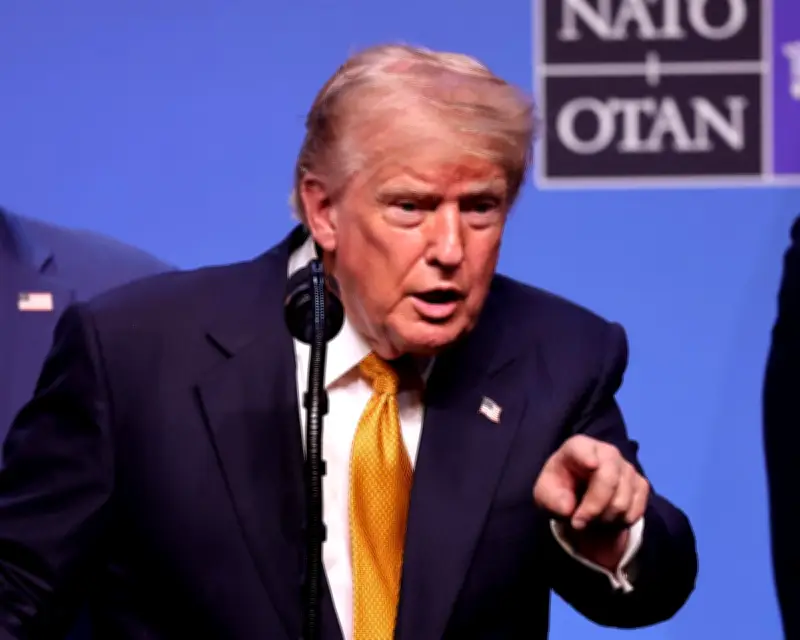
The final hours of the NATO summit were dominated by an erratic performance from US President Donald Trump, leaving allies bewildered and concerned about the future of the transatlantic alliance.
Trump's Unpredictable Conduct
During the closing sessions, Trump made a series of contradictory statements, veering from warm praise for NATO allies to sharp criticism of their defence spending. At one point, he suggested the US might reconsider its commitment to the alliance, a remark that sent shockwaves through the diplomatic corps.
According to a senior European diplomat who spoke on condition of anonymity, “It was like watching a rollercoaster. You never knew what was coming next. One moment he was shaking hands and smiling, the next he was threatening to pull out.”

Impact on Allies
Allies expressed deep unease over Trump's behaviour. German Chancellor Angela Merkel was seen conferring urgently with French President Emmanuel Macron after Trump's remarks. A joint statement later released by several European leaders reaffirmed their commitment to NATO but also called for “predictability and stability” in US leadership.
The summit, originally intended to focus on collective defence and counter-terrorism, was overshadowed by Trump's antics. A NATO official noted that “the agenda was completely derailed. We spent more time managing the US president than discussing substantive issues.”
Reactions from Washington
Back in Washington, reactions were mixed. Some Republican lawmakers defended Trump as a tough negotiator, while others expressed concern. Senator John McCain, a longstanding critic of Trump, said: “The president's behaviour at the summit was erratic and dangerous. It undermines our alliances and emboldens our adversaries.”
White House press secretary Sarah Huckabee Sanders dismissed the criticism, stating that Trump was “fighting for American interests and fair burden-sharing within NATO.” She added that “the president's approach is getting results, with allies pledging to increase defence spending.”
Long-Term Implications
The summit's chaotic end raised questions about the durability of the NATO alliance. Analysts warned that Trump's unpredictability could encourage Russian aggression and weaken the collective security framework that has underpinned Western defence for decades.
“This is a gift to Vladimir Putin,” said Ivo Daalder, a former US ambassador to NATO. “When the leader of the alliance's most powerful member behaves erratically, it sows doubt and division. That's exactly what Russia wants.”
Despite the turmoil, NATO Secretary General Jens Stoltenberg attempted to strike a positive note, emphasizing that the alliance remained united. “We have had a productive summit,” he said. “Allies have agreed on new initiatives to enhance our deterrence and defence. The United States remains a steadfast ally.”