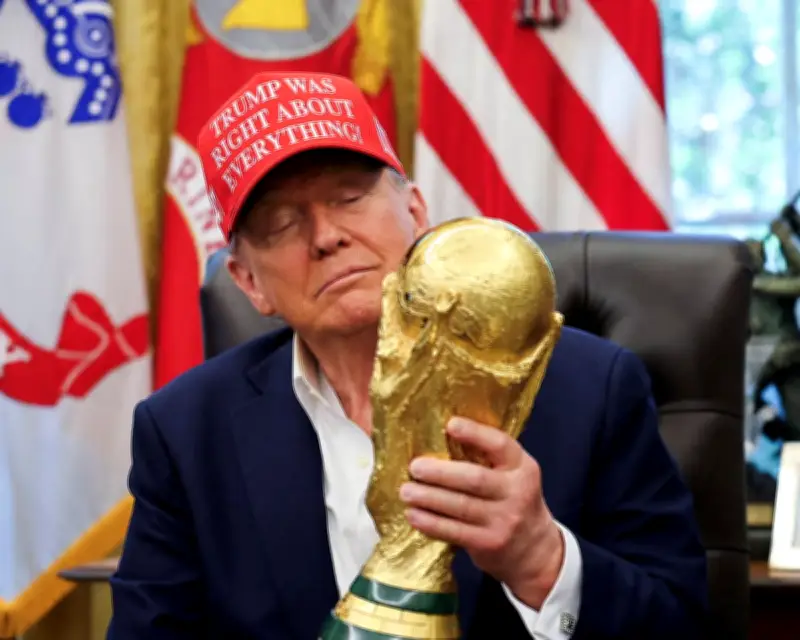
NATO leaders have collectively decided to boycott the 2026 World Cup final, scheduled to be held in the United States, after former President Donald Trump declined an invitation to attend the alliance's summit in Ankara. The move marks a significant escalation in tensions between the transatlantic military alliance and the presumptive Republican presidential nominee.
Summit Snub Triggers Boycott
According to a senior NATO diplomat who spoke on condition of anonymity, the decision was made during an emergency session of the North Atlantic Council on Wednesday. “It was a unified decision. If Mr. Trump cannot find time for the alliance, then we see no reason to celebrate an event hosted by his country,” the diplomat said.
The World Cup final, which will be held on July 19 at MetLife Stadium in New Jersey, is expected to draw over 80,000 spectators and a global television audience of more than 1.5 billion. NATO leaders had been planning to attend as a gesture of solidarity with the United States, but Trump’s refusal to attend the Ankara summit—which was designed to discuss burden-sharing and defense spending—prompted a rethink.

Trump’s Ankara No-Show
Trump’s office issued a statement earlier this week saying he would not travel to Ankara for the July 12-13 summit, citing “scheduling conflicts.” However, sources close to the former president indicated that he was reluctant to meet with allied leaders who have criticized his policies on Russia and trade. “President Trump believes NATO allies need to pay their fair share, and he doesn’t see the point in a summit where they lecture him,” a Trump adviser said.
The snub was seen as a direct affront to Turkish President Recep Tayyip Erdogan, who had personally invited Trump to Ankara. Erdogan had hoped to use the summit to discuss NATO’s role in the Middle East and counterterrorism efforts.
Impact on Transatlantic Relations
The boycott is likely to have far-reaching consequences for US-NATO relations. NATO Secretary General Jens Stoltenberg expressed regret over the decision but stopped short of criticizing the leaders. “The alliance remains united in its commitment to collective defense, but we must also show respect for each other’s time and priorities,” Stoltenberg said in a press conference.
European leaders, including German Chancellor Olaf Scholz and French President Emmanuel Macron, have been particularly vocal in their disappointment. “This is a missed opportunity to demonstrate the strength of our partnership,” Scholz said. Macron added that the boycott “sends a troubling signal about the state of our alliance.”
World Cup Organizers React
FIFA and the US Soccer Federation expressed disappointment but said the event would proceed as planned. “We respect the decisions of world leaders, but the World Cup final is a celebration of sport that transcends politics,” a FIFA spokesperson said. The US government has not commented on the boycott, but a State Department official noted that “the United States remains committed to NATO and its allies.”
The boycott is expected to affect security arrangements and diplomatic protocols at the final, but US law enforcement agencies have assured that public safety will not be compromised.