The Trump administration's recent foreign policy manoeuvres, including pursuing regime change in Venezuela and expressing a keen interest in acquiring Greenland, have sparked fierce criticism from America's closest allies. However, a former CIA agent argues these actions are part of a calculated, if controversial, strategic framework rather than erratic impulses.
A Strategic Framework, Not Chaos
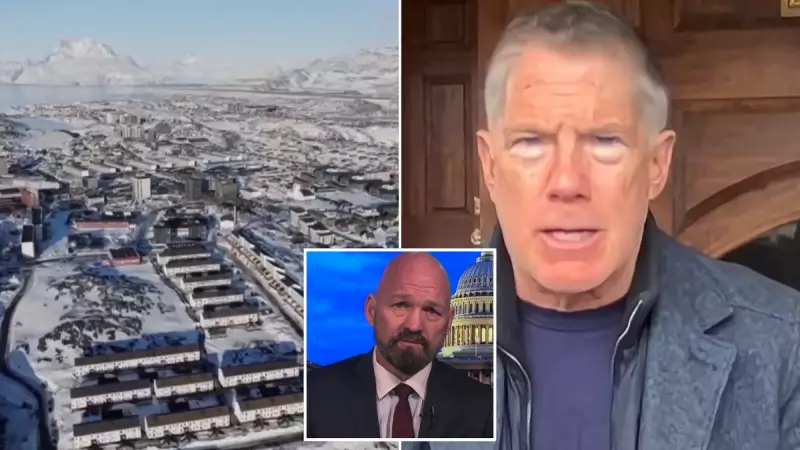
According to former CIA operative Mike Baker, who spoke on Channel Seven's Sunrise program, the White House's approach fits within a familiar national security perspective. Baker suggested the administration is effectively reinvigorating the long-standing Monroe Doctrine, a US policy principle designed to block hostile foreign powers from gaining influence in America's sphere of interest.
"You can understand in a sense, I suppose, if you think about it from a national security perspective, which is how they’re framing the Venezuelan action," Baker explained. He elaborated that from the White House viewpoint, resource-rich Greenland is a strategic asset that must not fall under the influence of competitors like China. "From the White House perspective, they’re saying, 'Look, Greenland, rich in resources — we shouldn’t let it fall prey to the Chinese who don’t have the US interests at heart'," Baker said.

Allied Backlash and NATO Strains
These moves have not been well-received internationally. Denmark, which governs Greenland, has warned that any serious US attempt to acquire the territory would represent a breaking point for the NATO alliance. This stark warning highlights the deepening strains between Washington and its traditional partners.
Despite the significant backlash, commentators believe it is unlikely to deter President Trump. Republican strategist and former US intelligence officer Don Bramer, also appearing on Sunrise, stated, "I don’t think it’s going to stop the president. It may alter the way we move forward on several different policies, but I don’t think we’re going to stop." Bramer defended the focus on Greenland by emphasising its crucial location in the Arctic Circle, a region of growing geopolitical competition. "If NATO and US don’t move forward on securing Greenland, then China will, Russia will," he argued.
Reshaping Alliances and Unlikely Invasion
While the rhetoric has been strong, Baker played down the possibility of any actual military action over Greenland. Even though senior Trump adviser Stephen Miller declared Greenland should "obviously be part of the US," Baker assessed that an invasion remains highly unlikely.
Interestingly, Baker suggested the current tensions might have a silver lining by prompting European NATO allies to reassess their defence strategies. "That’s not necessarily a bad thing for the EU, for NATO allies to say, 'We have to take on board more of our own concerns, more of our own strategy'," he said. This could lead to greater investment in independent European defence capabilities.
In conclusion, despite the international outcry, Baker indicated the Trump administration views its actions in Venezuela and towards Greenland not as mere provocation, but as necessary strategic positioning in a competitive world—a stance that continues to create significant friction with long-standing allies.