Tintern Abbey: A Journey Through Time and Art
Nestled on the banks of the River Wye between Chepstow and Monmouth, Tintern Abbey stands as a national Welsh icon, offering a profound glimpse into medieval Britain and its later cultural revival. Founded in 1131 by Cistercian monks from France, it was the first Cistercian establishment in Wales, initially constructed from simple timber before a grand sandstone reconstruction between 1220 and 1287, inspired by British Gothic architecture.
From Monastic Hub to Majestic Ruin
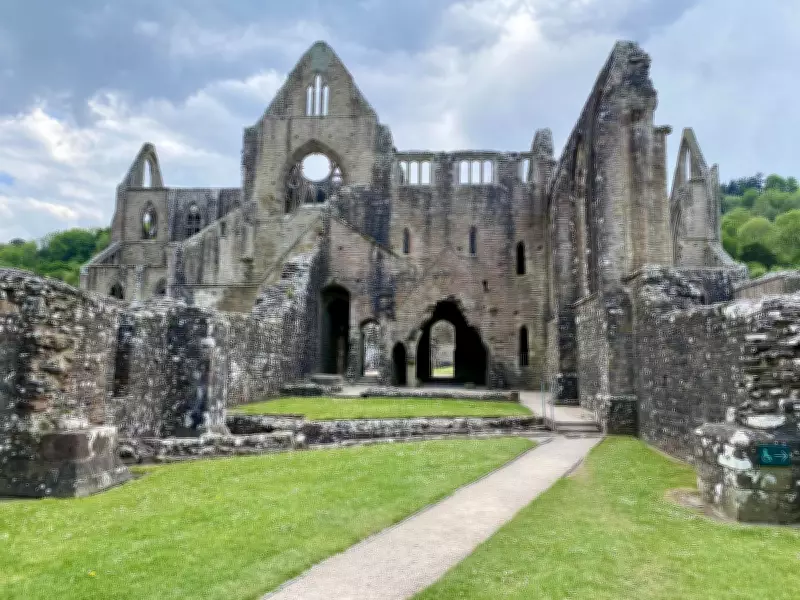
Today, visitors can sit on the steps of the Great West Window, gazing out at the roofless nave where black crows swoop through glassless lancet windows. The grassed area, once used by lay brothers for evening worship, is now sprinkled with English daisies, while red valerian flowers defy the odds by flourishing atop the soaked grey sandstone. This unfortunate state stems from Henry VIII's dissolution of monasteries in 1536, when Abbot Wyche surrendered the abbey, ending monastic life and beginning centuries of decay.
For 200 to 300 years, Tintern Abbey lay forgotten, a majestic ruin crumbling into dust due to its part-clay stone composition. However, the late 18th century marked a turning point as poets and artists were drawn to the beauty of the Wye Valley. Samuel and Nathaniel Buck's 1732 engraving symbolically started Tintern's metaphorical resurrection, while Reverend William Gilpin's 1770 guidebook hailed it as "the most beautiful" scene in Britain, sparking immediate tourist interest.

Romantic Inspiration and Artistic Legacy
With the French Revolution and Napoleonic Wars limiting European travel, British aristocrats turned to domestic wilderness landscapes, propelling Tintern Abbey to become one of the most popular tourist sites on the Welsh border by the mid-19th century. Joseph Mallord William Turner, a leading Romantic artist, visited multiple times, first in 1792, and exhibited his watercolour Tintern Abbey: The Crossing And Chancel, Looking Towards The East Window in 1794, cementing its status as a symbol of landscape painting.
Similarly, poet William Wordsworth's visit resulted in his 1798 poem Lines Written A Few Miles Above Tintern Abbey, capturing the site's impermanence and spiritual resonance. As visitors meander through the actively decaying ruins, they are reminded of how everything physical is at the mercy of time, yet Tintern's spirit lingers—from a place of worship to a beacon of artistic and cultural inspiration.
Modern Visits and Practical Details
A visit to Tintern Abbey is included in Albatross Tours' Best of British, a 17-day journey starting and finishing in London. The tour features a slower pace with stops at Leeds Castle, Stonehenge, Salisbury, Glastonbury, Bristol, Chester, the Lake District, Edinburgh, and more, traveling in a first-class coach with a tour manager and local guides. Prices for 2026 start at $14,687 per person for twin share and $17,987 for solo travelers, including 27 meals. For bookings, visit albatrosstours.com.au or call (07) 3497 4996 or (07) 3221 5353.