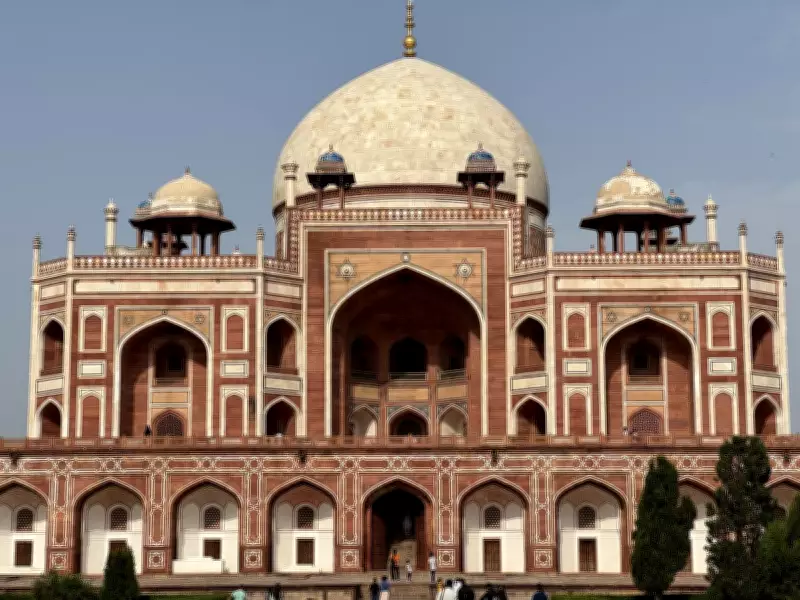
Exploring Humayun's Tomb: A First Day in New Delhi's Golden Triangle
For many travellers embarking on India's famed Golden Triangle journey, the adventure begins in New Delhi, with subsequent stops at the Taj Mahal in Agra and Amber Fort in Jaipur. A common arrival route involves a Singapore Airlines flight departing Perth in the late afternoon, connecting through Changi Airport overnight, and landing in New Delhi in the early morning hours. This schedule often results in limited or poor sleep, especially for those unable to rest comfortably in economy class seats.
After a swift half-hour transfer to a hotel, travellers can enjoy breakfast and, if fortunate or having paid for early check-in, settle into their accommodations. While some may opt to rest, the excitement of being in India typically inspires a desire to maximise the first day. A gentle stroll to Humayun's Tomb offers an ideal introduction.
The Grandeur of Humayun's Tomb
Humayun's Tomb is a majestic mausoleum constructed from red sandstone, adorned with white and black inlaid marble borders. Recognised as a UNESCO World Heritage site, it stands as a dramatic exemplar of Mughal architecture. This structure holds historical significance as the first garden tomb built on the Indian subcontinent, serving as a blueprint for the architectural style that would later culminate in the construction of the Taj Mahal in Agra approximately eighty years later.

The tomb is not only a tourist attraction but also a vibrant social hub for locals. Visitors will find residents walking and relaxing in the shade of large trees, engaging in conversations, courting, reading, and unwinding. Additionally, tourists from across India, dressed in bright saris, frequently pose for selfies and invite fellow visitors to join them in photographs, creating a colourful and culturally rich atmosphere.
Historical and Architectural Details
Construction of Humayun's Tomb commenced in 1565 and concluded in 1572. It was commissioned by Empress Bega Begum, the first wife and chief consort of Emperor Humayun, in memory of her deceased husband, who was the father of Emperor Akbar. Completed sixteen years after Humayun's death, the mausoleum stands as a lasting symbol of her grief.
The tomb is situated on a high terrace and features an octagonal design with four long sides and chamfered edges or corners. Topped by a dome reaching forty-two metres in height and clad in marble, the interior chamber boasts a vaulted roof. Persian architect Mirak Mirza Ghiyas designed the structure, with Indian and Persian craftsmen collaborating on its construction within a complex spanning twenty-seven hectares.
Symmetrical gardens frame the elegant building, exemplifying the Charbagh style—an Islamic garden divided into four quadrants representing the four rivers of paradise as described in the Koran. Pools connect the channels, and during a June visit, the sight of water flowing through the garden channels is particularly pleasing. Flowing water is an essential element of Charbagh gardens, and after research by the Archaeological Survey of India, a team from the Aga Khan Trust for Culture successfully restored this feature.
Beyond Humayun's Tomb, the complex includes other sixteenth-century Mughal garden tombs such as Nila Gumbad, Isa Khan, Bu Halima, Afsarwala, and Barber's Tomb, as well as Arab Serai, where the craftsmen working on the tomb resided. Arab Serai features a large arched entrance with substantial wooden doors.
Humayun's Tomb is located on Mathura Road, opposite Dargah Nizamuddin, and is open daily from 6:00 AM to 6:00 PM. International visitors are charged an entry fee of nine dollars and twenty cents, equivalent to six hundred Indian rupees.
An Alternative First Day Activity
Visiting the National Museum in New Delhi provides another excellent option for a gentle and informative start to the trip. The museum houses over two hundred thousand objects spanning more than five thousand years of Indian history and culture, with exhibits well-organised to facilitate easy understanding. The foundation for the museum was laid by the Maurice Gwyer Committee in May 1946, leading to an Exhibition of Indian Art in London during the winter of 1947, featuring items from various Indian museums.

The exhibition was intended to be displayed in New Delhi before artefacts returned to their original locations. It was staged at the president's residence, Rashtrapati Bhawan, in 1949, marking the inception of the National Museum. India's first president, Jawaharlal Nehru, laid the foundation stone at the current Rashtrapati Bhawan building in 1955, where the museum remains housed today.
The National Museum is situated in the Janpath area of New Delhi and operates from Tuesday to Sunday, 10:00 AM to 6:00 PM, with exceptions on national holidays. International visitors pay an entry fee of ten dollars, or six hundred fifty Indian rupees. Further information is available at the museum's official website.