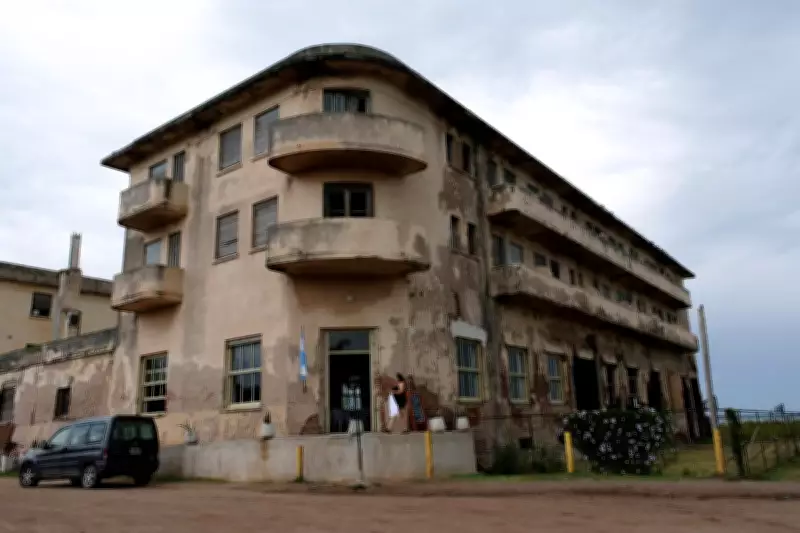
The Mysterious Ghost Hotel on South America's Largest Salt Lake
On the southern bend of a vast lake known locally as the "Small Sea," a crumbling relic of postwar architecture stands as a haunting monument to Argentina's past. The Gran Hotel Viena, rising from the receding shores of Laguna Mar Chiquita in Cordoba Province, feels perfectly suited for a horror film, with its eerie presence and dark backstory captivating visitors and locals alike.
Laguna Mar Chiquita, incorporated into Ansenuza National Park in 2022, stretches between the provinces of Cordoba and Santa Fe, ranking as South America's largest salt lake. Its shallow, mineral-rich waters attract massive flocks of birds, including three species of flamingos that inhabit the shores year-round. However, it is not the wildlife that draws many to this remote location, but rather the allure of a forgotten piece of architecture with a history strange enough to inspire Italian exploitation movie directors.
A Journey to the Abandoned Grandeur
Reaching the Gran Hotel Viena requires some effort. From the provincial capital of Cordoba, a bus trundles northeast for three and a half hours through flat farmland before arriving in the quiet lakeside town of Miramar. Once a bustling resort destination in the mid-20th century, Miramar fell into decline after rising water levels partially flooded the town in the 1970s. Today, its modest waterfront is lined with a handful of hotels, cafes, and birdwatchers gazing out across the immense silver sheet of water.

From the town center, a short walk along the shoreline reveals the Gran Hotel Viena, standing just meters from the lake's edge. Designed in the late 1930s by German immigrants, the hotel blended European elegance with modern touches of the era, featuring wide halls, symmetrical facades, and hints of Art Deco that once framed a luxury lakeside retreat. Despite its abandonment, the building still echoes with former grandeur, surrounded by dead tree trunks and crusted salt formations.
Dark Tourism and Chilling Legends
The uncanny setting of the hotel has fueled local lore, transforming it into one of Argentina's strangest dark-tourism curiosities. Construction began in the late 1930s and expanded between 1940 and 1945 as war raged across Europe. Yet, the Viena closed unexpectedly in 1946, reportedly due to labour disputes and financial troubles. This abrupt ending has fed decades of wild speculation.
Some stories claim the hotel was financed with Nazi capital and intended as a convalescent hospital for German officers. More far-fetched theories suggest Adolf Hitler himself might have fled here after staging his death in Berlin. Historians dismiss these claims as fantasy, but the rumours continue to swirl around the decaying walls. One persistent tale involves the caretaker, Martin Krueger, a German immigrant found dead inside the building two years after the hotel shut its doors. Locals whisper he was murdered for knowing too many secrets, and visitors report hearing footsteps and the faint clanking of keys at night, said to be Krueger's ghost haunting the corridors.
Exploring the Eerie Ruins
Today, the only way to explore the interior of Gran Hotel Viena is through Spanish-language tours organised by the Museo Gran Hotel Viena. These tours depart daily at 10am, 11am, 7pm, and 8pm, guiding visitors through fading corridors and rooms where fragments of the hotel's past remain visible in peeling plaster and weathered tiles. For those seeking a stronger dose of adrenaline, ghost-themed tours take place every day at 9:30pm, except Mondays, all for a meagre cost of $10.
For the less adventurous, the atmosphere can be soaked up at Tante Susi, a cafe set inside the Viena's former lobby. The space has been preserved almost exactly as it was, with bare, cracking walls, a gaping hole in the ceiling opening toward the upper floor, and an old upright piano resting quietly in the corner. Sit down and play a few notes, if you dare, as the wind sweeps in from the vast salt lake outside, adding to the chilling ambiance that makes the sweeping views over the Small Sea feel just a little more haunting.