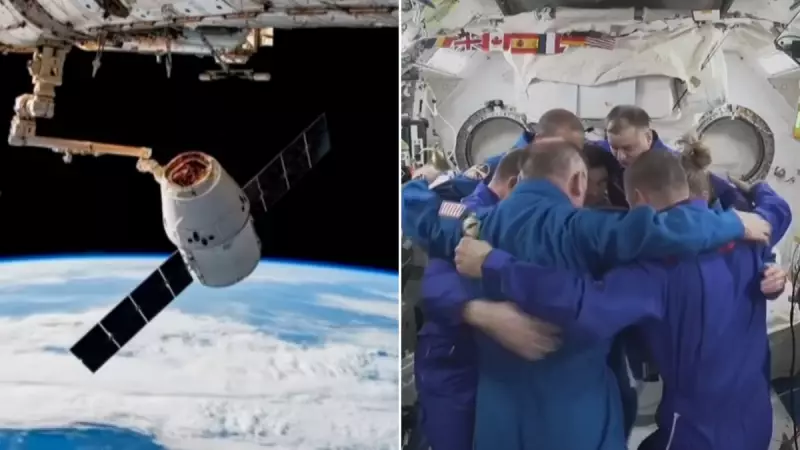
In an unprecedented move, NASA has cut short a mission to the International Space Station and ordered the urgent return of its crew to Earth after one astronaut developed a serious medical condition.
Unplanned Evacuation and Mission Changes
The space agency has cancelled two planned spacewalks and directed the four-person crew to begin their journey home approximately one month ahead of schedule. Space expert Brad Tucker told Channel Seven's Sunrise program on Wednesday that the affected crew member is reportedly in a stable condition.
The situation, described as a first for NASA, has been developing for at least a week and a half. Tucker noted that the medical issue was not so immediately critical as to warrant an instant evacuation, but the limitations of the orbiting laboratory made a swift return necessary. "You obviously don't have all of the diagnostic equipment or treatment on board the space station so, you can't just leave it for another month," Tucker explained.

Crew Details and Logistical Challenges
NASA has not publicly identified which of the four crew members is affected or disclosed the nature of the medical emergency. However, Tucker indicated it does not appear to be a space-related illness. The crew comprises two American astronauts, one Japanese astronaut, and one Russian cosmonaut.
All four must return to Earth together, as leaving a reduced crew on the ISS could risk stranding them without a viable escape craft. The crew began preparations within a 24-hour window, with undocking scheduled for around 9:00 AM AEST on Thursday. Their journey back is expected to take between 10 to 12 hours, culminating in a splashdown just off the coast of California.
Wider Impact on ISS Operations
The early return creates significant logistical challenges for NASA and its international partners. It is not a simple matter of bringing forward future missions, as new crews require important testing before launch from Earth. Consequently, the ISS will operate with a skeleton crew of just three people for about a month.
"It's a real run-on effect by this decision, which they didn't take lightly," Tucker said of the cascading impact on station operations.
Compounding the situation, astronauts returning from extended periods in microgravity typically experience severe physical effects as their bodies readjust to Earth's gravity. These can include blood pooling away from the brain and intense nausea, which could add to the stress for the already unwell crew member during the re-entry and recovery process.